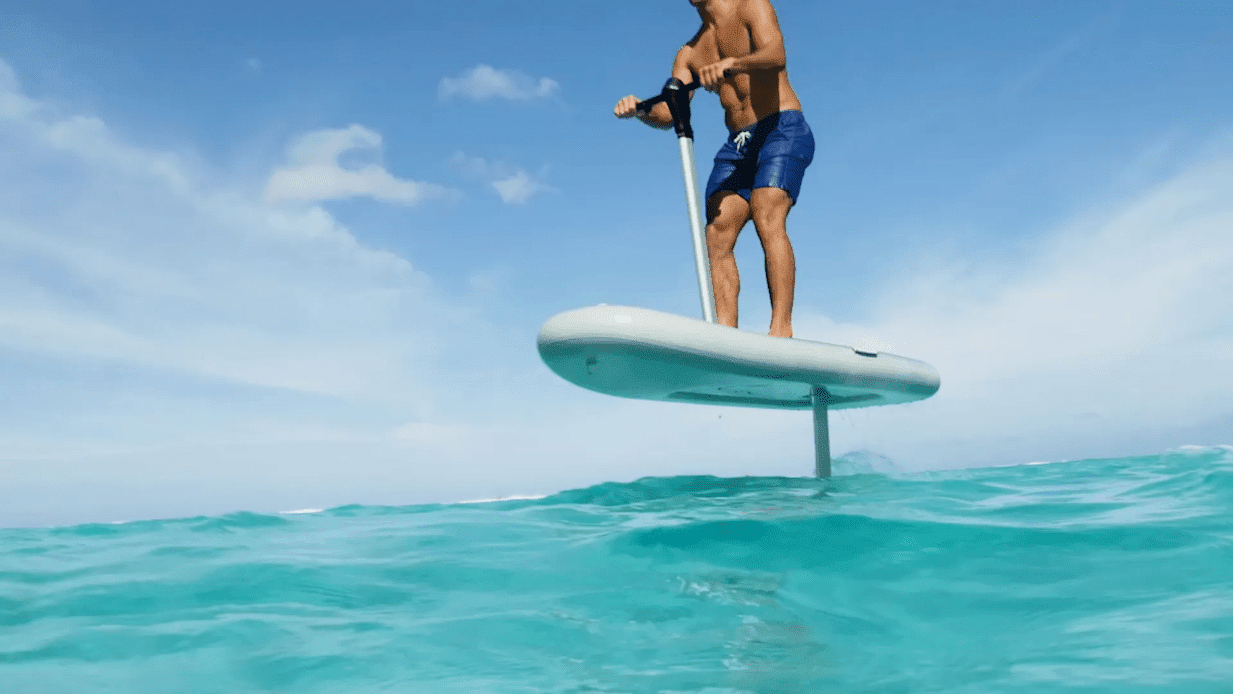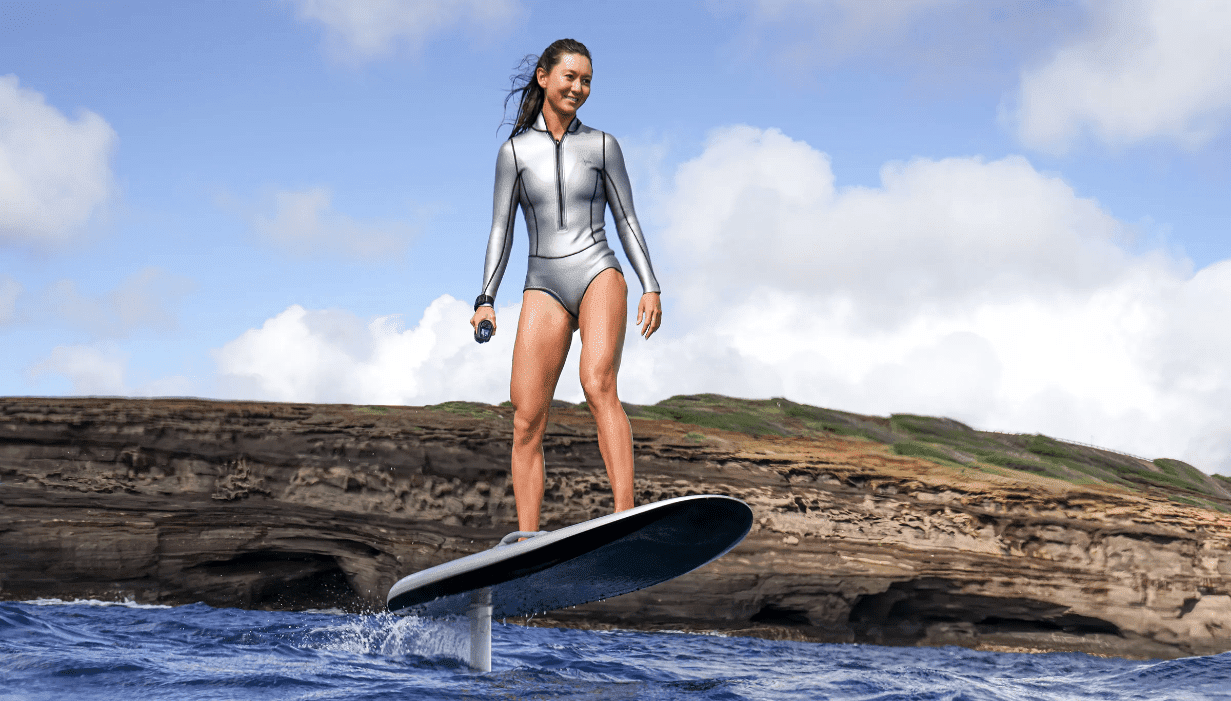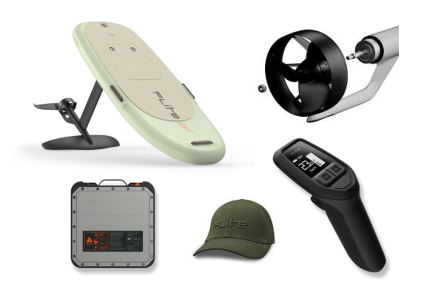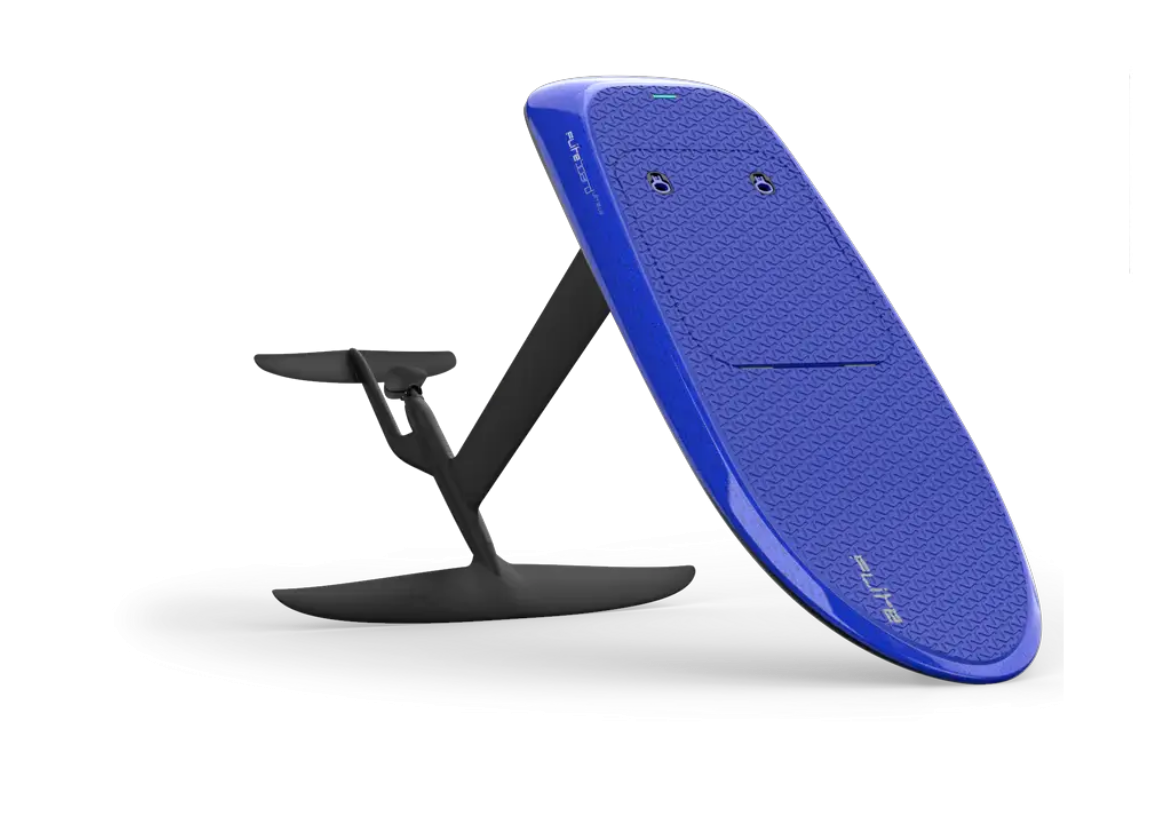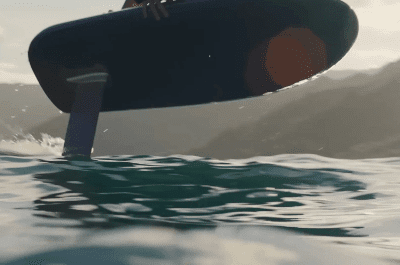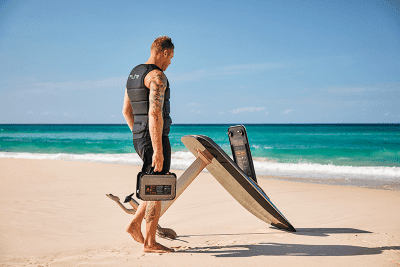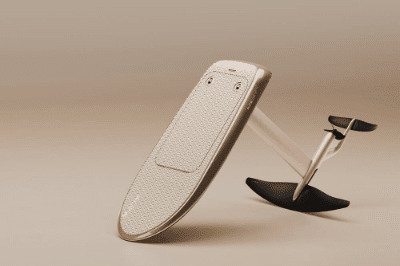
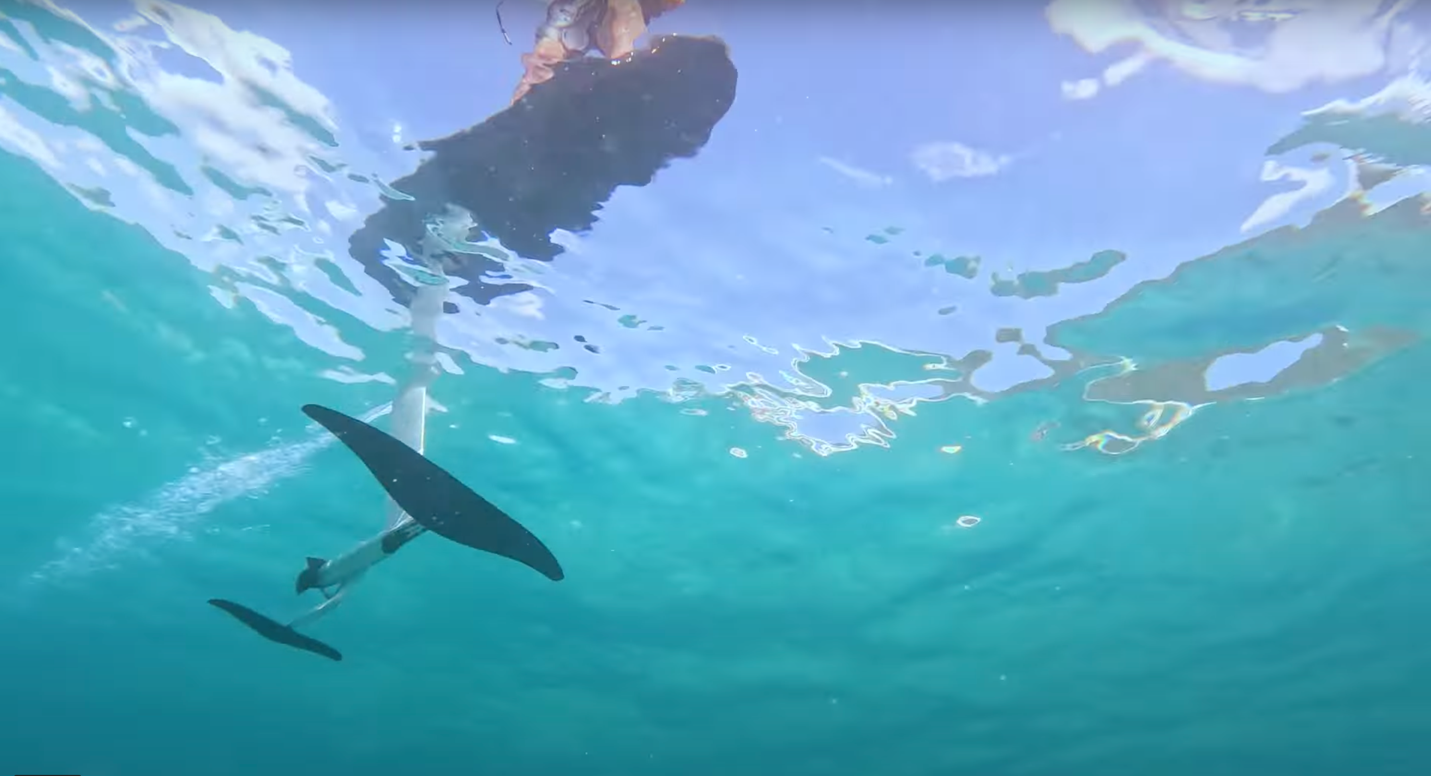
If you are a Fliteboard owner staring at a dozen wings and three stabilizers trying to figure out which one belongs under your board, you are in the right place. The wing changes more about how your eFoil rides than almost any other part. It decides how early you get up, how the board carves, how fast it runs, and how it feels the moment you ease off the throttle. Pick well and the setup feels tuned to you. Pick wrong and you have spent four figures fighting a wing built for water you rarely see.
We sell, service, and ride these wings every week on the Emerald Coast, from the glassy inlets near 30A to the open chop off Destin and Panama City Beach. This guide walks you through the same decision we walk customers through in the shop: confirm what fits your eFoil, understand the wing families including the new FLUX line, then narrow by your skill, your weight, and the water you actually ride. If you are still choosing a board first, start with the Fliteboard 2026 Buyers Guide. If your board is sorted and you just need the right wing, read on.
Before anything else, a quick fork that trips up a lot of first-time buyers. The word "wing" means two completely different things in foiling, and they are not interchangeable.
A wing-foil wing is the inflatable handheld sail you hold in the wind on a wing-foil board. A Fliteboard wing is the carbon hydrofoil that bolts under your mast and flies through the water. This page is about the second one. If you are looking for the handheld sail, this is not the guide you need.
If you are a new eFoiler who searched "which wing" and landed here unsure, you are in the right place: on a Fliteboard, the front wing and rear stabilizer are the underwater foils that generate lift and control. Everything below is about choosing those. For the wider picture of how the board, motor, and foil work together, the 2026 Buyers Guide lays it out, and if you would rather feel the difference in person, here is how wing testing works.
Here is the step almost every wing guide skips, and it is the one that causes the most returns. Before you fall in love with a wing, confirm your eFoil can physically mount it. If you are a Series 6 owner, this is usually a quick yes. If you are riding an older setup, it can be a hard no.
Compatibility lives in your propulsion unit, not your board. The wing attaches to the mast and fuselage that come with your eFoil unit, so that unit is what decides what fits. Fliteboard uses two connection types: the older flat interface and the newer conical interface.
The conical interface is the current standard, and you can spot it by the "C." If your propulsion unit is a Prop C, Jet C, Flitescooter C, or one of the MN Carbon systems, you are on the conical interface and the full current wing range fits, including the conical Cruiser C, Flow C, and Wave C wings and the new FLUX wings.
The FLUX wings break the naming rule, and that is the part people miss. FLUX wings are conical and fit any conical eFoil, even though their names carry no "C." They come from FliteLab and use their own naming, but the connection underneath is the same conical interface.
If you are on an older flat-interface setup, conical wings will not bolt on. There is no official adapter that bridges the two. The fix is not a new board, it is a conical propulsion unit, which then opens the full wing range to you. We break the whole thing down, with a compatibility table by propulsion unit, in our guide to the Fliteboard conical interface. If you are weighing whether that upgrade is worth it, our take on upgrading to the conical wings covers the trade-offs.
If you are not sure which interface you have, send us your eFoil details before you order. It is a two-minute check that saves a costly return.
Once you know what fits, the next question for any rider is what each wing family is built to do. Whether you are a first-season cruiser or an advanced carver, the families sort cleanly by what they reward: stability, glide, carving, speed, or surf feel. One thing to keep in mind throughout, because it changes everything: the motor handles getting you up. On an eFoil you are not choosing a wing based on how hard it is to generate your own speed, the way a prone foiler has to. You are choosing based on how you want the board to feel once you are riding.
If you want the full mechanics of why a long, narrow wing glides while a short, wide one carves, our breakdown of high aspect versus medium aspect wings goes deep. Here is what each family does in plain terms.
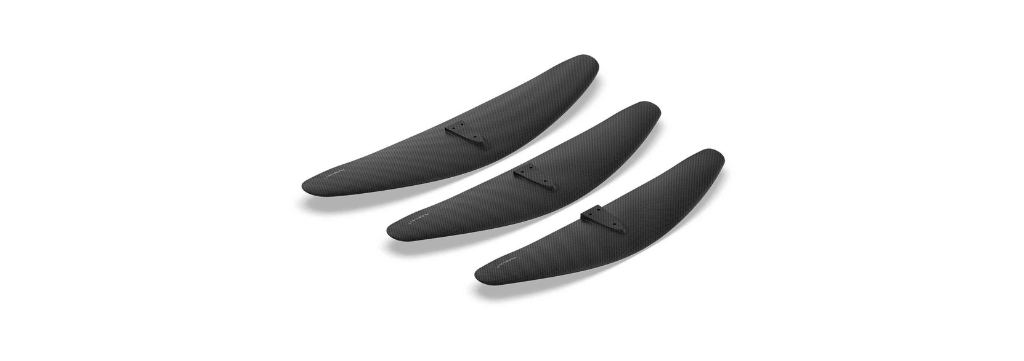
The Cruiser is a medium-aspect wing built for early takeoff and a steady, predictable ride. It generates lift at lower speeds and stays calm underfoot, which is why it is the wing most new riders learn on and many never feel the need to leave. The Cruiser 1800 C front wing is the most stable in the range, and the Cruiser Jet 1500 C pairs that easy takeoff with the Flite Jet system. Who it is for: beginners, heavier riders who want more lift, and anyone who values a relaxed ride over a sharp one.
The Flow family is built for a livelier, surf-leaning ride. The Flow S wings carry a medium-high aspect ratio and a looser, more forgiving carve, which makes them a natural second wing for a rider stepping up from the Cruiser: the Flow S 1300 C for earlier takeoff and glide, or the Flow S 1100 C for sharper turns. The full Flow wings run higher aspect, with more glide and speed for advanced riders: the Flow 1100 C is the versatile all-rounder and the Flow 900 C is the fastest of the group for steeper waves. Who it is for: intermediate to advanced riders who want to carve and ride bumps, not just cruise in a straight line.
The Wave wings are built for unpowered wave riding, with the stability and bite to carve and cut back like a surf foil. The Wave 1000 C suits a wider range of riders, while the smaller Wave 850 C is a high-speed surfing wing for lighter, advanced riders. The MN 1300 C sits between cruising and carving as a fast-gliding all-rounder for the MN and performance systems. These are advanced tools, and not the wings most Gulf riders reach for day to day. Who they are for: experienced wave riders with the conditions to use them.
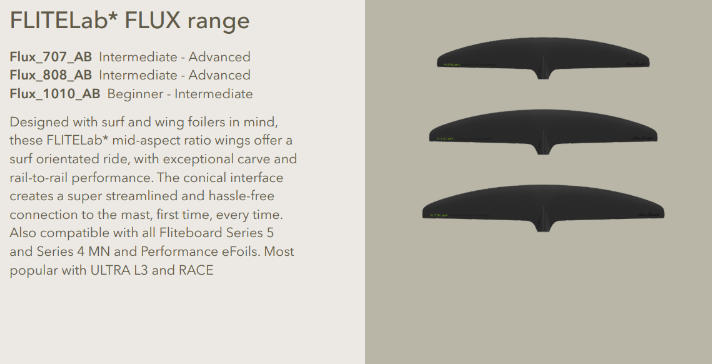
The FLUX wings are new for 2026 and bring a surf-foil character the standard wings were never designed for. The FliteLab FLUX front wing comes in three sizes, 707, 808, and 1010, paired with the FliteLab FLUX stabilizer in 125, 140, and 160. The 1010 is the most stable and forgiving, the 808 is the all-rounder most Emerald Coast riders settle on, and the 707 is the sharpest carver, best left to lighter, advanced riders. The "AB" on each size is the Adam Bennetts signature, the pro surfer and foiler who developed and tested the shapes. Who they are for: riders who want to carve hard and surf the swell when it shows up, on a conical eFoil. We cover sizing, stabilizer pairing, and Gulf fit in full in the FLUX Wing Lineup Guide. For a focused Cruiser-versus-Flow look at the beginner-to-intermediate end, see our wing comparison.
A quick way to narrow it down:
Conditions and goals point you to a family. Your skill and weight tell you which size within it. If you are an intermediate rider who already gets up cleanly and wants more from the wing, the logic is different from a first-week beginner, and different again if you carry more weight than the average rider.
Because the motor handles takeoff, weight on an eFoil is not about getting up. It is about how much lift and stability you want under the board once you are riding. Heavier riders generally want a larger wing for more lift and a more planted feel. Lighter riders can size down for a quicker, looser ride.
Skill matters as much as weight, and the two rarely line up neatly. A heavier advanced rider can happily ride a smaller, livelier wing. A lighter beginner is better off sizing up for stability while the technique comes together. If you are still working on smooth throttle and clean turns, size up regardless of weight. If you have clean control and want more response, size down.
One genuinely useful tip if you come from another foil sport: the motor gives you consistent power, so you can ride a smaller wing than you would unpowered. A rider used to a 1300 wind-sport foil can often drop to something around an 1100 on an eFoil and feel at home.
We do not publish a rigid weight-by-size chart, because the honest answer depends on your skill, your board, and how you like to ride, and the maximum rider weight for each Fliteboard sets the outer limit. If you are a heavier rider building a full setup, our guide to the best eFoil setup for riders over 200lb gets specific about how weight changes the whole package, not just the wing.
Most wing advice explains the lineup in a vacuum, as if every buyer rides the same water. They do not. The right wing for someone foiling head-high reef breaks is not the right wing for a rider on the Gulf, and getting that wrong is an expensive mistake.
The Emerald Coast has its own profile. Most days run flat to knee-high. The protected inlets near 30A are often glassy. When the sea breeze fills in around Destin and Panama City Beach, you get rolling, wind-driven chop rather than clean, organized swell. Real head-high surf happens, but it is the exception, and it usually arrives with a storm.
On flat and choppy Gulf days, a mid-size wing earns its place. Something like the FLUX 808 or a Cruiser carries enough stability to stay composed in chop while still giving you a satisfying carve at cruising throttle. Going too small on a glassy day leaves you riding in a straight line with nothing to push the wing.
For heavier riders or anyone who wants a more forgiving ride, size up. A larger wing keeps lift and stability under the board when the afternoon chop builds off PCB.
Save the smallest, sharpest wings for the rare clean days. A 707 or a high-aspect Flow is a superb wing, but its tight, fast character is built for power and clean surf the Gulf rarely delivers. For most riders on most local days, the mid-size choice is the more rewarding everyday wing. Where your eFoil lives also matters: if you launch off a dock or ride shallow dune lakes, our look at soft top versus carbon eFoils around docks covers how terrain shapes the whole setup. When you want to feel the difference between two sizes on real Gulf water, that is what our demo days are for.
For most riders, the smartest move is not one perfect wing. It is two: one to learn and settle in on, and one to grow into. Whether you are a family buying a shared setup or a single rider planning to progress, a two-wing quiver covers far more water than any single wing can.
The pattern that works: start on a stable wing like the Cruiser, then add a livelier second wing once you are comfortable, such as a Flow S or a FLUX 808. You keep the easy wing for guests, light days, and teaching, and reach for the sharper wing when you want to carve. The modular system is built for exactly this, so adding a wing later never means replacing your board.
This is also where testing pays for itself, because the second wing is the one people most often guess wrong. Riding two sizes back to back tells you more in twenty minutes than any spec sheet, and our wing testing program exists so you can do that before you commit. If you are still narrowing your board and budget around a quiver, the 2026 Buyers Guide helps you plan the whole kit.
Plenty of riders around Panama City Beach and Destin come to wings the same way: they take a demo, get hooked, and then have to decide what to actually buy. If you are a heavier intermediate, somewhere in the 185 to 210 pound range, with a season or two behind you, the sizing math is a little different from what a lighter rider hears.
The open water off PCB does not stay glassy. When the afternoon sea breeze fills in, you get wind-driven chop that pushes a small wing around and makes a marginal setup feel nervous. More weight means you already want more lift and more stability under the board, and chop only raises the bar.
The wing that punishes you least while you keep progressing is the bigger one. A larger FLUX size like the 1010, or a stable Cruiser, carries your weight comfortably at cruising throttle, stays planted when the water gets bumpy, and still carves enough to show you what the wing is about. The smaller, sharper sizes reward a lighter rider or an advanced one with clean technique in calmer water. At your weight and stage, starting there usually means fighting the wing instead of enjoying it.
Get the wing that is fun today, then add a sharper one as your control tightens. There is no rush, and a lot of riders your size end up owning both. For a fuller picture of how weight changes board, battery, and wing choices together, see our guide to the best eFoil setup for riders over 200lb. If you would rather feel a 1010 and a mid-size back to back before deciding, that is a quick session to set up.
If you are a Series 6 owner riding the 30A corridor and shopping for an upgrade wing, the good news is that your options are wide open. A current Series 6 setup runs the conical interface, which means the full modern wing range is on the table for you, including the FLUX line.
The trap here is not fit, it is assuming a wing you liked on an older board still applies. The conical changeover means older flat-interface wings will not mount, and a few riders order the wrong one because they shopped by model name rather than by interface. Your propulsion unit is the thing to check: a Prop C, Jet C, Flitescooter C, or MN Carbon system is conical, and so is your mast.
With fit confirmed, the choice comes down to how you ride the 30A water. For the glassy inlet mornings and the lighter chop that defines most days here, a mid-size conical wing like the FLUX 808 or a Flow gives you carve without getting skittish. If you want a more forgiving ride or carry more weight, size up. The full reasoning, including which propulsion units count as conical, is laid out in our guide to the conical interface and wing compatibility.
Before you order, confirm the interface rather than guessing from the box. If you bought your setup new in the Series 5 or 6 era, you are almost certainly conical, but a quick message to us settles it for good.
If you ride out of Inlet Beach or one of the protected 30A inlets, you know the summer pattern. The mornings are often pure glass. There is no swell to speak of, just flat water and maybe a light chop once the sea breeze arrives in the afternoon. You are running the motor the whole time, and the question is which wing makes a flat morning genuinely fun rather than flat in every sense.
If you are a lighter, advanced rider who likes to carve, this is the one case where a smaller, sharper wing shines. On glassy water the wing's job is not to catch a wave, it is to roll rail to rail and hold a clean line at the speed your motor is holding. A tighter wing like the FLUX 707, or a higher-aspect Flow, comes alive when you lean it over on flat water.
The honest caveat: that same wing is less forgiving when the chop fills in, and it asks for clean technique. If you are still building control, or you ride through the windy part of the day, a mid-size wing is the smarter call and you give up very little on the glass. Aspect ratio is doing a lot of the work in how these wings feel, and our explainer on high aspect versus medium aspect wings is worth a read before you commit to a small one.
The best way to settle it is to ride a sharp wing and a mid-size wing on the same glassy morning and feel the trade. Bring your weight and your board, and we will set you up to test both.
A wing is a feel decision as much as a spec decision, and the best way to choose is to ride one. We run demo days and a wing rental program for exactly this reason, so you can put a wing on the water in real Gulf conditions before you spend four figures on the wrong size.
If you already know your size, you can shop the full wing range with confidence. If you are between two sizes, unsure how your weight and riding line up, or not certain your eFoil takes the conical interface, the smarter move is a conversation first. Bring your weight, your board, and an honest read on how you ride, and we will point you to the combination that fits. You can see how the program works in our guide to testing Fliteboard wings, or come ride one at an upcoming demo day.
A Cruiser. It is a medium-aspect wing with early takeoff and a stable, forgiving ride, which is why most new riders learn on it. Heavier beginners or anyone who wants maximum stability should look at the larger sizes.
Only if your eFoil uses the conical interface, meaning a Prop C, Jet C, Flitescooter C, or MN Carbon propulsion system. FLUX wings are conical even though their names have no "C." They will not fit older flat-interface masts, and there is no adapter. If you are unsure, check with us before ordering.
Yes. The front wing and the rear stabilizer are separate purchases, and the stabilizer you choose changes the ride. The FLUX stabilizer pairs with the FLUX front wings, while the Flow 245 C, 500 C, and Cruiser Jet 300 C stabilizers pair with the standard wings. It is worth pairing deliberately rather than reusing whatever you have.
For most Emerald Coast riders, a mid-size wing like the FLUX 808 is the most versatile across flat-to-choppy days. Heavier riders or those wanting a more forgiving ride should size up. The smallest, sharpest wings are specialist tools for advanced riders in the rare clean conditions.
The board sets the limit before the wing does. The maximum rider weight guide covers the current figures by board, which matters most for heavier riders building a setup.
The decision comes down to four questions, in order. First, confirm your eFoil's interface, because a conical eFoil opens the full current range including FLUX, while an older flat setup limits you until you upgrade the propulsion unit. Second, pick the family that matches how you want to ride: Cruiser for stability, Flow or Flow S for carving, FLUX for surf feel, Wave or MN for the specialists. Third, size within that family by your skill and weight, sizing up when you want stability and down when you want response. Fourth, match it to your real water, which on the Emerald Coast usually points to a mid-size wing for the flat-to-choppy days that make up most sessions.
Get those four right and you will not be guessing. If you want to skip the guesswork entirely, ride two sizes back to back at a demo before you buy, and let the water make the call. Bring your weight, your board, and how you like to ride, and we will help you land on the wing that fits.
Not sure which wing fits your eFoil, your weight, and the water you ride?
Talk it through with Emerald Wake, or ride two sizes back to back at a demo before you buy.
Please fill out this form and someone from our team will contact you as soon as possible. You can also reach us by email at [email protected]
[email protected]
Phone: (850) 400-8500
Business hours:
Mon-Sat: 8am – 5pm
Sun: 9am – 4pm

© 2026 Emerald Wake LLC - All Rights Reserved
Privacy Policy | Accessibility | Terms of Use | Disclaimer