












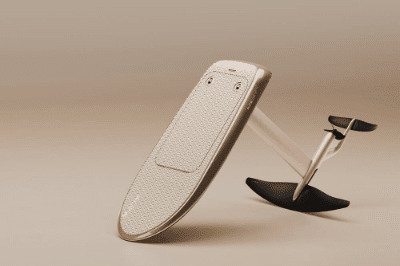
Conical. It tells you the part uses the conical interface, the tapered wing-to-fuselage connection Fliteboard uses across the current range. It does not describe the propulsion type or the wing shape, only the connection.


If you are shopping for a new Fliteboard wing, one thing decides whether it will even bolt onto your setup: the conical interface. Get it wrong and the wing does not fit, and you are looking at a return.
Here is the short version. As of the Series 6 lineup, the conical interface is the standard across Fliteboard's range, and you can spot a conical system by the "C" in its propulsion name. The catch that trips people up is the FLITELab FLUX wings, which are conical but do not carry a C. And one rule clears up most of the confusion: compatibility is set by your eFoil propulsion unit, not by your board.
This guide explains what the conical interface is, gives you a compatibility table to check your own setup against, and answers the questions that cause the most mis-orders. If you are still choosing a board, the Fliteboard 2026 Buyers Guide covers that decision first. Otherwise, read on. This is the check Emerald Wake runs for customers every week, written down so you can do it yourself before you buy.
| Your eFoil propulsion unit | Wing interface | Compatible wings |
|---|---|---|
| Prop C, Jet C, Flitescooter C (Series 5/6) | Conical | All C wings (Flow C, Cruiser C, Wave C) + FLUX wings |
| MN Carbon Prop C, Jet C, Wave C | Conical | All C wings + FLUX wings |
| Series 4 MN and Performance eFoils | Conical | All C wings + FLUX wings |
| Standard eFoil, Series 4 and earlier | Flat (standard) | Standard flat-interface wings only |
If your propulsion unit has a C in its name, or you are on a current Series 5/6 setup, the full conical wing range, including FLUX, will fit. If you are on an older standard system, you are on the flat interface and conical wings will not bolt on without a propulsion upgrade. The sections below explain why, and what to do if you are in the second group.
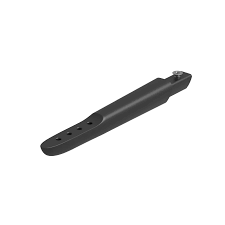
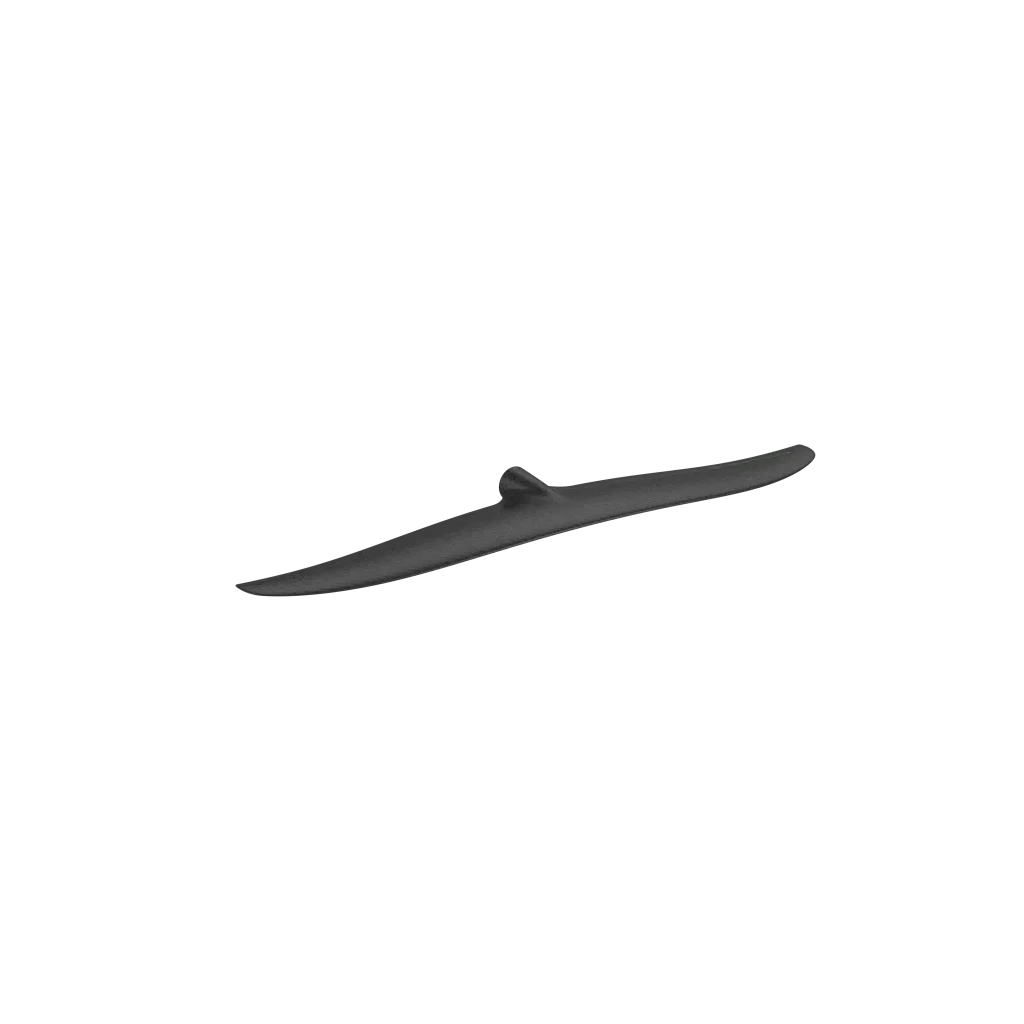
The interface is simply how the wing connects to the fuselage, the part that joins your wing to the mast. Fliteboard has used two over the years: the older flat interface and the newer conical interface.
The flat interface mounts the wing on a flat plate held by bolts. It works, but it allows a little flex and play in the connection over time. The conical interface replaces that flat plate with a tapered cone that seats into a matching socket. The cone self-centers as you tighten it, locks down with two bolts, and leaves almost no play. The result is a stiffer, more streamlined connection that goes on and off quickly and stays solid.
That stiffness is the point. A connection that flexes dulls the feedback between the wing and your feet and wears faster. A rock-solid connection transmits what the wing is doing directly and holds up better over time. As of the Series 6 lineup, the conical interface is the standard across Fliteboard's range, so most current setups are conical.
The C stands for conical, and this is the single most useful naming clue Fliteboard gives you. When you see a C in a propulsion system or a wing name, it means that part uses the conical interface.
So Prop C, Jet C, Flitescooter C, and the MN Carbon systems are all conical. On the wing side, the C wings (such as the Flow C and Cruiser C) are conical too. The C is not telling you about the type of propulsion or the wing's shape. It is telling you about the connection, and the connection is what governs compatibility. One wing range breaks this naming rule, which is where most of the confusion starts.
If your eFoil is conical, your wing options fall into two groups.
The first is the C wing range: the conical versions of Fliteboard's standard wings, including the Flow, Cruiser, and Wave families. These all carry a C in the name, so they are easy to identify. If you are weighing up which of these suits your level, our beginner to intermediate wing comparison walks through the differences.
The second is the FLITELab FLUX wings: the 707, 808, and 1010 surf-oriented wings. These are conical and fit any conical eFoil, even though their names do not include a C. If you want the full picture on which FLUX size suits your riding and your conditions, the FLUX Wing Lineup Guide breaks it down.
What does not fit a conical eFoil is the older flat-interface wing range. A flat wing will not seat on a conical fuselage, and there is no official Fliteboard part that bridges the two. So if you are on a conical setup, your wing shopping is limited to the C wings and the FLUX wings, and that is a good place to be, because it is where the current range lives.
Yes. The FLUX wings are part of the conical range and fit any conical eFoil, despite not carrying a C in their name.
This is the most common point of confusion, because every other conical wing follows the C naming convention and the FLUX wings break it. The reason is simply that the FLUX wings come from FLITELab, Fliteboard's performance sub-brand, which uses its own naming (the size number plus the AB signature) rather than the C suffix. The connection underneath is the same conical interface, so if you are on a Prop C, Jet C, or any current Series 5/6 system, a FLUX wing will fit with no adapter and no special part.
No. The two interfaces do not mix. A conical wing will not seat on a flat fuselage, and a flat wing will not seat on a conical one. They are different shapes doing the same job, and there is no official Fliteboard adapter between them.
The rule that clears up most confusion here is this: compatibility is set by your eFoil propulsion unit, not by your board. The board is just the platform. The mast and fuselage, which come with your propulsion unit, are what the wing actually attaches to. So when you are checking compatibility, look at your eFoil unit, not the board it is sitting on.
There is one workaround worth knowing about, with a caveat. A third-party company makes an adapter that lets you run older standard wings on a conical mast. It is not made or endorsed by Fliteboard, and using a non-official part can affect fit, performance, and warranty coverage. If you are considering it, talk it through with us first so you understand the trade-offs before you spend the money.
Yes, but not by swapping the wing alone. Because compatibility lives in the eFoil unit, the way to move an older board onto conical wings is to add a C eFoil propulsion unit, such as a Prop C, Jet C, or MN Carbon system.
The good news is that the C eFoil units fit any Fliteboard board made after Series 2. So if you have an older board you like, you do not necessarily need a whole new board to get onto the conical range. You need the conical propulsion unit, and then the full C wing and FLUX wing range opens up to you.
Whether that upgrade makes sense depends on your board, your budget, and how you ride. We cover the case for switching in more detail in our guide on whether to upgrade to the conical wings. It is also exactly the kind of thing worth a quick conversation before you commit, since the right answer is different for a casual cruiser than for someone chasing surf performance.
Conical. It tells you the part uses the conical interface, the tapered wing-to-fuselage connection Fliteboard uses across the current range. It does not describe the propulsion type or the wing shape, only the connection.
Yes. The FLUX wings (707, 808, 1010) are part of the conical range and fit any conical eFoil, even though their FLITELab naming does not use the C suffix.
The mast and fuselage that come with any C eFoil unit, including Prop C, Jet C, Flitescooter C, and the MN Carbon systems, as well as the Series 4 MN and Performance eFoils. If your propulsion unit has a C, your mast is already conical.
Only by adding a C eFoil propulsion unit. The C units fit any board made after Series 2, so you can keep an older board and still move onto the conical wing range by upgrading the eFoil rather than the whole setup.
The fastest way to avoid ordering the wrong wing is to check before you buy. Look at your eFoil propulsion unit: if it has a C in the name, or it is a current Series 5/6 system, you are on the conical interface and the full C wing and FLUX range will fit.
If you are not certain, send Emerald Wake your eFoil details and we will confirm exactly what fits before you order. We are an authorized Fliteboard reseller and service center, and this is a check we run for customers every week. It takes a couple of minutes and saves the cost and hassle of a return. And if you would rather feel the difference before committing, here is how to test Fliteboard wings on the water first.
Get your compatibility confirmed, then use our guide to which Fliteboard wing is right for you to pick the size and family that match how you ride.
Not sure which interface your eFoil uses?
Send us your setup details and we will confirm exactly which wings fit, before you order.
Please fill out this form and someone from our team will contact you as soon as possible. You can also reach us by email at [email protected]
[email protected]
Phone: (850) 400-8500
Business hours:
Mon-Sat: 8am – 5pm
Sun: 9am – 4pm

© 2026 Emerald Wake LLC - All Rights Reserved
Privacy Policy | Accessibility | Terms of Use | Disclaimer