

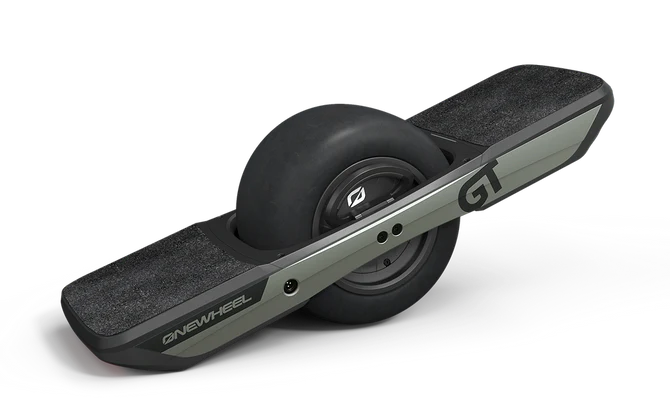

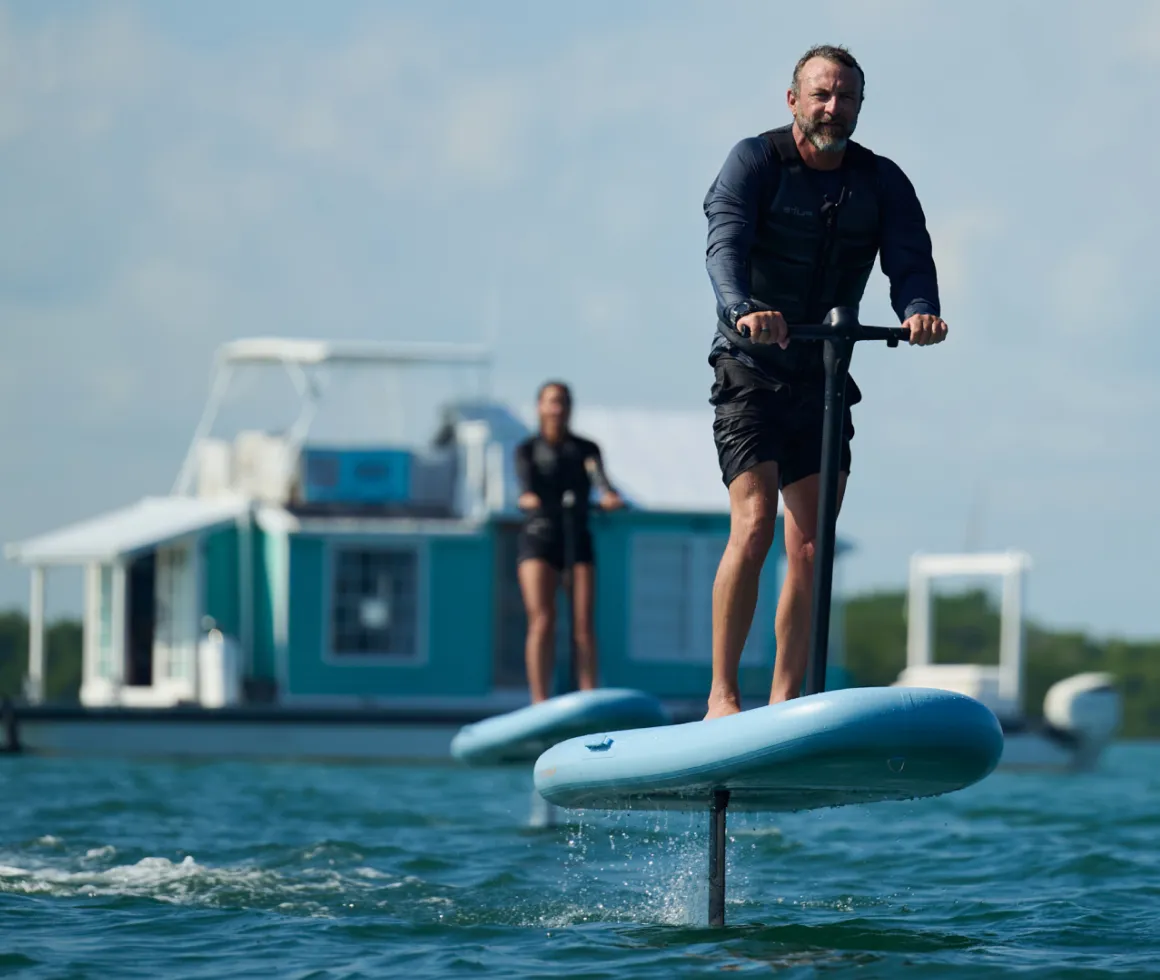
Fliteboard’s measurements sheet lists 120 kg, approximately 265 lb, for the FliteScooter entry. Check the exact model and propulsion configuration, and keep recommended riding weights and lesson eligibility separate from that maximum.

Updated
Fliteboard’s published board limits fall into two groups: 100 kg (about 220 lb) for RACE and ULTRA L3, and 120 kg (about 265 lb) for ICON, PRO, AIR ICON, AIR PRO, and FliteScooter. Those are maximum ratings, rather than a promise that every configuration will be equally easy to ride at that weight.
The useful question is what that rating means for your setup. Board volume, propulsion, wing choice, experience, and the conditions you will ride in all affect how comfortable takeoff feels. A board can be within its published limit and still be a demanding place to learn.
Three numbers to keep separate: the board’s maximum rating, Fliteboard’s recommended rider weight for the propulsion configuration, and Emerald Wake’s lesson booking limit. Check all three before buying or booking. Pound figures are rounded; use the manufacturer’s kilogram rating when you are close to a limit.
No. Check the exact model rather than applying one number to the whole range. The table below summarizes the relevant boards in Fliteboard’s published measurements sheet.
| Board | Volume | Published maximum |
|---|---|---|
| RACE | 58 L | 100 kg / ≈220 lb |
| ULTRA L3 | 49 L | 100 kg / ≈220 lb |
| ICON | 100 L | 120 kg / ≈265 lb |
| PRO | 67 L | 120 kg / ≈265 lb |
| AIR ICON | 110 L | 120 kg / ≈265 lb |
| AIR PRO | 80 L | 120 kg / ≈265 lb |
| FliteScooter | 237 L | 120 kg / ≈265 lb |
Source: Fliteboard Product Weights & Measurements, updated July 20, 2026 and checked October 9, 2026. The FliteScooter row is labeled Series 3–4; that label alone does not establish whether a newer configuration has identical hardware. Confirm the exact model you are purchasing.
For example, a 230 lb rider is below the published ICON and PRO board ceilings, but above the RACE and ULTRA L3 ceilings. That is the first filter. Choosing the right configuration comes next.
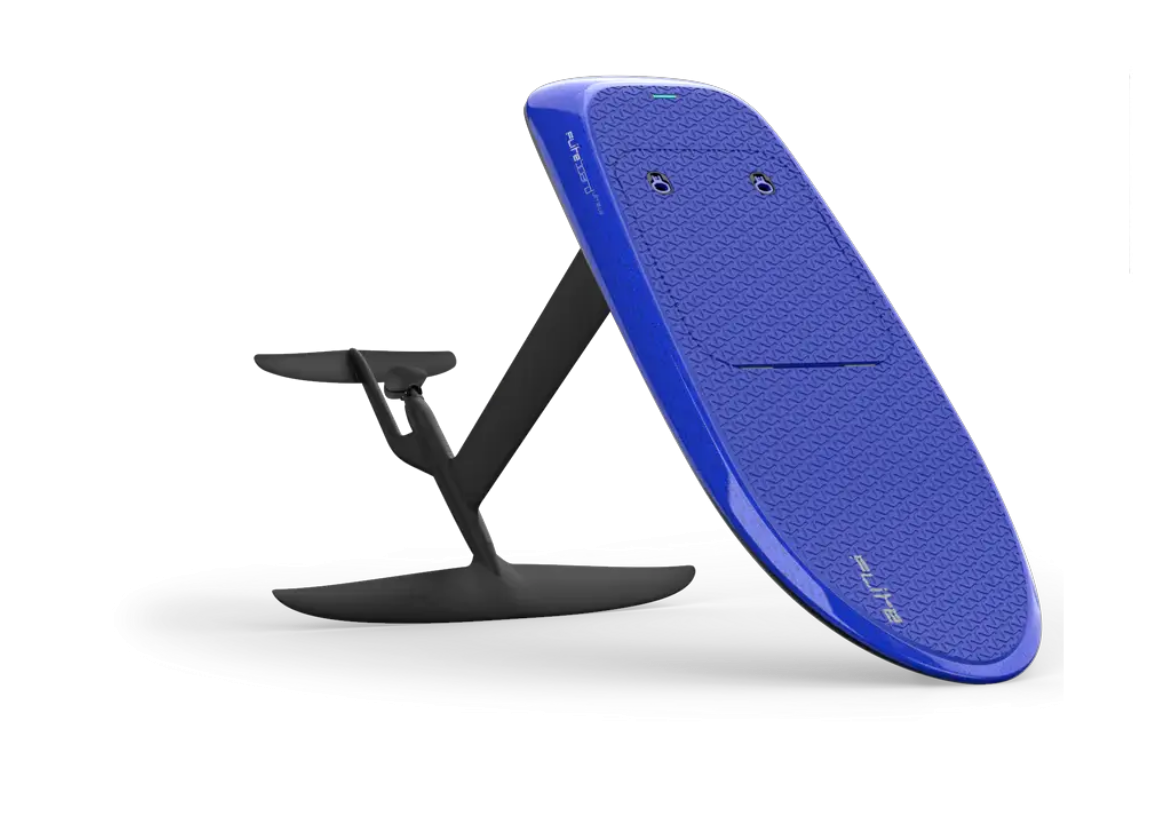
Yes, there are options in this range. For a newer rider who values an easier start, the ICON is a sensible board to discuss. Its larger platform gives you more room to get established before you are consistently flying.
The PRO can be an option for a rider who wants a more responsive board and is prepared for a more demanding learning phase. Previous watersports experience may help, but it does not make the smaller platform the automatic choice. Try it before deciding how much challenge you want in your first sessions.
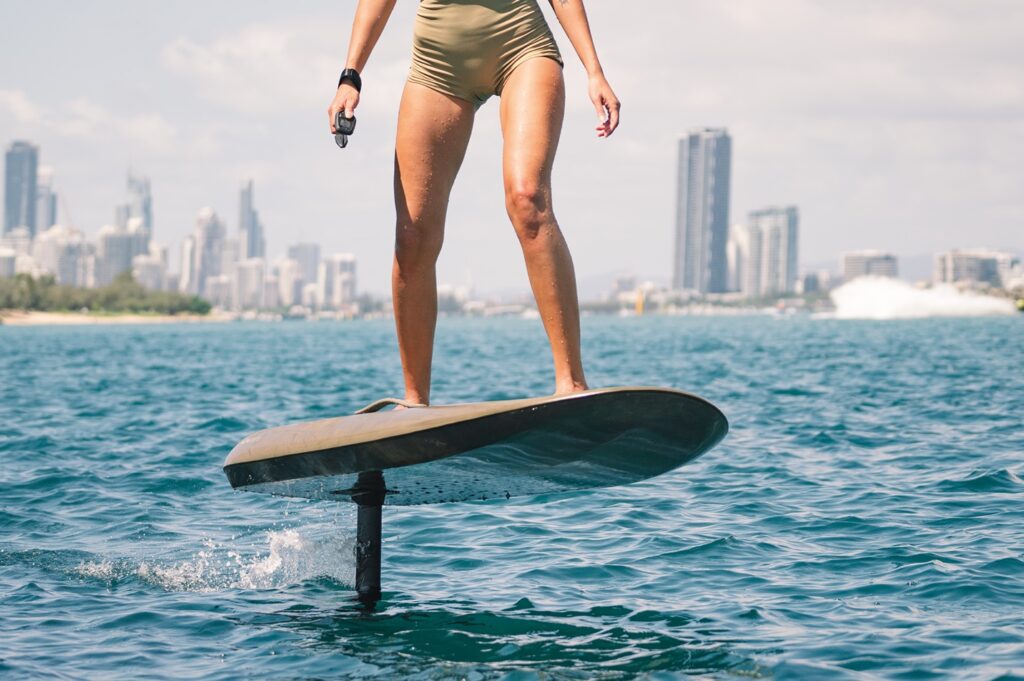
The AIR ICON is also worth comparing if durability and shared use matter. Hamish has described a different touchdown feel on inflatable boards than on hard boards. That is a reason to compare them on the water, rather than assuming extra volume will make every stage of learning easier.
For the full board, wing, and propulsion decision, read our setup guide for riders over 200 lb. You can also compare the ICON’s all-rounder role with the wider 2026 lineup.
Start with the complete configuration and your experience, rather than a rigid weight bracket. The ICON offers a conventional-board option to discuss; the FliteScooter adds a larger platform and handlebar support. Those are different ways of making your first rides more approachable.
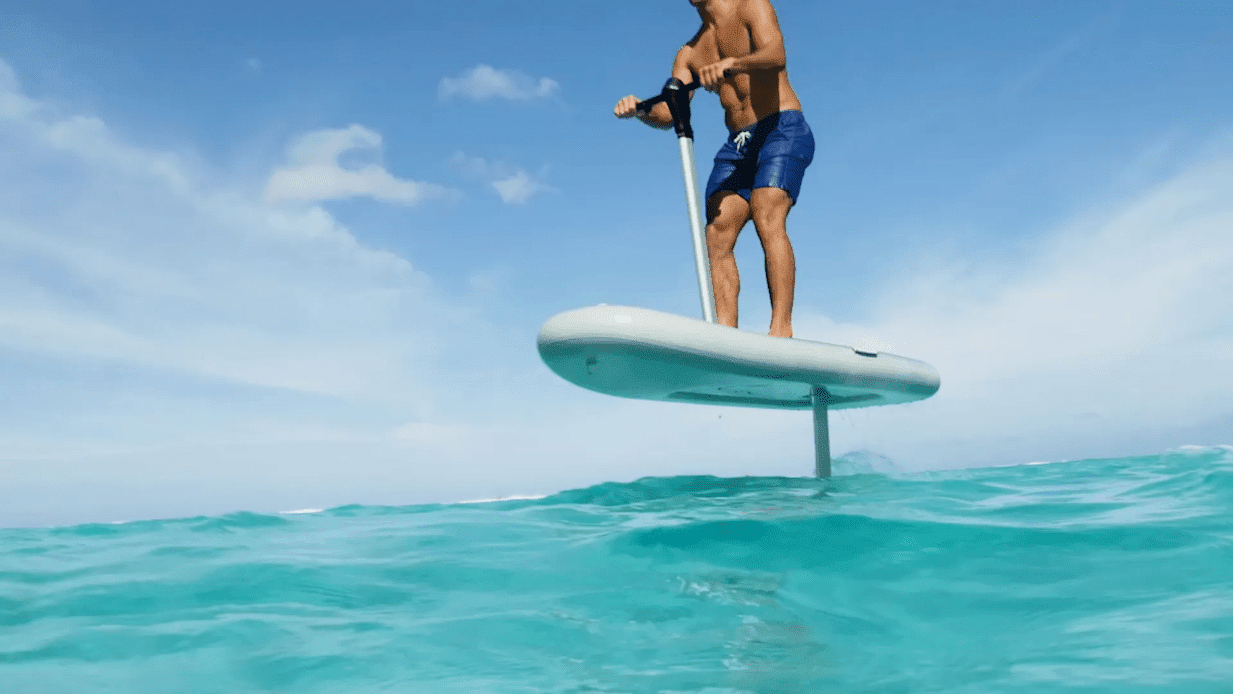
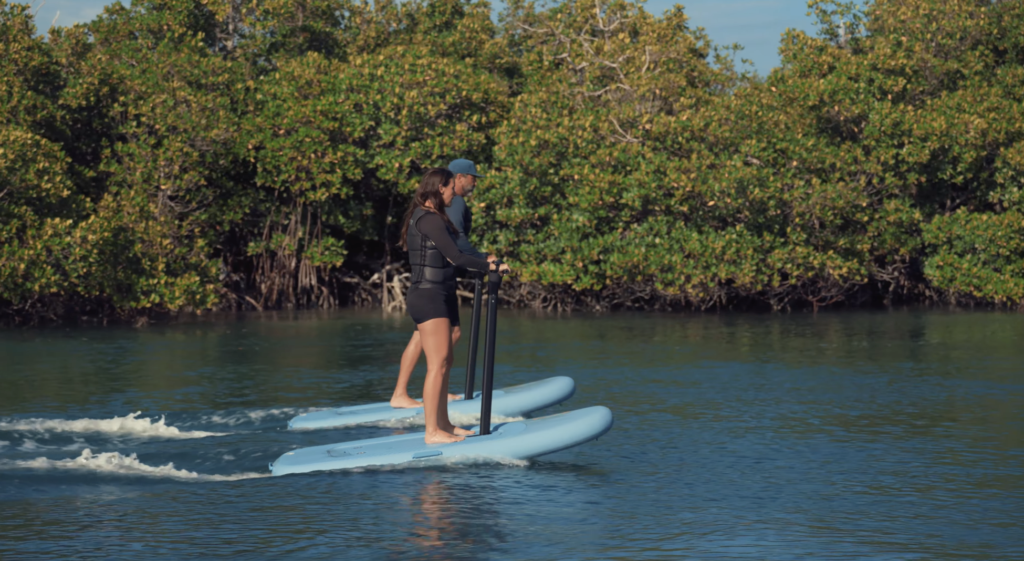
For someone approaching the upper board rating, the FliteScooter deserves a close look. Its handholds help you steady yourself while finding the relationship between throttle, body position, and lift. That support can be useful without guaranteeing a particular learning time.
The PRO may suit an experienced rider with the right setup, but its published maximum does not make it equally approachable for every rider below that number. Tell Hamish how often you plan to ride, whether anyone else will share the board, and what you want to do once you are comfortable.
If your riding weight is close to a maximum—or above it—confirm the exact configuration with Hamish and Fliteboard before buying. Do not treat a successful ride by someone else as an extension of the manufacturer’s rating.
It can, and the distinction between a maximum rating and a recommended weight matters here. Fliteboard’s official FAQ load-range table lists lower recommended weights for some setups even where the warranty ceiling is higher.
For the table’s Air/Fliteboard group, it lists 120 kg recommended with prop propulsion and 100 kg with Jet 2. The PRO/AIR PRO group is listed at 100 kg recommended with either propulsion type, with a 120 kg warranty ceiling. Match the table to the exact configuration you are considering.
That is why “the board is rated for my weight” does not settle the propulsion question. Compare how the setup gets moving and lifts with your chosen wing, rather than buying solely from a maximum-weight headline.
Jet 2 encloses the impeller. Prop propulsion offers a different takeoff feel and configuration choice. Hamish’s preference for prop setups in some heavier-rider situations is guidance to discuss for your case, rather than a rule that every rider above 200 lb must buy Prop C.
Check the generation when buying used. Fliteboard distinguishes the original Flite Jet from Jet 2 and lists a 100 kg warranty limit for the original Jet. A newer board’s published rating does not erase that older propulsion limit.
Read our Jet 2 and propulsion overview and the Jet 1 versus Jet 2 guide for the differences, then talk through the actual setup before ordering.
Riders over 200 lb can be eligible, but the board rating is not the lesson booking limit. Emerald Wake’s current lesson page lists participants as 14+ with a maximum weight of 245 lb. That policy is separate from the manufacturer’s published board ceilings.
If you are between 200 and 245 lb, contact Hamish to discuss your experience and the board available for your session. If you are above the booking limit, ask before making a reservation; do not assume a higher-rated board changes the lesson policy.
A coached session can help you assess confidence, control, and a suitable progression. Conditions and equipment availability determine the plan, so confirm the meeting location and setup when booking rather than relying on a generic promise about flat water or learning speed.
See current eFoil lesson options and requirements or contact Hamish with your weight, experience, and riding goals.
Rider weight, speed, wing choice, and how often the board touches down all affect power use. Choose a battery around the complete setup and the session you want to have. A maximum board rating cannot tell you how long you will ride between charges.
Explore is an option to discuss for a compatible hard board or FliteScooter when longer sessions matter. AIR ICON and AIR PRO do not accept Flitecell Explore, so a second compatible battery may be a better plan for extended shared sessions. Check the exact battery generation and fit before buying.
Our Nano, Sport, and Explore guide explains the battery trade-offs. Hamish can help you match that choice to the board and the way you will use it.
Fliteboard’s measurements sheet lists 120 kg, approximately 265 lb, for the FliteScooter entry. Check the exact model and propulsion configuration, and keep recommended riding weights and lesson eligibility separate from that maximum.
That is below its published 100 kg maximum, but the RACE is a performance board. Being below the ceiling does not establish that it is a suitable first board. Compare a more forgiving setup if you are still learning.
It can. Rider weight is one factor in the power needed for takeoff and sustained flight; speed, wings, conditions, and technique also matter. Choose a compatible battery and plan a reserve rather than expecting the advertised maximum runtime. AIR boards cannot take Explore.
A published maximum does not tell you whether a very light rider has the size, coordination, and control to ride a particular setup. Confirm age, equipment suitability, and local lesson requirements. Read our guide to kids and eFoiling for the broader considerations.
Tell Hamish your weight and the clothing and equipment you plan to wear, and confirm how the manufacturer’s rating applies to that setup. If you are close to a ceiling, use the kilogram specification and allow for your actual riding equipment rather than relying on a rounded pound figure or an assumed wetsuit weight.
Get a setup recommendation built around your weight, experience, and riding goals.
Talk through the board, propulsion, wing, and battery with Hamish before booking or buying.
Please fill out this form and someone from our team will contact you as soon as possible. You can also reach us by email at [email protected]
[email protected]
Phone: (850) 400-8500
Business hours:
Mon-Sat: 8am – 5pm
Sun: 9am – 4pm

© 2026 Emerald Wake LLC - All Rights Reserved
Privacy Policy | Accessibility | Terms of Use | Disclaimer