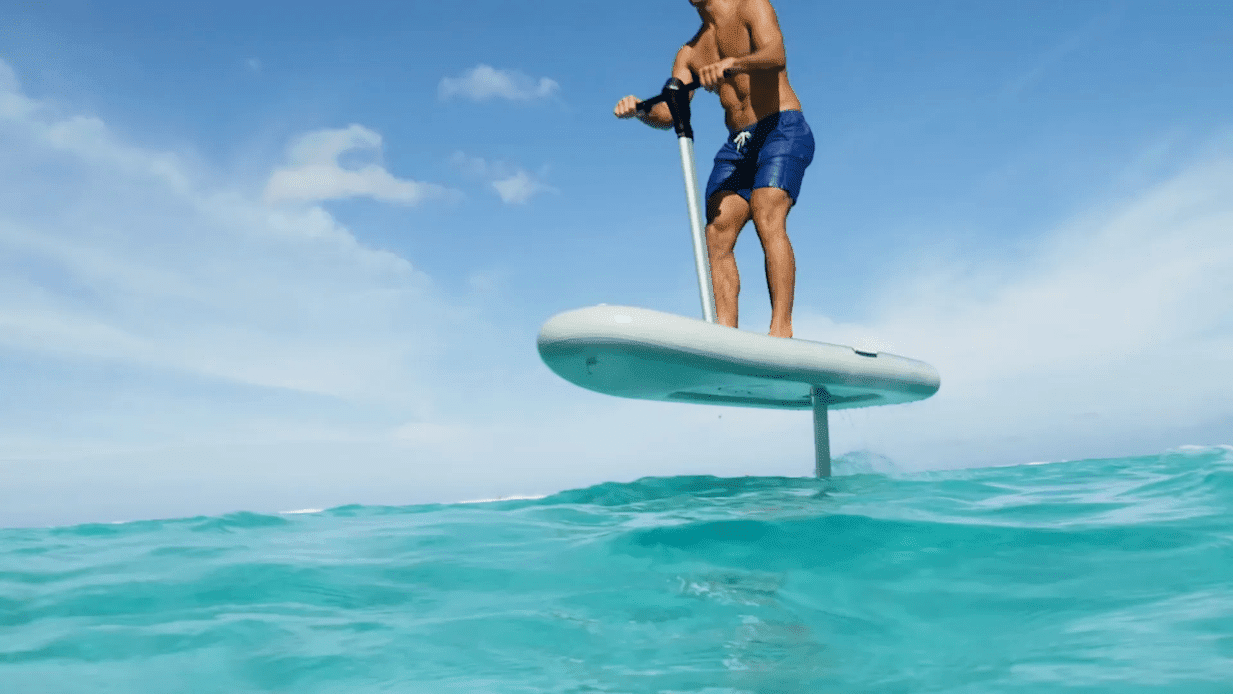
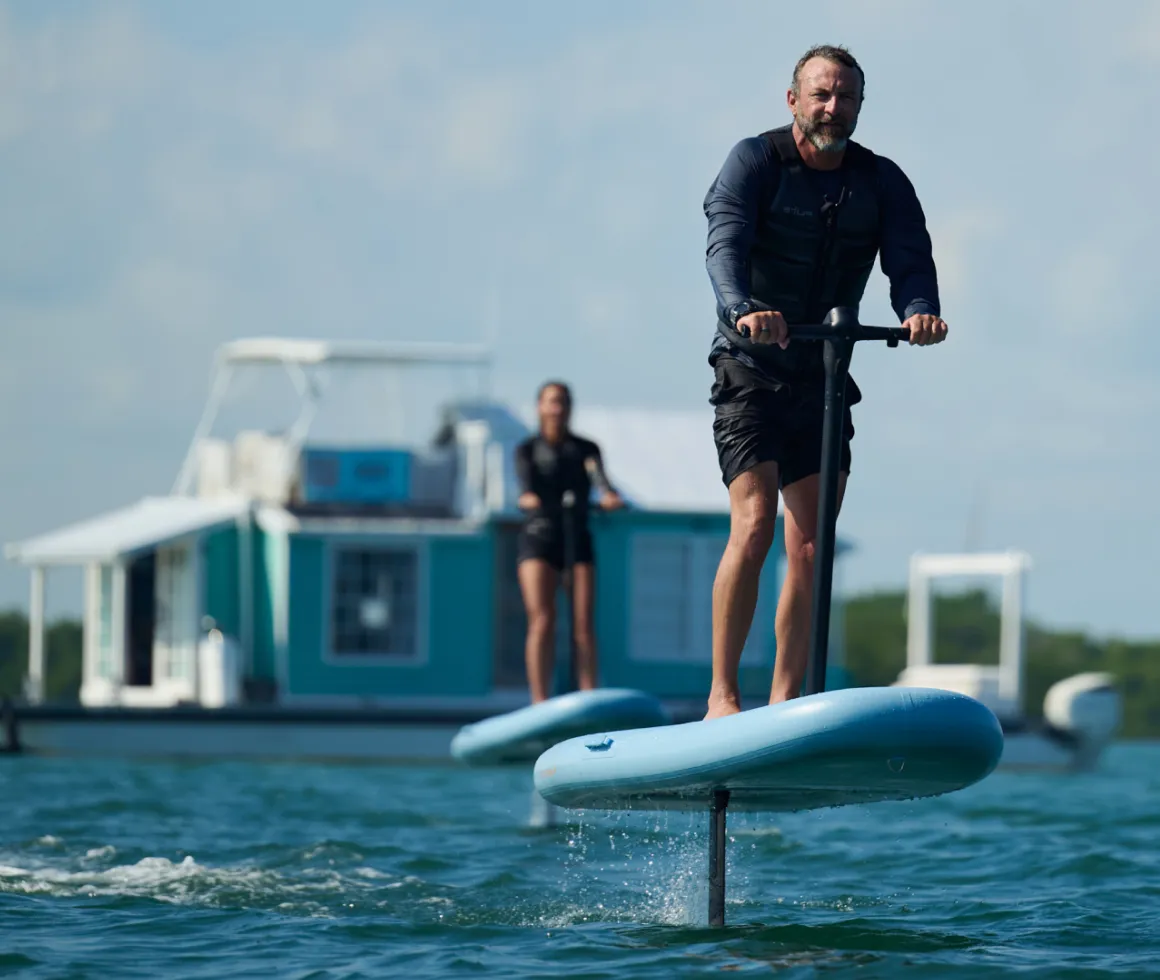
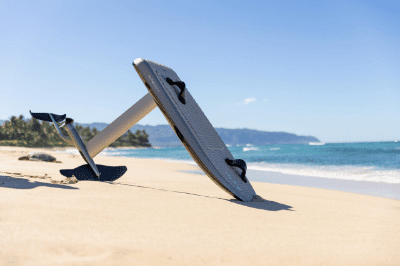
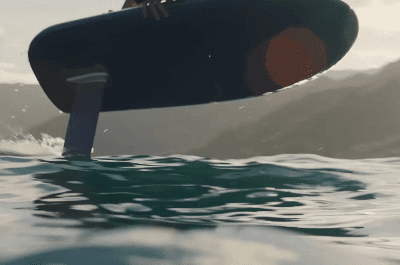
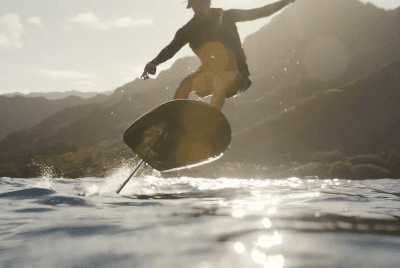
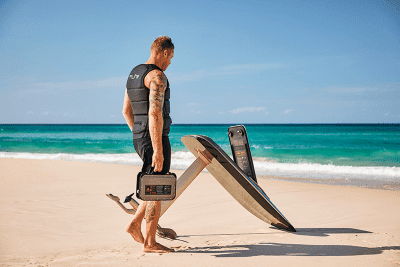
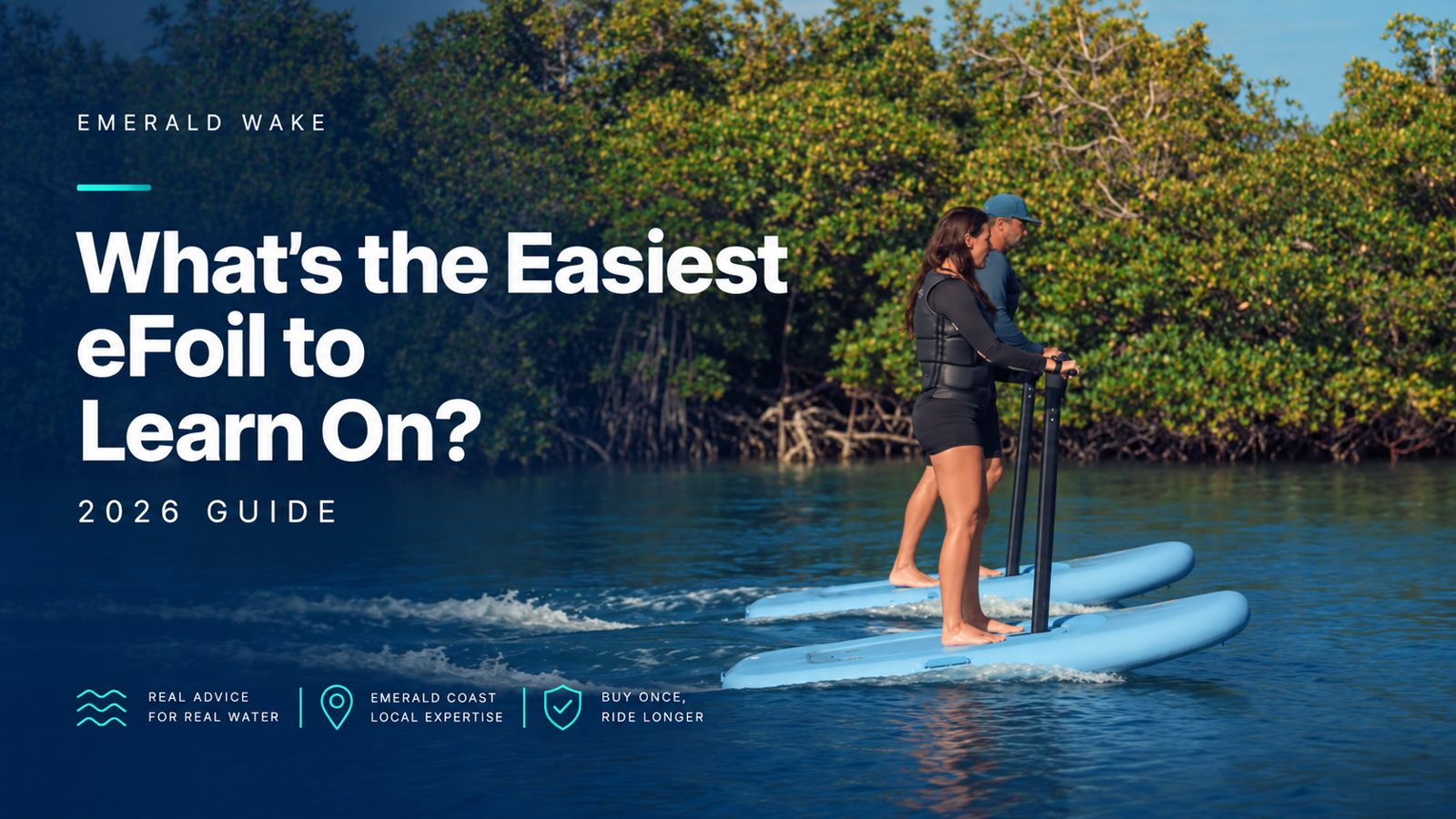
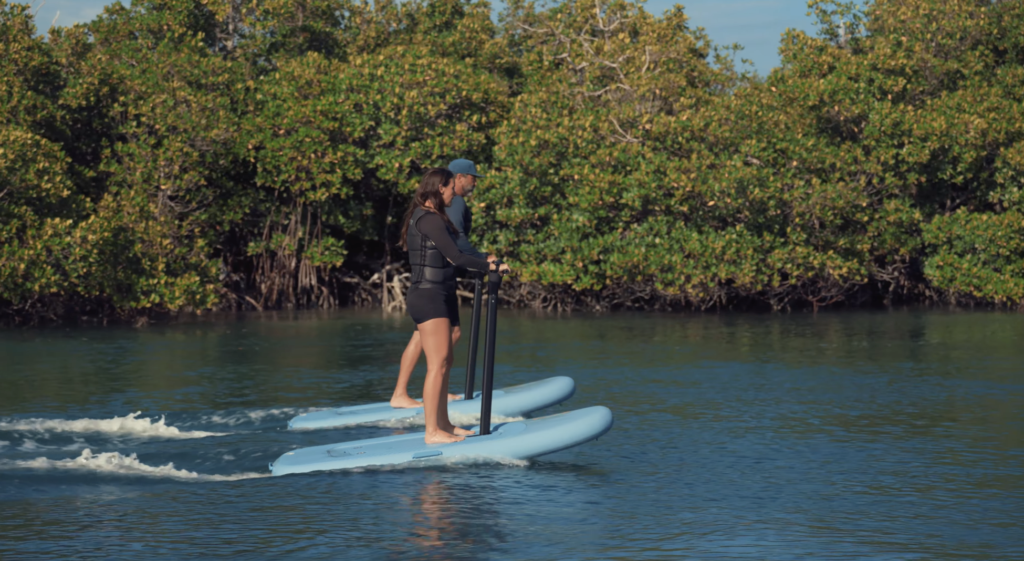
The FliteScooter is the easiest starting point in the Fliteboard lineup for most complete beginners. Its removable handlebars give you two handholds as well as your feet, and its 237-liter platform lets you stand before you start moving.
That answers the learning question. The buying question takes a little more thought. A board for a nervous first-timer, a family sharing one setup, and a confident rider planning to practice every week may be three different choices.
Quick answer: Start with stability, manageable power, a suitable beginner wing, and a forgiving deck. The FliteScooter adds handlebar support; the ICON Soft Top 2 is an option for riders who want a conventional board. Choose the complete setup around your weight, confidence, and riding plans.
What makes an eFoil easier to learn on?
The board matters, but it is only part of the setup. Five features make a difference when you are finding your balance:
Buoyancy and board shape. More volume can make climbing on and getting established easier. Around 100 liters is a useful reference for a conventional beginner board, rather than a universal minimum. Rider weight and confidence change the equation.
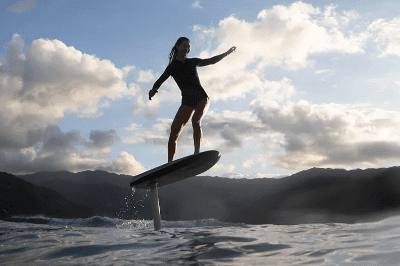
How you get to standing. A conventional eFoil usually involves progressing from lying or kneeling to standing while moving. A FliteScooter gives you handlebar support while you get comfortable upright.
A suitable wing. A beginner-oriented wing helps you find lift and control at a manageable pace. Match it to the rider and the compatible eFoil system.
Controllable propulsion. Predictable throttle response matters more than top speed. Jet propulsion encloses the impeller, but coaching and careful handling still matter around the mast and foil.
A forgiving deck. EVA foam adds grip and cushioning when climbing back on. It does not make falls or dock contact risk-free.
Why is the FliteScooter so easy to learn on?
The handlebars simplify the transition that many beginners find hardest: getting upright. Instead of balancing only through your feet, you have handholds while you learn how power, body position, and the foil work together.
The 237-liter inflatable board gives you a buoyant platform. The current FliteScooter configuration uses Flite Jet 2 and a beginner-oriented wing setup. You can build confidence with the board on the water before trying sustained flight above it.
Handlebar support gives first-time riders another way to steady themselves.
The handlebars are removable, so the board can also be ridden without them. That is an option for progression, but it is still a large board; removing the bars does not turn it into a compact performance model. Check the wing and system compatibility for the configuration you plan to ride.
Yes, especially when durability and sharing matter. Its inflatable outer construction is useful around boats and docks and gives a more forgiving surface than an exposed hard shell. It still needs careful handling, and learning on it still takes practice.
An inflatable and a hard board can feel different when they touch down between short flights. That is a reason to try both, rather than assuming the larger inflatable will always be easier—or ruling it out because a hard board feels more precise.
In his July conversation with Megan, Hamish described older Series 5 AIR boards as useful spare boards for friends and family learning to ride. That observation was about those older boards, not a test of every Series 6 configuration. The useful buying principle carries through: a shared board has to work for the people who will actually use it.
The AIR ICON is an option when a board will be shared with other learners.
Is the ICON Soft Top 2 a good board for beginners?
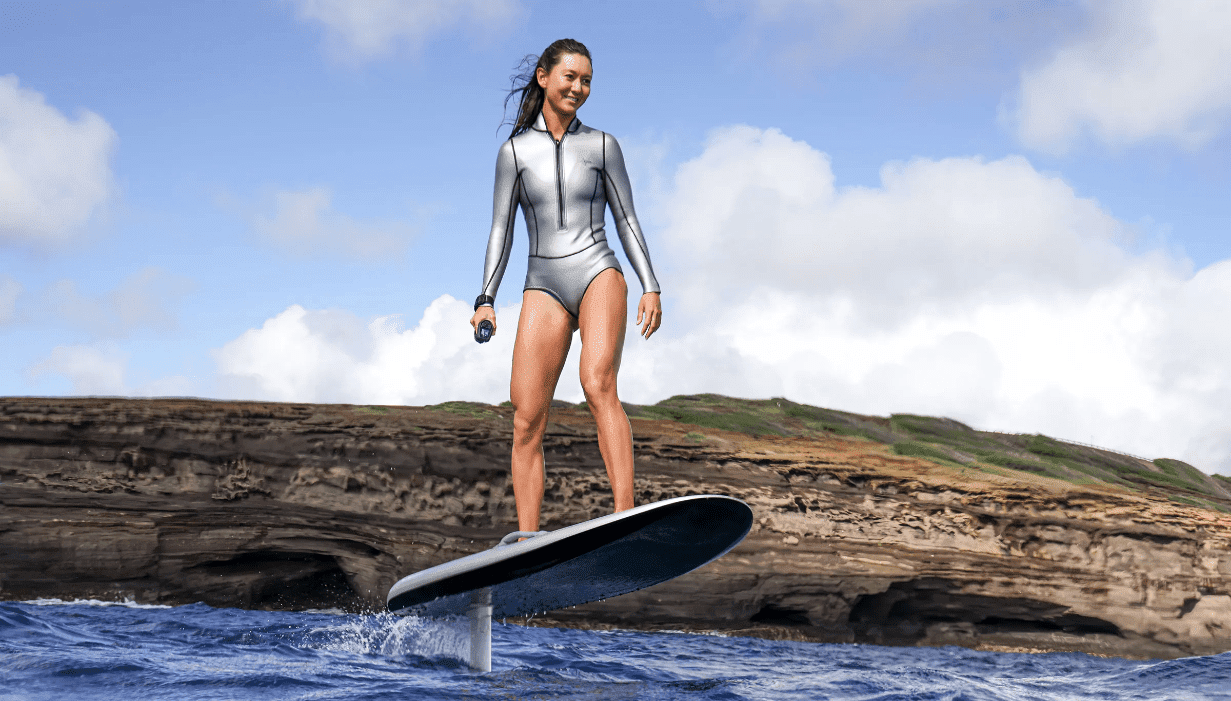
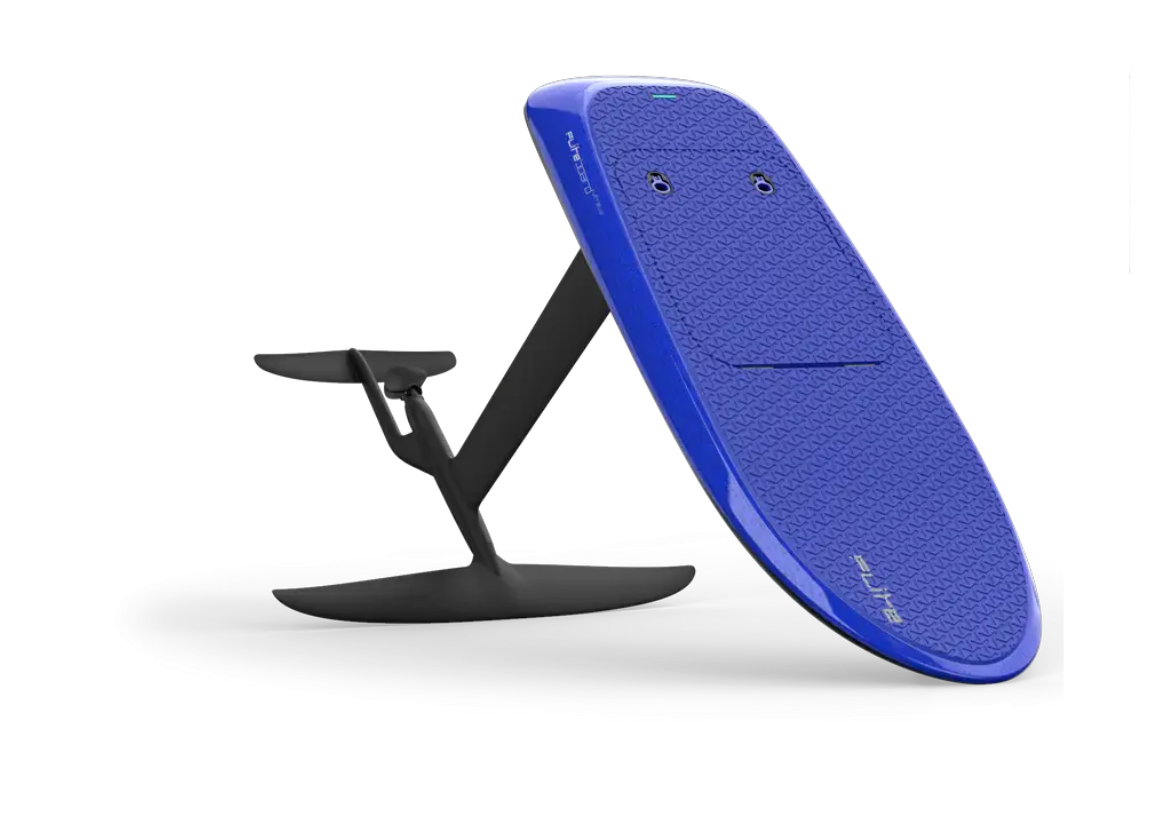
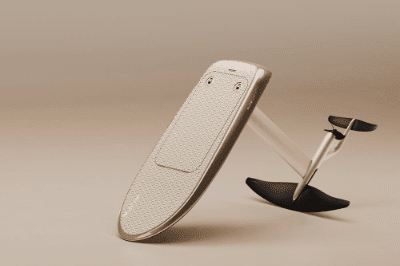
The 100-liter ICON Soft Top 2 is a useful option if you want to learn on a conventional board. Its fiberglass core, thermoformed outer construction, and EVA top surface combine a hard-board format with grip and cushioning on the deck.
It makes sense to compare it with the AIR when dock handling, cost, and a conventional riding feel are priorities. Neither construction is immune to damage. Carbon brings a different weight and stiffness trade-off; it is not a requirement for learning.
The ULTRA L3 and RACE are performance choices, rather than the natural starting point for a complete beginner. Their lower-volume platforms leave less room for uncertainty during the early learning stages. Fliteboard positions the ULTRA L3 for advanced riders and the RACE for intermediate to advanced riders.
The PRO also deserves a rider-specific conversation. Its smaller platform may suit someone with relevant boardsports experience and regular practice plans, but that does not make it the right first board for every new rider.
What should you actually buy if you are just starting out?
Buy for the riders and the use case, not just the quickest first lesson. Start with four questions: who will share it, what each rider weighs, how often you will ride, and what you want to do once you are comfortable.
A nervous first-timer: try the FliteScooter and see whether handlebar support makes the sport feel approachable.
A family sharing one board: compare the AIR ICON, ICON, and FliteScooter with the least confident rider in mind. Include battery rotation and handling in the decision.
A rider who wants a conventional board: try an ICON setup with a suitable beginner wing before deciding whether a smaller board is necessary.
A confident boardsports rider: the PRO may become an option as your balance develops. Test it instead of buying solely on the assumption that you will progress quickly.
A heavier rider: discuss the complete board, wing, battery, and propulsion combination. A volume figure alone cannot tell you how takeoff will feel.
Hamish made another useful point in his May conversation with Megan: progression can come from changing wings, without immediately replacing the board. A compatible wing change can alter stability, carving, speed, and the way the setup responds. If an ICON feels familiar after a season, a smaller board is one possible next step—not the only one.
A coached lesson is a useful first step before buying. It lets you find out how comfortable you feel getting upright, controlling power, and beginning to foil, with an instructor helping you assess the setup.
Emerald Wake offers both Fliteboard and FliteScooter lesson options. Ask which boards are available for your booking and whether trying a conventional board would suit your experience. We will help you plan a session around your starting point.
Handlebar support can help an eligible younger rider with balance, but it does not establish age or weight eligibility. Emerald Wake’s current lesson page lists participants as 14+ with a 245 lb maximum. Confirm eligibility when booking and read our guide to kids and eFoiling.
What is different about the current FliteScooter setup?
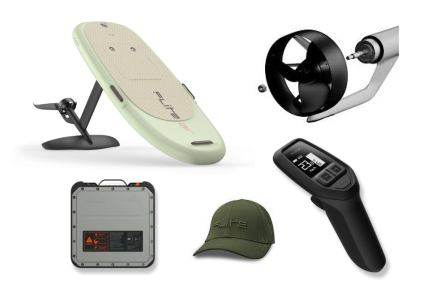
The current FliteScooter configuration features Flite Jet 2 and a 65 cm mast. The familiar concept remains: a buoyant inflatable board with removable handlebars. If you are comparing an older board, check its actual propulsion, mast, wing interface, and battery configuration.
How long does it take to learn eFoiling?
Some beginners get moving in minutes on a FliteScooter. Standing and cruising on the surface is different from sustained foiling, and learning time varies with the rider, coaching, setup, and conditions. Give yourself time to build control rather than chasing a fixed deadline.
Do I need watersports experience to take a lesson?
No. Complete beginners can learn with coaching. Previous boardsports experience may help with balance, but you still need to learn throttle control and how the foil responds. Read what to expect without prior watersports experience.
Can I try different boards before buying?
Ask about the boards available for your lesson or demo and whether a comparison fits your experience and session plan. Trying a setup helps you judge comfort, handling, and how you want to progress before committing to a purchase.
Tell Hamish who will ride, their experience, and what you want to do on the water. We will help you compare a lesson, a beginner setup, and the options that make sense as you progress.