Flite AIR vs AIR PRO 2026 | Which Inflatable eFoil Should You Buy?
By Ryan Goloversic posted on April 8, 2026
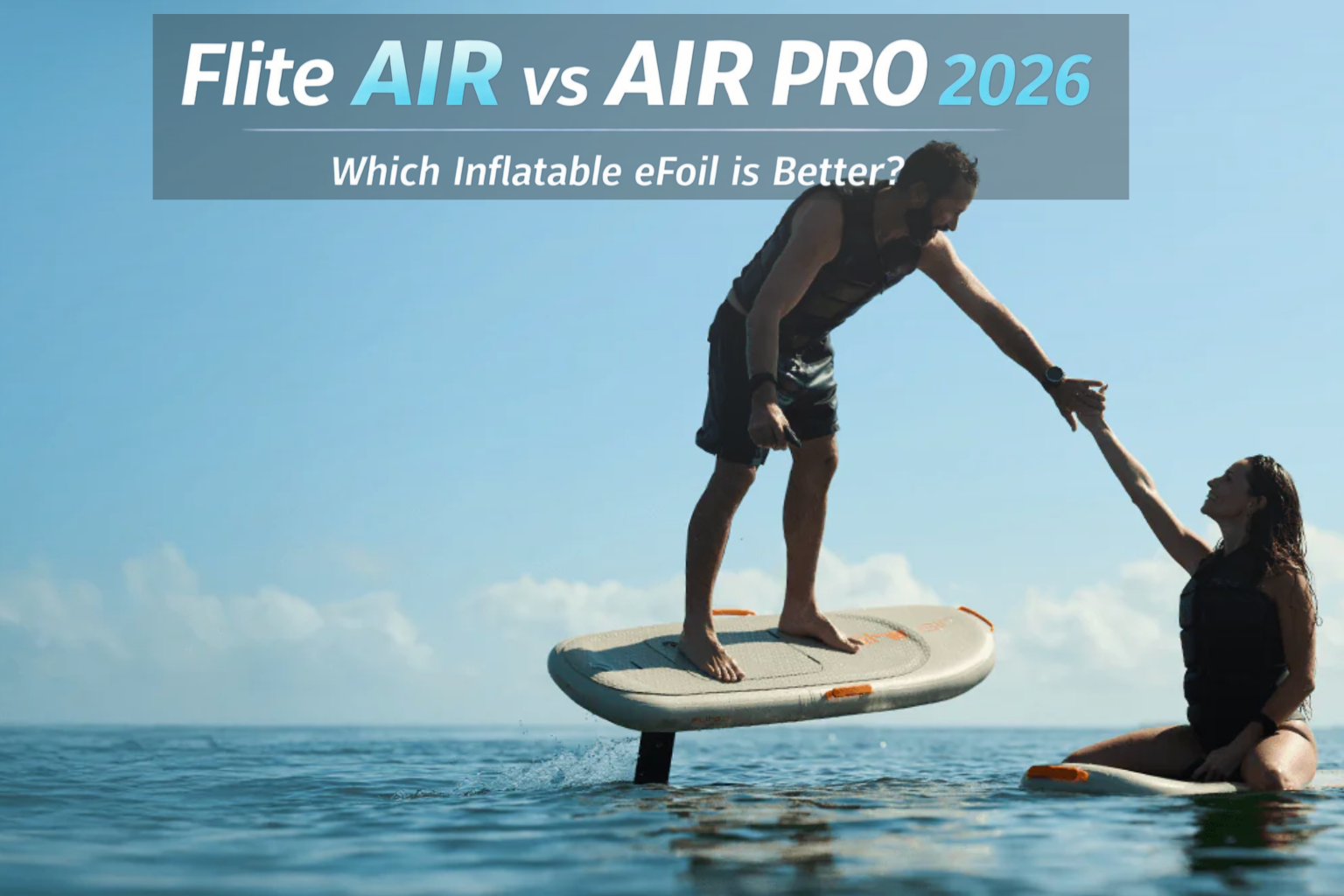
If you are looking at inflatable eFoils in 2026, the decision usually comes down to two boards: the Flite AIR 110L and the Flite AIR PRO 80L.
Both belong to Fliteboard’s AIR family, the part of the lineup designed to make eFoiling more approachable, more durable, and significantly more affordable than carbon models. For many riders, this is where the journey starts. With prices beginning around $6,995, the AIR boards represent the most accessible entry into the Fliteboard ecosystem without sacrificing real ride performance.
What makes the choice interesting is that these two boards are built for very different riding styles.
The 110L AIR focuses on stability and confidence, especially during early sessions when riders are still figuring out stance, throttle control, and takeoff timing. The AIR PRO 80L shifts toward agility and responsiveness, making it more attractive for lighter riders or anyone with previous boardsport experience.
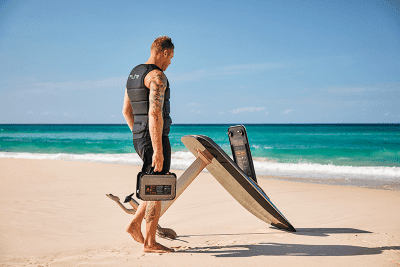
Around the Emerald Coast, we often see both boards used in dock and boat-launch environments where durability matters as much as performance. Inflatable construction makes these boards particularly forgiving in those situations.
⤷ If you want a full overview of how the AIR boards fit into the broader lineup, the Fliteboard 2026 Buyer’s Guideexplains how riders typically progress through the different board families.
In this guide, we will break down exactly how the AIR 110L and AIR PRO differ, how the inflatable construction actually behaves on the water, and which one makes the most sense for your riding style.
What Is the Difference Between the Flite AIR 110L and the AIR PRO 80L?
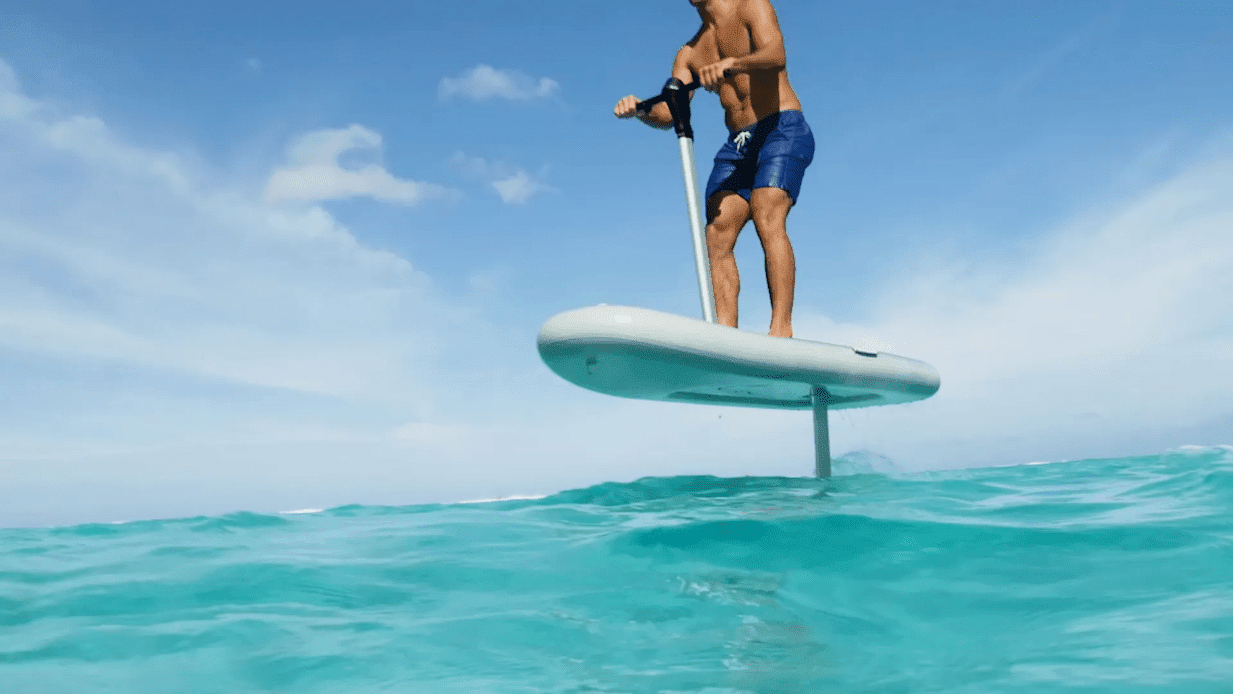
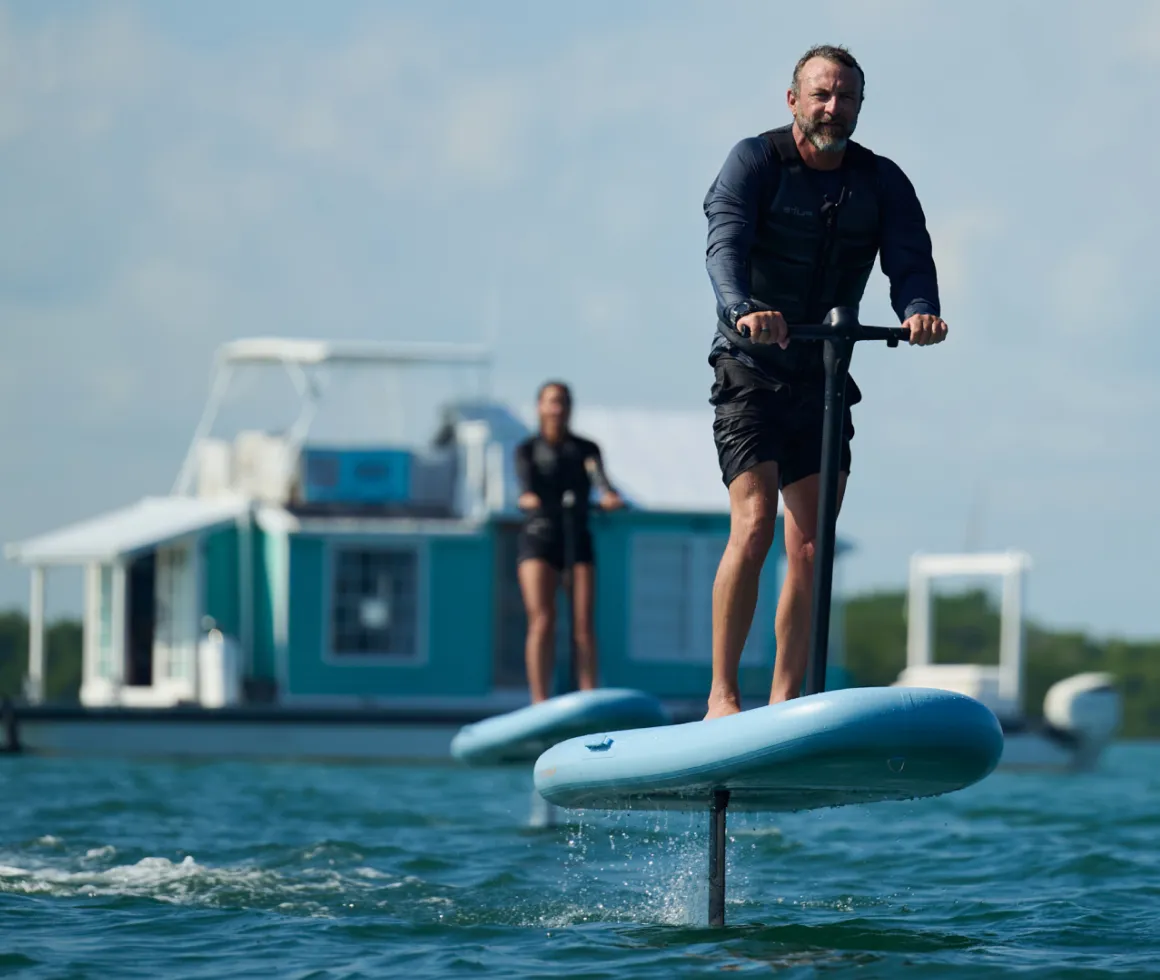
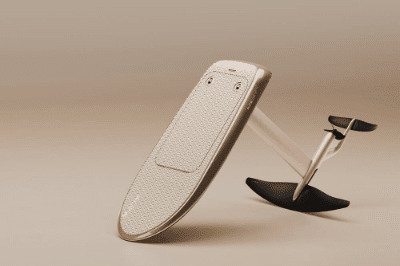
At first glance, the Flite AIR 110L and the AIR PRO 80L look similar. Both are inflatable eFoil boards built around the same hybrid concept, a rigid central platform surrounded by a reinforced inflatable shell designed to absorb impacts and simplify ownership.
In practice, however, they deliver two very different riding experiences.
The AIR 110L is built around one priority: maximum stability during learning. With 110 liters of volume and a longer 5'8" shape, the board provides enough buoyancy for most riders to stand comfortably on the water before engaging the foil. This makes the early stages of riding calmer. Riders have time to organize their stance, adjust their feet, and ease into throttle instead of rushing into takeoff.
The AIR PRO reduces that volume to 80 liters and shortens the board to 5'2". The result is a noticeably more agile board once flying. With less swing weight and less buoyant surface area, the board responds more quickly to weight shifts and carving inputs. Turns initiate faster and transitions feel more reactive underfoot.
These specifications reflect the two intended use cases. The AIR 110L is designed for beginners, shared boards, and heavier riders who benefit from extra flotation. The AIR PRO targets intermediate riders or lighter riders who want a more playful and responsive ride feel once they are comfortable getting onto foil.
At Emerald Wake we often see new riders start on the 110L because it removes pressure during those first sessions. Once takeoffs feel automatic and riders begin carving intentionally, many start looking at smaller boards like the AIR PRO for a livelier feel.
Why Inflatable eFoils Feel Different From Hard Boards
One of the most common questions riders ask is whether inflatable eFoils feel noticeably different from rigid boards once they are on the water.
The short answer is yes, but not in the way many people expect.
Modern inflatable eFoils like the Flite AIR series are built using a hybrid construction with a rigid foam core in the center of the board. This rigid platform supports the battery and mast connection, which is where structural stiffness matters most. Around that core sits a reinforced high pressure inflatable shell that provides durability and impact protection.
Because of this design, the board remains structurally solid where the foil attaches. Control inputs from the rider still transfer directly into the foil system. The inflatable material primarily affects what happens when the board interacts with the water surface.
This shows up most clearly during takeoff and touchdowns.
Compared with rigid carbon boards, inflatable shells create slightly more surface drag before the board lifts onto foil. Riders may notice the board holding the water for a brief moment before releasing into flight. Once the foil is engaged and the board is flying above the surface, however, the ride feel becomes very similar because the board is no longer interacting with the water directly.
The tradeoff is intentional.
Inflatable boards sacrifice a small amount of pre takeoff efficiency in exchange for significantly greater durability and easier ownership. When boards are used around docks, boats, and shared environments, that durability often matters more than small performance differences during the first seconds of a ride.
For many riders, especially beginners or families sharing a board, that tradeoff makes the AIR series a practical starting point.
How the Rigid Foam Core Changes Inflatable eFoil Performance
Early inflatable boards in many watersports had a reputation for feeling soft or unstable. That perception comes mostly from older designs where the entire structure relied on air pressure alone.
Modern eFoil inflatables work differently.
The Flite AIR series uses a rigid foam core that carries the structural load of the board, especially around the battery box and mast connection. This central platform provides the stiffness required for precise foil control while the inflatable outer shell focuses on durability and impact resistance.
This hybrid structure is what allows the AIR boards to behave like proper foil platforms rather than flexible inflatables.
When a rider shifts weight forward or back, that input transfers through the rigid core into the mast and foil assembly. Because of this, the board still delivers predictable pitch control and stable foil feedback while riding. The inflatable shell does not absorb those control inputs the way a fully inflatable structure might.
Where the inflatable layer matters most is durability.
The reinforced shell acts like a protective bumper around the board. When boards are launched from docks, bumped against swim platforms, or handled by multiple riders, the material absorbs impacts that could chip or crack traditional hard boards. In real ownership scenarios this translates into lower stress around docks, boats, and shared use environments.
This is one reason many riders who eventually upgrade to smaller rigid boards still keep an AIR board. It becomes the board that friends, family members, or first time riders can use without worrying about damaging expensive carbon equipment.
Why the Flite AIR Range Starts Around $6,995
One of the biggest reasons riders look at the Flite AIR boards first is simple: price accessibility.
Most rigid carbon eFoil boards sit significantly higher in the price range because of the materials and manufacturing involved. Carbon fiber construction is lightweight and extremely stiff, but it is also expensive to produce and easier to damage in real world environments.
The AIR series was designed to solve that problem.
By using a hybrid construction with a rigid internal structure and an inflatable outer shell, Fliteboard created boards that are substantially more durable and less expensive to manufacture than traditional hard boards. The result is a starting price around $6,995, which makes the AIR boards the most attainable entry into the Fliteboard ecosystem.
Lower price does not mean they are disposable boards.
Instead, the AIR models prioritize durability and everydayusability. Inflatable rails absorb impacts that would normally chip a fiberglass or carbon board, which makes them especially appealing for environments where boards are launched from docks or boats. Many owners appreciate the fact that they can focus on riding instead of constantly worrying about cosmetic damage.
For new riders, families sharing a board, or anyone entering eFoiling for the first time, that combination of lower entry cost, impact resistance, and beginner friendly stability is what makes the AIR range such a common starting point.
Is the 2026 Sabbia Color the Only Option for the AIR Inflatable Range?
For the 2026 Series 6 lineup, the Flite AIR inflatable boards are offered in a single color option called Sabbia.
This change was intentional. Instead of offering multiple cosmetic variations, Fliteboard simplified the AIR range to focus on clarity within the lineup. Riders now see a consistent visual identity across the inflatable models, which helps distinguish them quickly from the rigid board families.
The Sabbia colorway uses a neutral sand toned palette designed to match the practical nature of these boards. The AIR series is primarily about durability, transport convenience, and accessibility, so the emphasis remains on function rather than customization.
In other words, the visual design reinforces the product’s role in the lineup: a practical entry point into eFoiling, a durable board for shared use, and a straightforward ownership experience without unnecessary complexity.
For riders focused on performance materials, weight savings, or multiple color choices, those options appear in the rigid ICON, PRO, and ULTRA board families.
Can I Use the Explore Battery With the Flite AIR Boards?
No. The Flite AIR inflatable boards are not compatible with the Flitecell Explore battery.
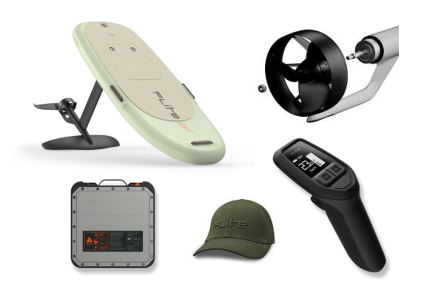
The reason comes down to physical design. The AIR boards use a battery compartment sized for the Nano and Sport batteries, which are lighter and more compact. The larger Explore battery simply does not fit within the battery box used in the inflatable construction.
In practice, this limitation usually aligns well with how the AIR boards are intended to be used.
Most riders pairing batteries with the AIR 110L or AIR PRO choose either the Nano or Sport because lighter batteries improve board handling and reduce total system weight. This is especially helpful on smaller boards like the AIR PRO, where lower weight makes the board feel more responsive during carving and transitions.
There is also a practical benefit. Smaller batteries make the board easier to carry, easier to launch from docks or boats, and simpler to transport between sessions.
For riders prioritizing maximum runtime with the Explore battery, the better match typically becomes a rigid board platform such as the ICON, where the larger battery fits comfortably and supports longer cruising sessions.
Which Riders Should Choose the Flite AIR 110L?
The Flite AIR 110L exists for one clear purpose: making the first stages of eFoiling easier and less intimidating.
With 110 liters of volume and a longer 5'8" platform, the board provides enough buoyancy for most riders to stand comfortably on the surface before applying throttle. That extra flotation gives riders time to organize their stance, adjust foot placement, and settle their balance before the board begins accelerating toward takeoff.
For beginners, that margin matters.
Early sessions usually involve small hesitations. Riders pause, shift their feet, or adjust their stance while figuring out throttle control. A larger board like the AIR 110L remains stable during those moments, which makes the learning process calmer and more predictable.
Because of that stability, the AIR 110L is typically the best fit for first-time riders, families sharing a board, and heavier riders who benefit from additional buoyancy. Riders over roughly 90 to 100 kg often find the larger platform more forgiving during the first few sessions.
At Emerald Wake, we often see the 110L used as a guest board or teaching platform for exactly this reason. It allows new riders to focus on understanding foil lift and throttle control rather than constantly managing balance.
Once riders begin carving intentionally and feel comfortable getting onto foil consistently, some start looking toward smaller boards. But for early sessions and shared ownership scenarios, the extra stability and confidence of the AIR 110L make it one of the easiest entry points into eFoiling.
If you are also considering handlebars or a hard board, compare the options in our guide to the easiest eFoil to learn on.
Choosing between the AIR 110L and AIR PRO usually raises a few practical questions. Below are the ones riders ask most often when comparing these two inflatable eFoils.
Frequently Asked Questions About Flite AIR vs AIR PRO
Is the AIR PRO harder to ride than the AIR 110L?
Not necessarily harder, but it is less forgiving during takeoff. The smaller volume means the board sits deeper in the water before lift, so riders need slightly cleaner throttle timing and weight distribution. Once on foil, however, many riders actually find the AIR PRO easier to maneuver because of its quicker response.
Are inflatable eFoils slower than rigid boards?
Once the board is flying, performance differences are minimal. The main difference appears before takeoff, where inflatable shells can create slightly more drag as the board releases from the water surface. After lift, the foil system does most of the work and ride characteristics become very similar.
Which AIR board works better for heavier riders?
In most cases, the AIR 110L is the better option for heavier riders. The extra volume provides more buoyancy and stability during takeoff. Riders over roughly 90 to 100 kg typically find the larger board easier to manage while learning.
Can beginners start on the AIR PRO?
Yes, especially if they already have strong boardsport experience. Surfers, wakeboarders, or kiteboarders sometimes prefer the smaller board because it feels more agile. True beginners, however, usually progress faster with the additional stability of the AIR 110L.
Are inflatable boards durable enough for long-term use?
Yes. In fact, one of the main advantages of the AIR series is impact durability around docks and boats. The reinforced inflatable shell absorbs bumps that could chip or crack traditional hard boards, which is why many owners keep an AIR board even after upgrading to smaller performance models.
Final Takeaway: Which Inflatable Fliteboard Makes Sense for You?
Choosing between the Flite AIR 110L and the AIR PRO 80L ultimately comes down to how you expect your riding to feel during the first months on the water.
If your priority is stability, confidence during takeoff, and a board that multiple riders can share easily, the AIR 110L is usually the safest starting point. The additional volume provides more margin during early sessions and makes the learning process calmer for beginners and heavier riders.
If you already have boardsport experience or know that you prefer a more reactive board, the AIR PRO delivers a more agile ride once flying. The smaller platform responds faster to weight shifts and carving inputs, which many intermediate riders appreciate as their skills improve.
Both boards share the same inflatable durability and hybrid construction, which means they are built to handle real world use around docks, boats, and shared environments. The decision is less about which board is better and more about which riding style you want to start with.
Not sure which option fits your weight, experience level, or local riding conditions?
A short conversation can often clarify the decision quickly.
Call or email Hamish for a straightforward recommendation based on how and where you ride.