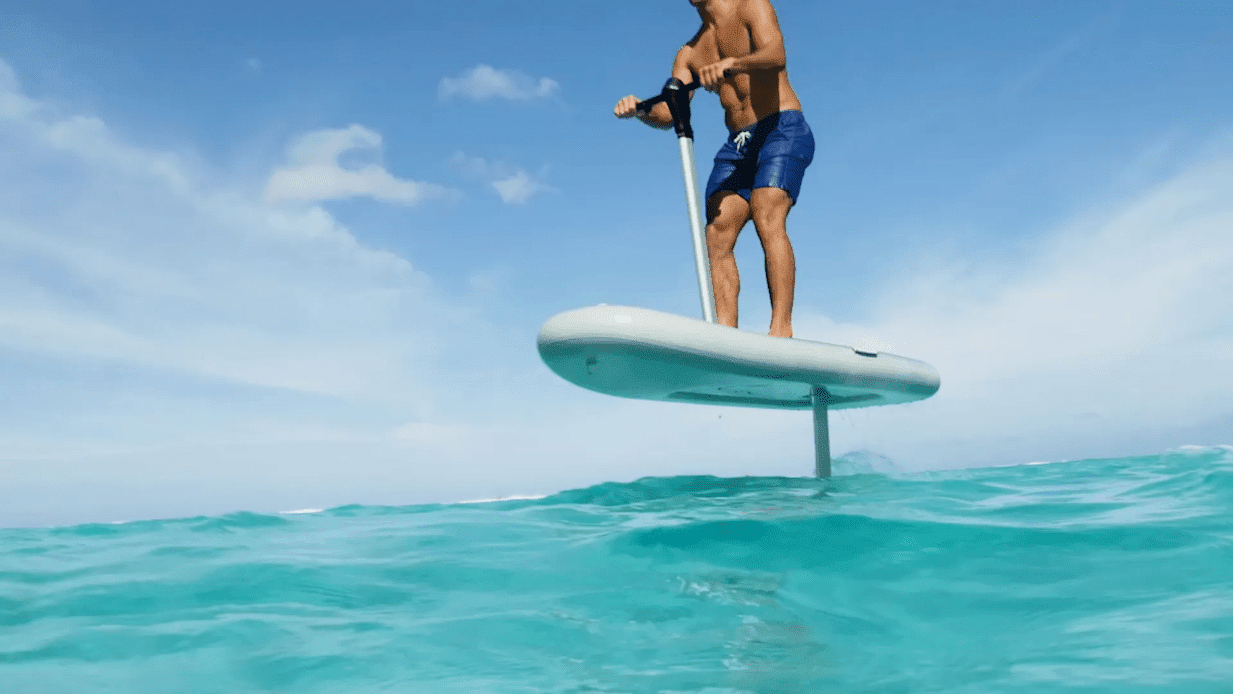

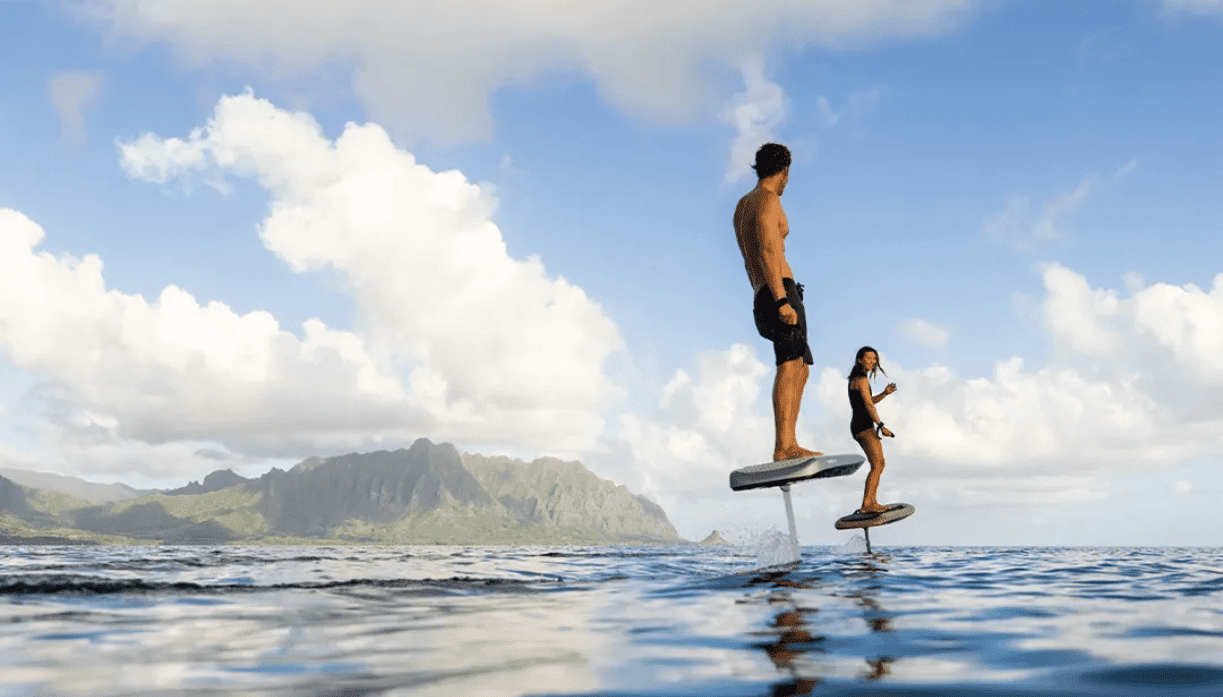
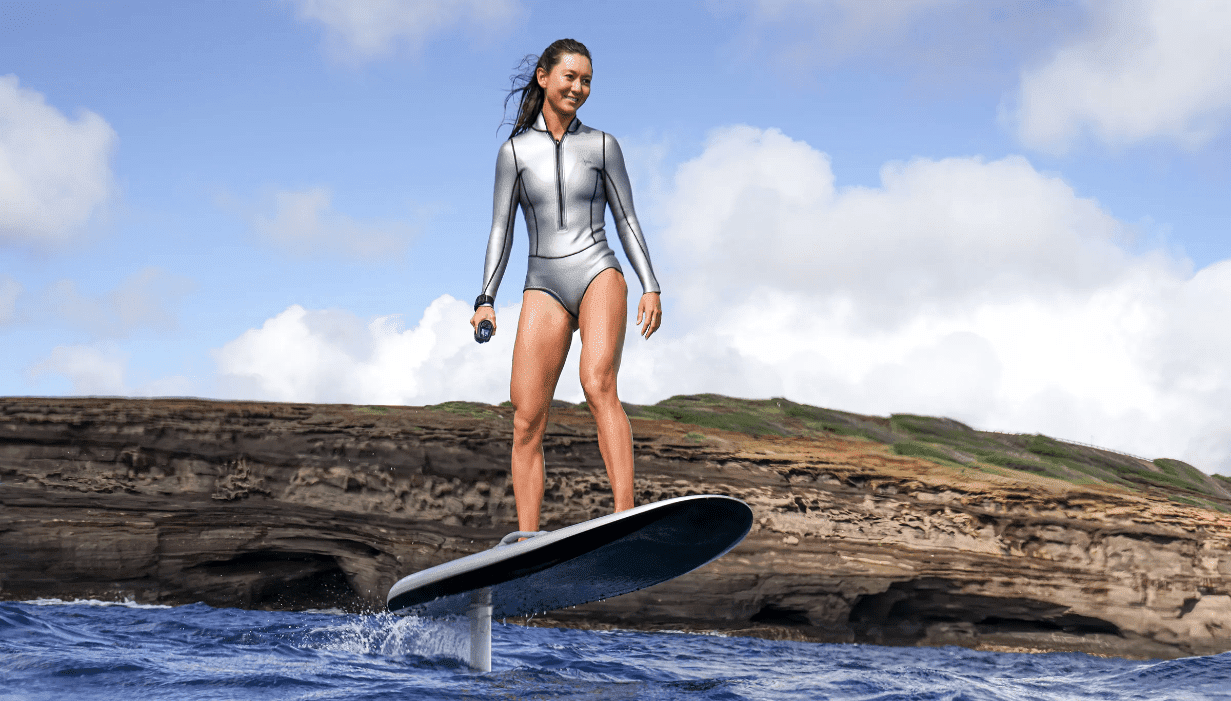

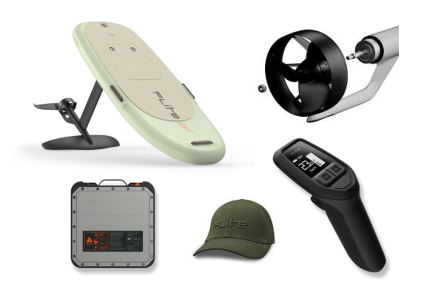
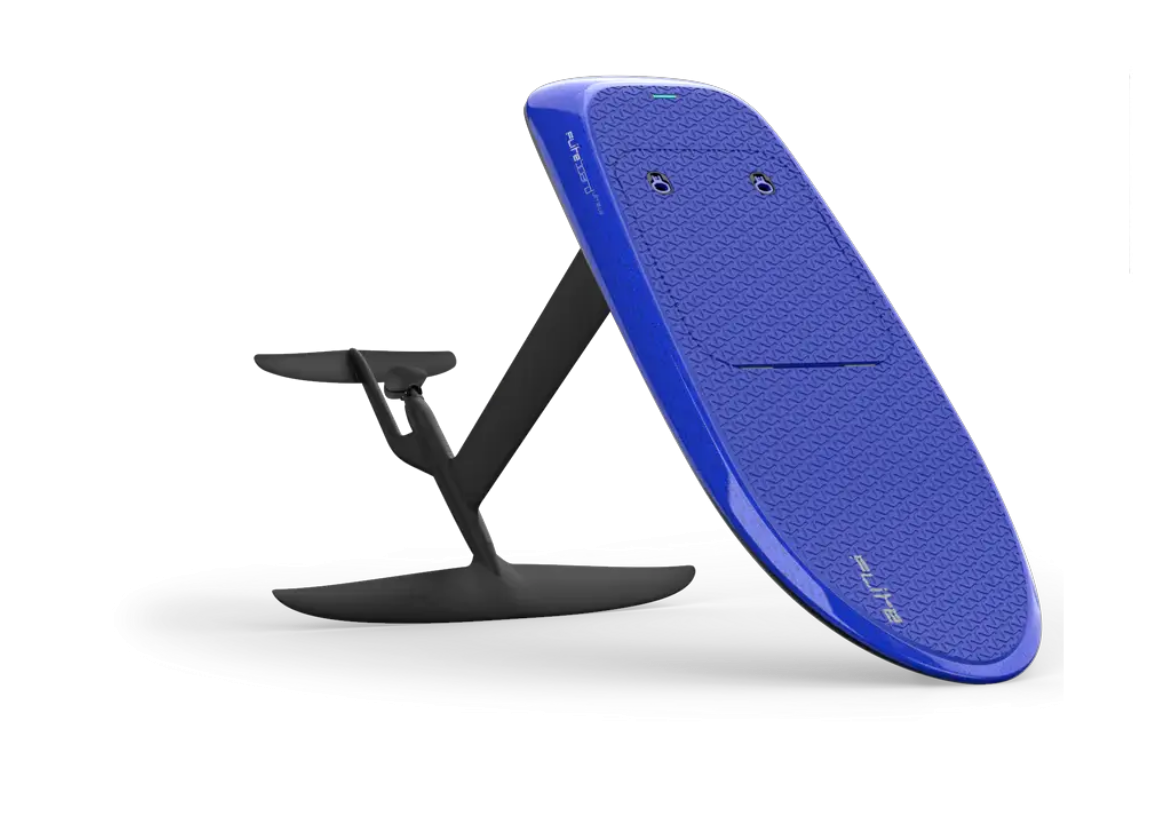

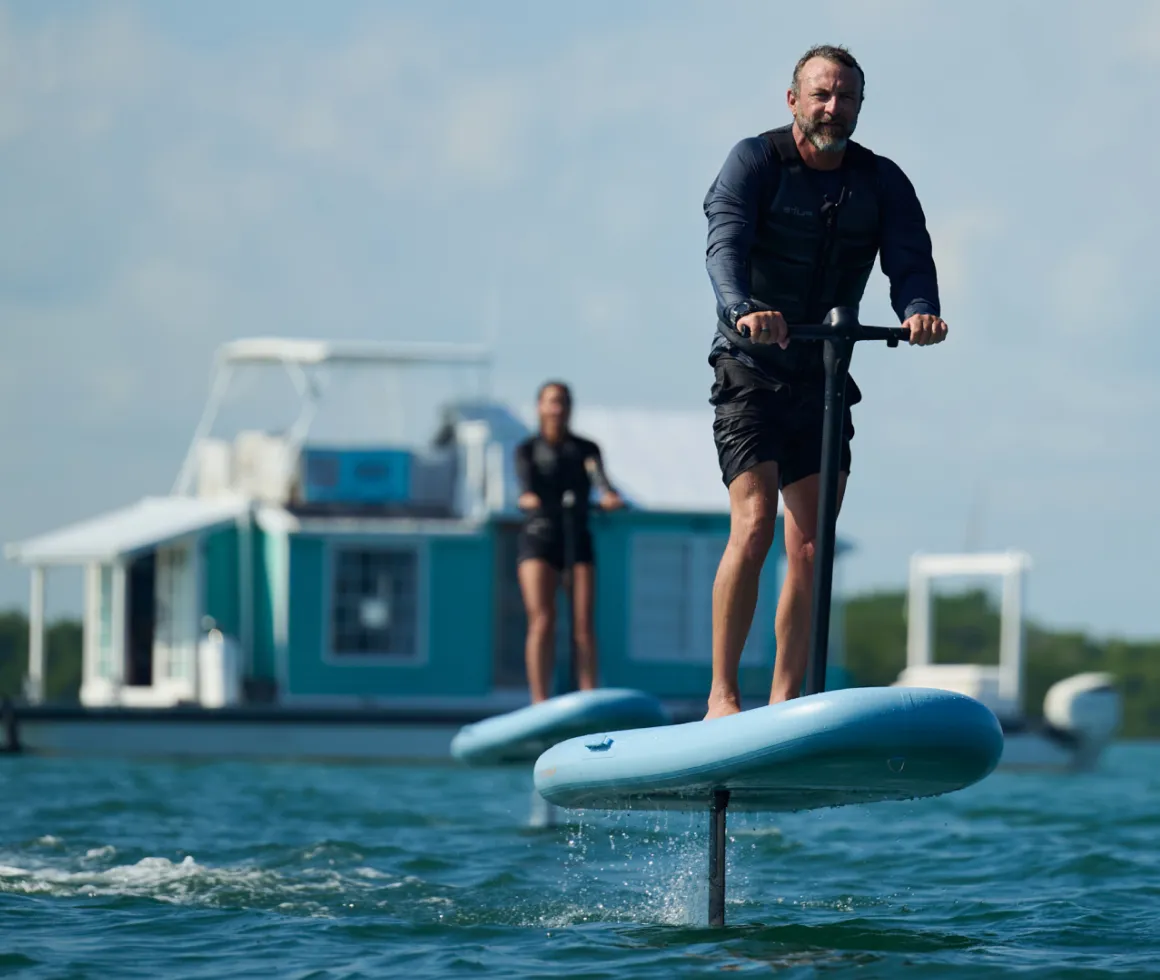
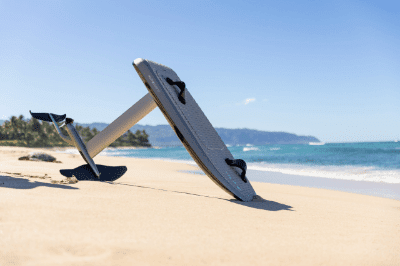
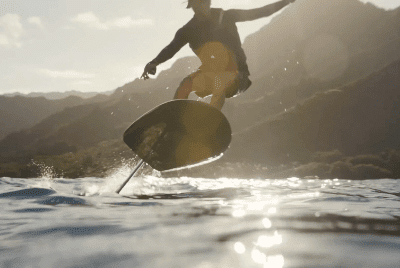
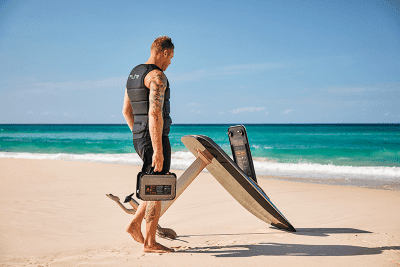
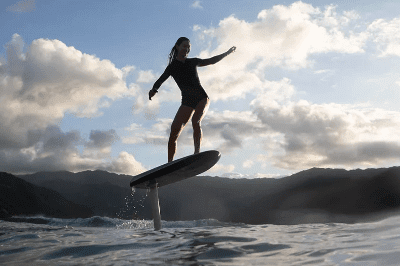
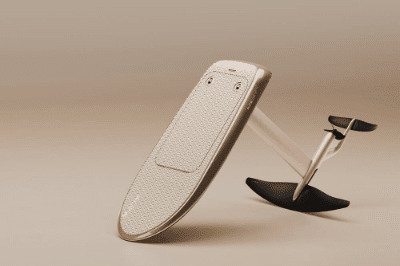
The standard is the 80cm (31.5 inch) aero-grade aluminium mast, available as Jet C with the Flite Jet 2 or as Prop C with a propeller. The carbon Marc Newson masts are 82cm (32 inch), and the FliteScooter uses a shorter 65cm mast.

Updated
For most riders, the mast to buy is the 80cm aluminium eFoil in its Flite Jet 2 form. It's the current all-rounder, it carves cleanly, and it pairs with the whole conical wing range. The 82cm Marc Newson carbon masts are a real upgrade for riders who want less weight and drag but not a requirement for a good ride.
The reason this question matters is that a mast is not just a pole. Its length, its material, and the propulsion it's built around all change how the board feels under your feet, and on a Fliteboard those choices are made together as one eFoil system, not bought piece by piece.
This guide covers the mast decision only: the real 2026 options, how length and material change the ride, how propulsion locks in your choice, and which mast suits the water we actually ride here on the Emerald Coast. Wings, shims, and the jet-versus-prop debate each have their own guide, and we'll point you to them where they matter.
The old "pick 60, 75, or 80 centimeters" menu is out of date. In the 2026 Series 6 lineup, the mast choice is simpler than it used to be, and length is no longer the main lever.
Here's what you actually choose between:
Every one of these uses the conical (C) interface, so wing compatibility is consistent across them. If you're still choosing a board and want the whole picture, start with our Fliteboard 2026 buyer's guide and come back here for the mast call.
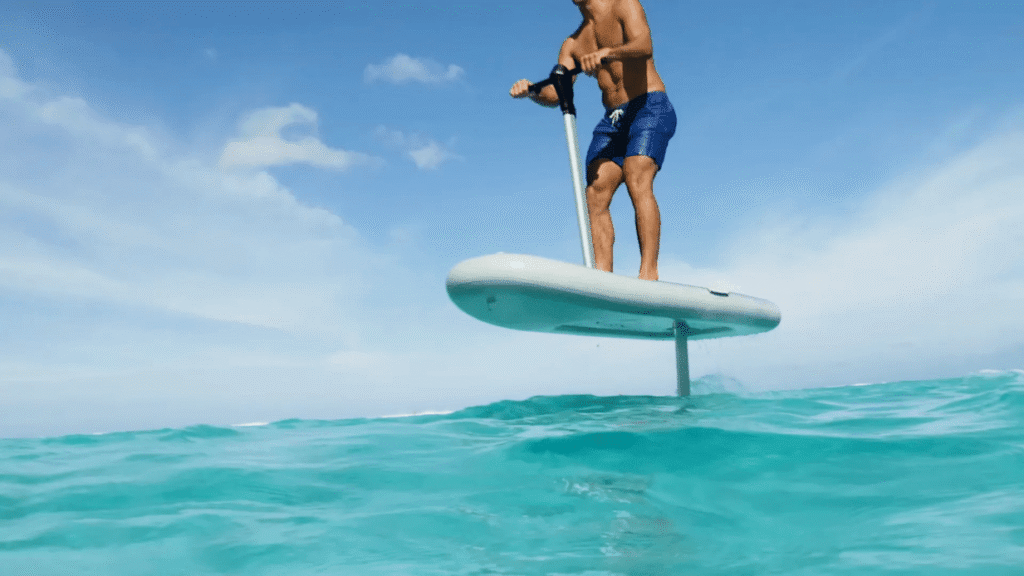
Mast length sets how much room you have above and below the water, and that changes almost everything about the feel.
A taller mast, like the 80cm or 82cm, keeps the board higher off the surface once you're up. That gives you more clearance to stay flying through chop and small waves, and more room to lean into a carve before the board touches down. The trade-off is that the extra height gives you more to correct. The same reach that lets you lean also means small mistakes translate into bigger movements, so a taller mast asks for cleaner input.
A shorter mast, like the 65cm on the Flitescooter, sits you closer to the water. That makes the ride more stable and forgiving, the falls shorter, and the whole experience calmer, which is exactly why it's the platform we start new riders on. If you're weighing that end of the range, our guide to the easiest eFoil to learn on covers why lower and slower keeps people riding longer.
For most owners past the beginner stage, though, length is basically settled at 80cm or 82cm. The decision that's left is material and propulsion.
This is the real fork in the road for most buyers.
Aluminium is the aero-grade, single-block mast at 80cm. It's durable, corrosion-resistant in saltwater, and it delivers a stiff, confident ride with deep, clean carves. It's the accessible choice and, for the large majority of riders, it's all the mast they'll ever need. If you ding it, it's also the cheaper one to live with.
Carbon is the 82cm Marc Newson monocoque, built from high-modulus Japanese pre-preg carbon. It's lighter, stiffer, and lower in drag than aluminium, with a thinner profile that makes the whole setup feel closer to an unpowered surf foil. That's a genuine step up in feel for a rider who's chasing it. The honest downsides are price and repair cost: carbon is the premium option, and damage to it costs more to put right.
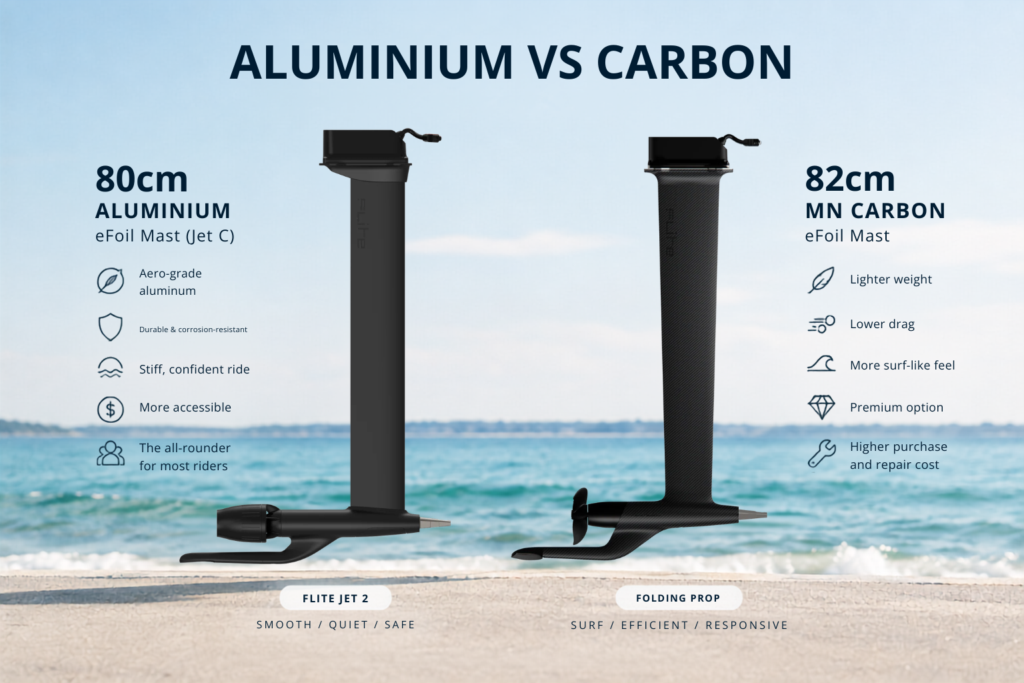
The short version: buy aluminium unless you specifically want the lighter, more surf-like feel of carbon and you're willing to pay for it. Neither choice is a mistake. They're just aimed at different riders. You can see how the current systems are configured when you browse the current Fliteboard systems.
Here's the part that trips up buyers who shop for a mast in isolation: on a Fliteboard, the mast and the propulsion are one system, and your propulsion choice decides which mast you can have.
The 80cm aluminium mast comes in two versions. Jet C is built around the Flite Jet 2, the enclosed jet drive that's quieter, smoother, and the safest option around beginners and shared riders. Prop C is built around a propeller (with a guard and Pro Tail Cover) and is compatible with the True Glide free-spinning prop and the folding prop for wave riding. The catch worth knowing before you buy: Prop C is not compatible with the Flite Jet 2. You pick one drivetrain and the mast comes with it.
In carbon, the MN Carbon Jet houses the Flite Jet 2, while the MN Carbon Wave is a folding-prop, wave-specific system on a narrower fuselage. So "which mast" and "which propulsion" are answered together, not separately.
We won't re-argue jet versus prop here, because it deserves its own space. Read our full breakdown of the best Flite propulsion system and then come back to lock in the mast that carries it.
The right mast depends less on your ego and more on where you actually ride, and the Emerald Coast gives you a few very different kinds of water.
On the flat, protected bay water on a calm morning, the 80cm aluminium Jet 2 is close to ideal. It's stable enough to enjoy and stiff enough to carve, and the jet keeps things smooth and quiet. When the Gulf picks up in the afternoon, or when boat wakes chop up the bay, that same taller mast earns its keep by giving you clearance to keep flying instead of breaching every time the surface gets messy. On the rare days the Gulf gives you a real wave window, the MN Carbon Wave is the mast that turns an eFoil into something close to a surf foil.
There's one local caution worth naming. A 31 to 32 inch mast needs water under it. Fliteboard's own guidance is to ride in at least about five feet of depth to protect the wings and mast, and some of our shallow coastal dune lakes drop below that in stretches. That doesn't rule them out, it just means picking your spot and knowing the depth matters more here than the brochure suggests. The fastest way to settle all of this is to test different masts in a lesson on the water you'll actually ride.
A mast never rides alone. The wing you run on it decides your lift and turning feel far more than the last few centimeters of mast height, and the rear stabiliser and shims fine-tune the balance on top of that.
Two quick principles. Bigger wings pair naturally with the calmer, more stable end of the range and with newer riders; smaller, faster wings want the stiffer masts and cleaner input. And shims let you adjust the pitch of the rear stabiliser to dial the ride in once the mast and wing are chosen. Rather than repeat those decisions here, go deep in the right place: our guide to which Fliteboard eFoil to buy, board and wing covers wing selection, and pair it with the mast you've landed on here.
If you mostly foil the coastal dune lakes near Santa Rosa Beach and Grayton, like Lake Powell and Western Lake, your mast question is really a depth question first. These lakes are flat and protected, which is close to perfect for learning and cruising, but they're also shallow in places, and a standard 80cm mast hangs more than two and a half feet below the board.
That doesn't mean you need a special mast. It means the 80cm aluminium Jet 2 is a fine choice as long as you ride the deeper channels and give yourself the roughly five feet of depth Fliteboard recommends to keep the wings and mast safe. Where riders get into trouble is drifting into a shallow bar mid-session and clipping the bottom, which is a spot problem, not a gear problem.
If your dune-lake sessions are your main use, we'd rather help you pick the launch and the line than sell you a shorter mast you don't need. Take a look at eFoiling the dune lakes around Santa Rosa Beach for where the calm, ridable water is.
If your home water is around Destin, between the harbor and Choctawhatchee Bay, you already know it rarely stays glassy all day. Morning calm gives way to afternoon chop, and boat wakes stack up fast on a busy summer bay.
That's the case for the taller mast, not a shorter one. The 80cm aluminium gives you enough height above the surface to stay flying through chop and wake that would trip up a lower setup, and its stiffness holds a clean line when the water is bumpy. Riders who fight constant touchdowns in Destin are usually under-masted or on too small a wing for the conditions, not out of skill. A taller, stiffer mast paired with a stable wing is the fix.
If Destin is where you ride, feeling an 80cm mast in real bay chop tells you more than any spec sheet. See how we run sessions on riding a Fliteboard around Destin and try it before you commit.
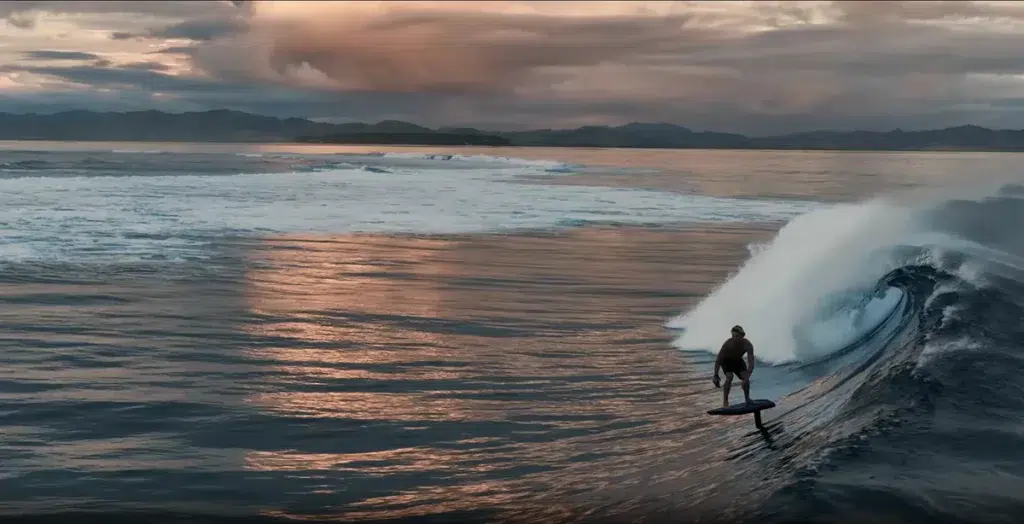
If you dream about dropping into a Gulf wave and carving it powered-off, the MN Carbon Wave is the mast built for exactly that. Its carbon monocoque construction and narrower fuselage make it the lowest-drag mast Fliteboard builds, and with the folding prop it feels closest to a real surf foil of anything in the range.
For our coast, consistent, rideable Gulf surf around Panama City Beach and the open Gulf comes in windows, not on demand, and a lot of the year the water is flat. The MN Carbon Wave is a specialist. If wave riding is genuinely your goal and you'll chase those windows, it's worth every dollar. If you ride mostly flat water and tell yourself you'll surf "someday," the 80cm aluminium or the MN Carbon Jet will serve you better far more often.
If you ride the Gulf side around the bay, eFoiling around Panama City Beach is a good place to see the conditions we actually get, so you can be honest with yourself about how often you'd use a wave mast.
The standard is the 80cm (31.5 inch) aero-grade aluminium mast, available as Jet C with the Flite Jet 2 or as Prop C with a propeller. The carbon Marc Newson masts are 82cm (32 inch), and the FliteScooter uses a shorter 65cm mast.
For most riders, no, and that's not a knock on carbon. The 80cm aluminium is stiff, durable, and carves well, and it's all the mast most people need.
Carbon is worth it if you specifically want the lighter, lower-drag, more surf-like feel and you accept the higher purchase and repair cost. It's an upgrade for a preference, not a fix for a problem.
To a point. Fliteboard is a modular system, but the mast and propulsion are bought as one eFoil unit, so switching between a Jet 2 (Jet C) and a propeller (Prop C) means changing the eFoil, not just a part.
Wings, batteries, and shims swap freely across the conical interface. For exactly what fits what, see the conical interface and what's compatible .
There isn't a "shallow-water mast" in the current lineup beyond the shorter scooter setup. A standard 80cm mast is fine in shallow areas as long as you keep to the roughly five feet of depth Fliteboard recommends.
In thin water, spot choice matters more than mast choice.
Once the mast and wing are set, the rear stabiliser and shims do the fine-tuning. Adjusting the shim changes the pitch of the rear wing and noticeably changes how the board feels.
Our guide to which shim to use on a Fliteboard walks through it.
The best mast isn't the longest, the stiffest, or the most expensive. It's the one matched to your water, your skill, and the propulsion you want, which for most riders on the Emerald Coast is the 80cm aluminium Jet 2, with carbon as a real upgrade for those chasing a lighter, more surf-like feel.
Tell us where you ride, how often, and what you want the board to feel like, and we'll spec the right mast and eFoil system instead of leaving you to guess.
Talk your setup through with Hamish and buy it once, correctly.
Please fill out this form and someone from our team will contact you as soon as possible. You can also reach us by email at [email protected]
[email protected]
Phone: (850) 400-8500
Business hours:
Mon-Sat: 8am – 5pm
Sun: 9am – 4pm

© 2026 Emerald Wake LLC - All Rights Reserved
Privacy Policy | Accessibility | Terms of Use | Disclaimer