Save yourself a week of browsing. A premium (Fliteboard) eFoil in 2026 runs about $8,500 to $13,000, and where you land in that range comes down to three things: the board, how it is built, and the battery. Board, build, battery. Everything else written about eFoil pricing is noise stacked around those three... and the number on the product page is where the math starts, not where it ends.
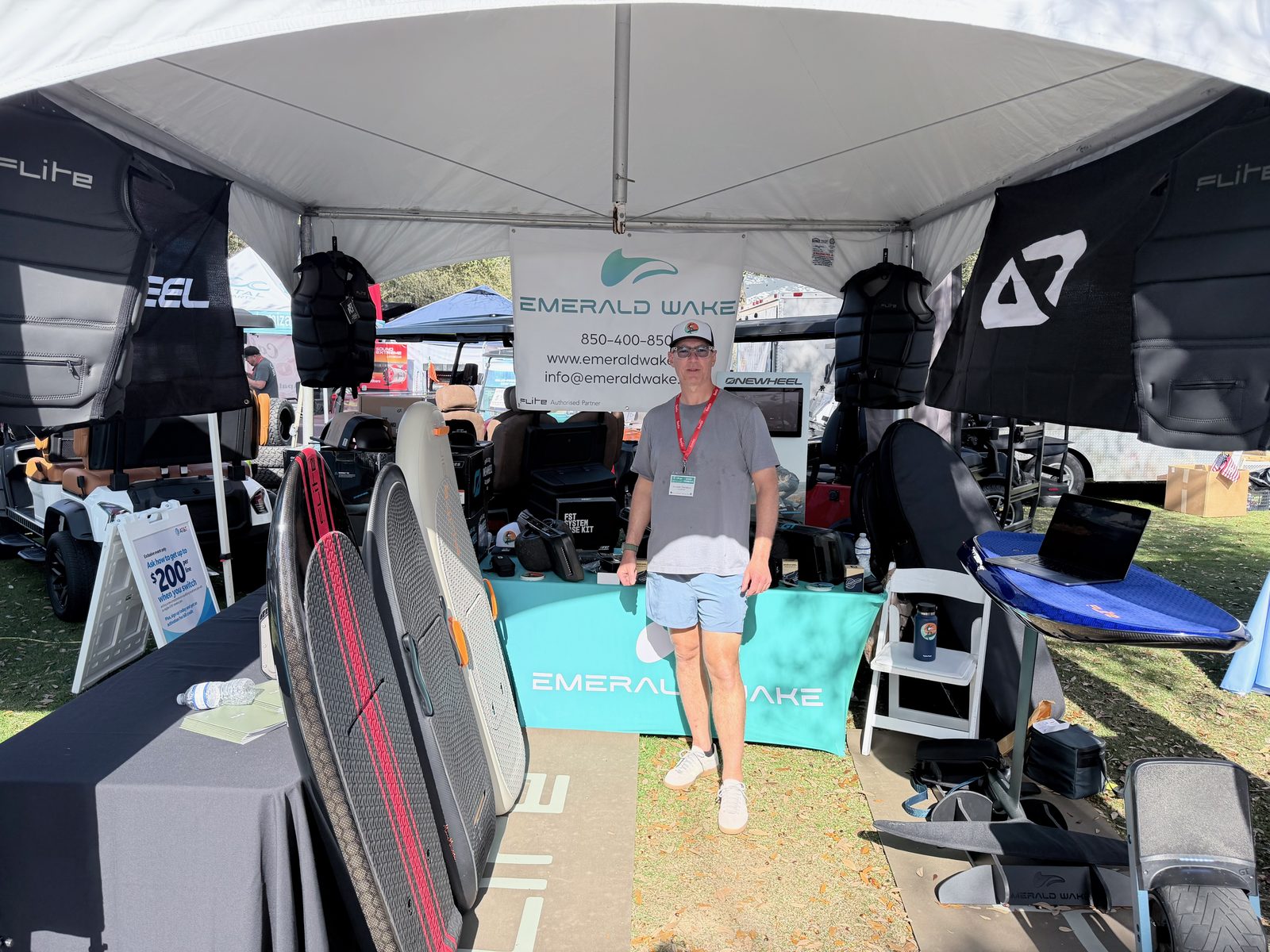
At Emerald Wake we sell these boards, teach on them, service them, and ride them most weeks, on the Gulf and the calm dune lakes around 30A where the water sits flat enough that most first-timers are up and flying inside an hour. This guide sticks to Fliteboard pricing, because Fliteboard is the brand we actually sell, ride, and service, so every number here is one we stand behind rather than a figure pulled off a manufacturer's site. Our founder, Hamish, has watched plenty of people buy the cheapest board in the catalog to save a couple thousand dollars, then come back a season later wanting the one they should have bought in the first place. (It happens more than you would think.)
So is an eFoil expensive? Yes. Is it worth it? That depends entirely on getting those three choices right for how you actually ride, not for how the brochure rides. Pick wrong and you either overspend on a board built for someone else, or you save a little now and outgrow it by the end of summer. We would rather you spend once and spend it well: real numbers, no press-release ranges, plus the cheapest way to find out whether eFoiling is for you before you put down five figures.
What are the price tiers for an eFoil in 2026?
Strip away the options and 2026 eFoil pricing sorts into three tiers.
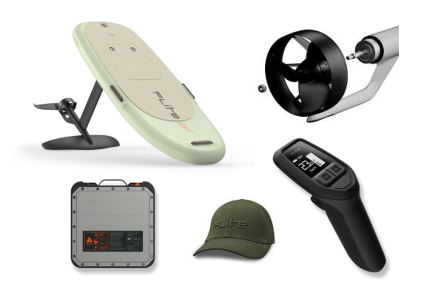
Entry, around $8,500. The inflatable Flite AIR.
The middle, around $10,500. A hard board (the ICON or the PRO) in soft top or fiberglass, where most riders land.
Premium, $12,000 to $13,000. Carbon construction, or the performance ULTRA L3 and RACE.
Three things move you between those tiers: the board model, the construction, and the battery. Which board actually fits you is its own question, and we walk through it rider by rider in our 2026 Fliteboard buyer's guide.
How much does a Fliteboard cost? (2026 Series 6 pricing by model)
Here is what the 2026 Series 6 lineup starts at, board by board. Every Fliteboard is configured to order, so think of these as starting prices for a complete, ready-to-ride build (board, eFoil system, battery, controller, and charger). Your choices move the number from there, and you can build and price any of them on our Fliteboard shop.
What the sticker does not spell out: those starting prices use the smallest battery (the Flitecell Nano) and the slow charger. The battery and charger you choose are where the number actually moves. Even so, the product-page price is close to what most single-battery setups really cost, not a lowball.
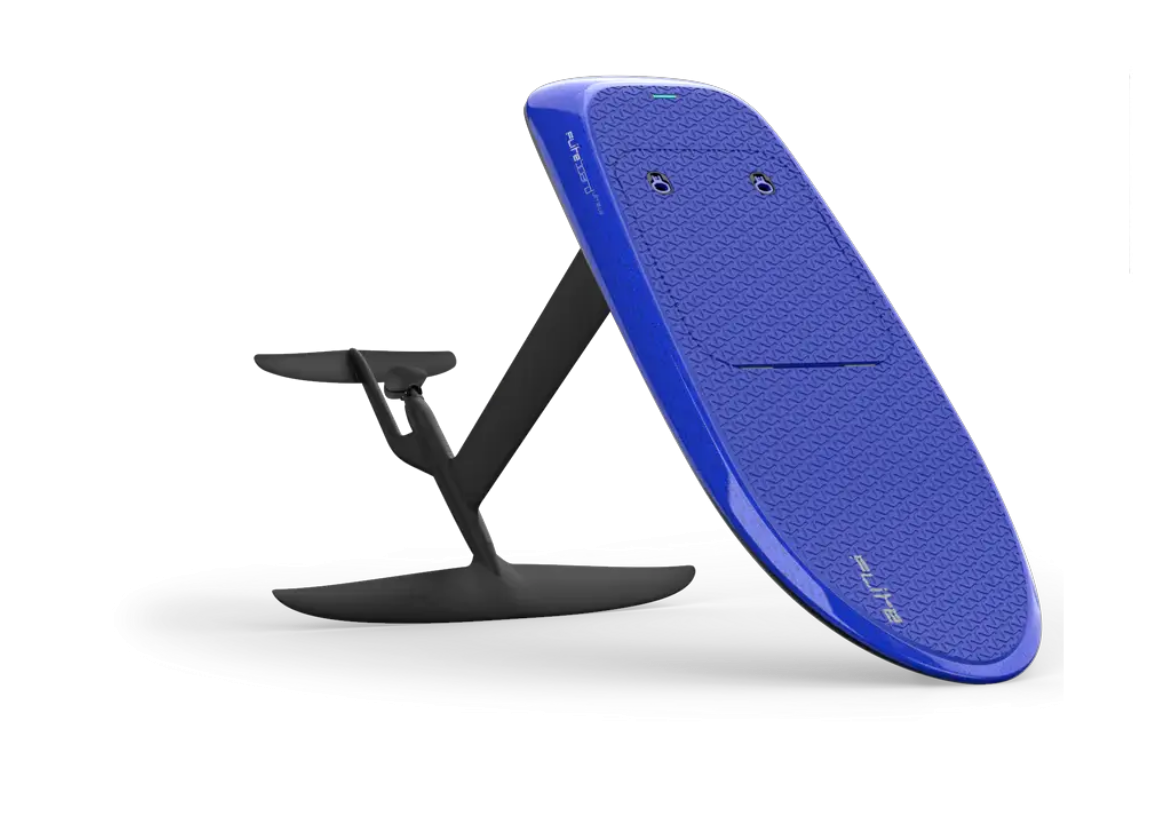
Notice the ICON and the PRO cost the same: about $10,550 in soft top or fiberglass, $12,119 in carbon. The difference between them is not price, it is shape. The ICON is the bigger, more stable board. The PRO is smaller and livelier.
That difference is where Hamish gets blunt with people. We teach beginners on the ICON because the extra volume makes standing up easy, but his honest advice once you have a few lessons in is simple: if you are going to buy a board, buy the PRO. The ICON is easy to outgrow in a season. The PRO has the headroom to stay fun a year later. The full case for it is in our Fliteboard PRO 2026 review.
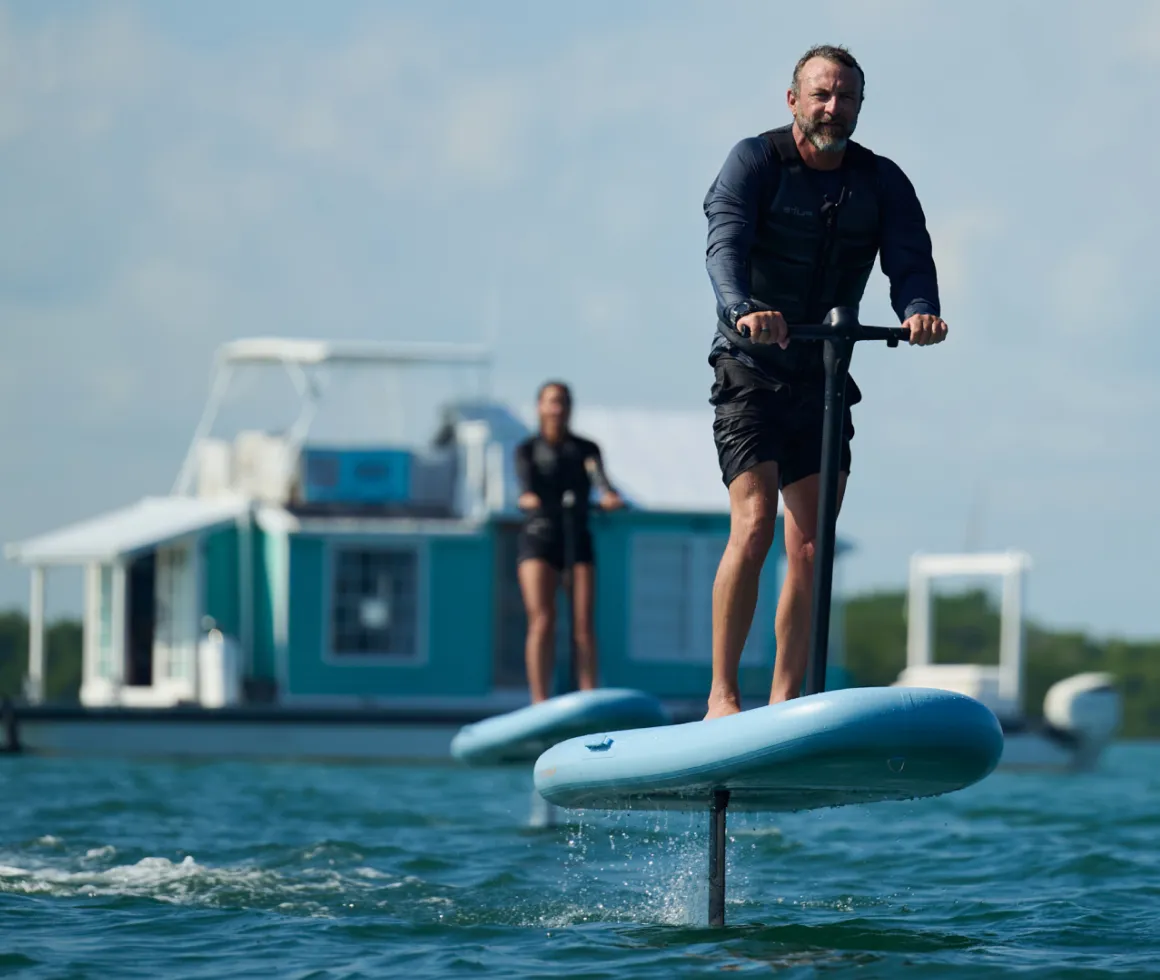
At the top, the ULTRA L3 ($12,978) and RACE ($13,023) are the carbon performance boards, built for advanced riders rather than first-timers. The Flitescooter ($12,404) is its own animal: handlebars, step-on-and-go, the lowest barrier to entry in the range even if it is not the cheapest.
Carbon, soft top, or fiberglass: what does each construction cost?
The hard boards (the ICON and the PRO) come in three constructions, and this is the cleanest place to either save or spend about $1,600. Same shape, same electronics, same wings. Only the board itself changes.
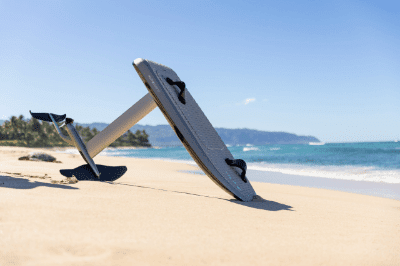
Carbon: about $1,600 more. Lighter, stiffer, and the most durable of the three. It is what Hamish rides, and what he points most buyers toward when the budget is there. The weight you save shows up the moment you carry the board to the water, and again every time you turn.
Soft top: the value pick. A polyurethane board with an EVA foam deck, like a premium surfboard. Comfortable underfoot, shrugs off knocks, and it looks sharp. The honest caveat: the soft top is only a couple of years old, so how it holds up under relentless Florida sun and salt over the long haul is still being written. We like it. We are also watching it.
Fiberglass: same price as soft top, and we do not really push it. It used to be the budget board. Not anymore. It now costs the same as the soft top while being more fragile, and it only comes in white. The one point in its favor is that it is easier to patch. Hamish said it straight: he is not even stocking fiberglass at the shop, because unless you specifically want white, the soft top wins at the same money.
How each of these actually behaves around docks, boats, and dune-lake launches is its own topic, and we get into it in soft top vs carbon eFoils.
What's the true cost of owning an eFoil? (batteries, chargers, and the extras)
The board is the headline. It is not the whole bill. These are the other real costs, straight from our own configurator.
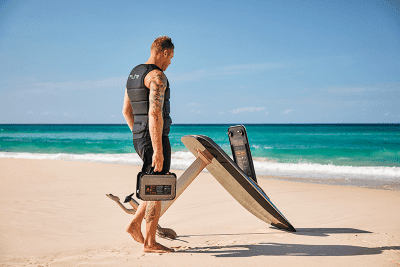
The battery: $2,310 to $2,860. Every board ships with the Flitecell Nano ($2,310), good for about 45 minutes of ride time. Most riders are happier on the mid-size Sport ($2,860, up to 90 minutes), and since it is only about $550 more, it is the easy upgrade and the one Hamish sells most. Which battery fits how you ride is the most useful call to get right here, and we lay all three out in Flitecell Nano vs Sport vs Explore.
A spare battery: another $2,310 to $2,860. This is the real big-ticket extra. One pack gives you a single session, then a wait while it charges. A second Sport pack runs $2,860, and it is the most common "I should have bought it sooner" purchase we see. If your day is built around back-to-back rides, budget for it. If not, skip it.
Charger: $260 included, $1,210 for the fast one. The slow charger comes with every board and fills a Nano in about 3.5 hours. The fast charger ($1,210) does it in under an hour. If money is no object, Hamish says get it. If budget is tight, the slow charger does the exact same job, just overnight.
Safety gear: about $65 to $200. A water helmet runs $65 to $70 (the Sweatsaver Halo is $64.99, the Gotham $69.99). Add an impact vest and you are still under a couple hundred dollars. Not optional in our book, and not in the box. Wear them.
Optional tuning. Extra wing sets run $1,225 to $1,325 (the Wave, Flow, and MN options). A folding prop is $435, a RACE impeller $330, the upgraded MN controller $700. None of it is required to ride. All of it is there when you want to fine-tune the feel.
Add it up. The setup most people actually ride (a board, the Sport battery, a helmet, and a vest) lands roughly $700 to $1,000 over the starting price: low-to-mid teens, depending on the board. The number only climbs if you add the two big optional extras, a spare battery and a fast charger, which run about $4,000 together and push a fully loaded build to roughly $15,000 to $17,500. So unlike most of what you will read online, the sticker here is close to the real number for a single-battery setup. We would rather tell you that than scare you with a total you will not actually spend.
Which eFoil is the cheapest, and the most expensive?
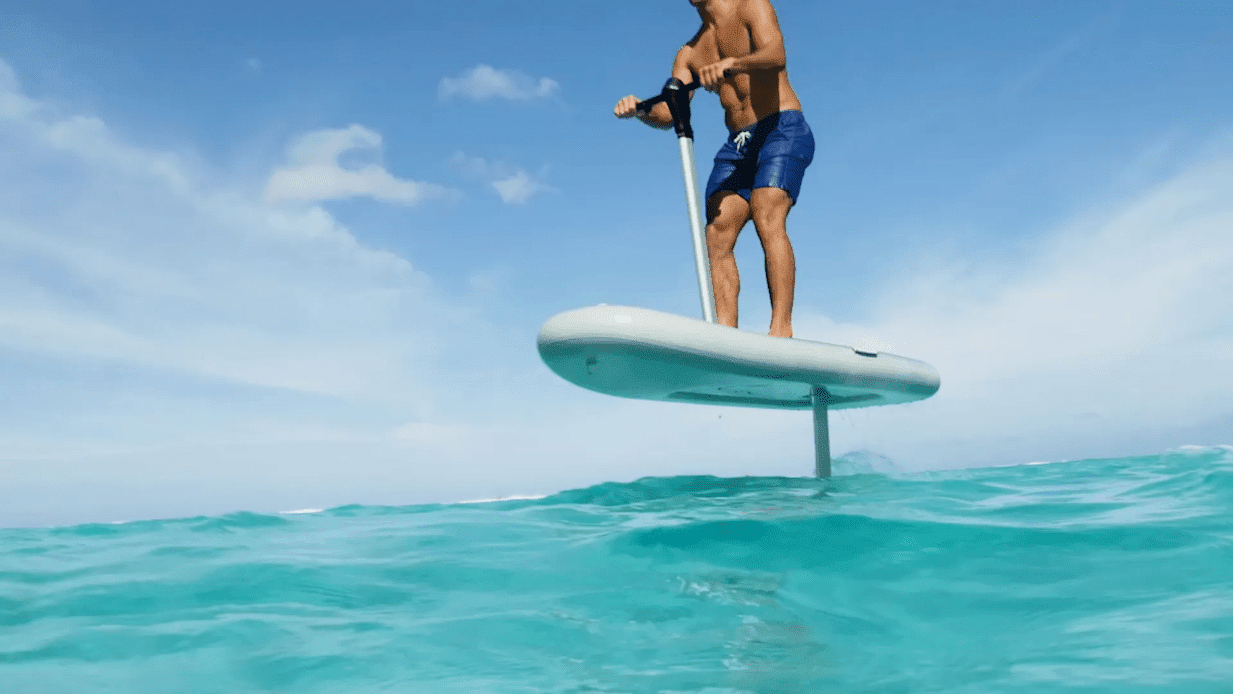
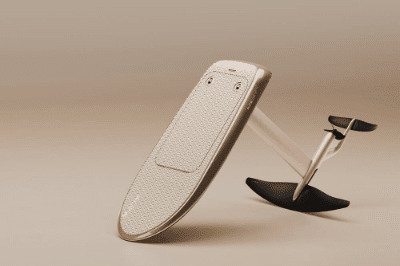
The cheapest way onto a Fliteboard is the Flite AIR at $8,519. It is the inflatable, and it earns its spot at the bottom of the range honestly: foam core, inflatable rail, and it shrugs off the dock, the boat, and the tailgate. For a boat owner, a family with kids, or anyone nervous about banging up a five-figure board, it is the easiest yes in the lineup. The trade-off, in Hamish's words, is that it rides a little grippier and less nimble than a hard board, so committed riders tend to move past it. If that is you, you already know it. If it is not, the AIR is a lot of fun for the money. You can see it here: Flite AIR.
The most expensive board most people should actually consider is the RACE at $13,023, with the ULTRA L3 right beside it at $12,978. Both are carbon, both built for one thing done well: the RACE for flat-water speed, the ULTRA for waves. They are gorgeous, and they are not beginner boards. Buy one as your first eFoil and you will spend your first month fighting it.
Above those sits Fliteboard's Marc Newson line, the brand's halo range. We can order it, but it is not something Hamish pushes, and rarely something he sells. The premium carbon and clever engineering that justified its price a few years ago have since trickled down into the boards above, which ride just as well for thousands less. For almost everyone riding the Emerald Coast, the board worth owning tops out right around $13,000, not in the high teens.
Should you buy new or used to save money?
Used is the obvious way to spend less, and sometimes it is the right call. Just go in with your eyes open, because on an eFoil the risk is concentrated in one place: the battery.
A Flitecell is a consumable. It is rated for a few hundred charge cycles before its range starts dropping, and replacing one runs $2,310 to $2,860. So a used board that looks like a bargain can stop being one the moment you learn the battery is halfway through its life. Before you buy private-party, ask for the cycle count (the Flite app tracks it), open the hatch and check for any sign of water or corrosion, and confirm the board is recent enough that parts and service still exist for it.
There is a middle path we like better than rolling the dice on a stranger's board: our own demo and close-out boards. These are current-generation Fliteboards, lightly used at lessons and demo days or discounted at season's end, sold by the same shop that will also service them and stand behind them. You get most of the savings of used without the unknowns. Have a look at what is on the floor right now: demo and close-out Fliteboards.
Buying new still wins for most first-time buyers, mostly for the warranty and the fresh battery. But if saving a few thousand matters more than having the latest color, used can absolutely make sense, as long as you check the battery first.
Is an eFoil worth the price?
A five-figure board sounds like a lot until you do two pieces of honest math.
The first is cost per session. A Fliteboard is not a one-summer toy. Treated well, it lasts for years, and the more you ride, the less each ride costs. Buy a board around $13,000, ride it once a week for three seasons, and you are down to roughly the price of a nice dinner per session, with no line, no booking, and no waiting for a rental window. Renting locally runs $150 or more an hour, so if you are going to ride regularly, owning catches up fast.
The second is what you are actually buying at the premium end. Cheaper eFoils exist. So do the stories that come with them: a mast that snaps, a battery that quietly dies, and a manufacturer who has gone quiet or gone under, leaving you with a five-foot paperweight and no parts. A premium board from a brand with a real dealer and service network behind it is the difference between a repair and a write-off. We are an authorized Fliteboard service center, which means when something needs attention, it gets attention, here, not shipped across the world.
So is it worth it? If you will ride a handful of times ever, no, and we will tell you that to your face. Take a lesson, rent when the mood strikes, and keep your money. But if eFoiling clicks the way it does for most people who try it, a good board pays for itself in seasons of use and holds its value better than almost anything else in the garage. The full case for why Fliteboard specifically earns its price is in is a Fliteboard worth it.
Try before you buy: book a demo or lesson on the Emerald Coast
A 2026 Fliteboard runs $8,519 to $13,023 depending on the board and construction. The battery you actually want adds only about $550, and the real out-the-door number lands close to the sticker for a single-battery setup. A spare battery and a fast charger are the only choices that move it much.
But the smartest money you can spend on an eFoil is the cost of a lesson, long before the cost of a board. Take a lesson before you buy anything. You will ride the actual gear on calm water, find out in one session whether eFoiling is for you (it usually is), and learn which board fits how you ride before you spend a cent on one. We teach on the stable ICON for exactly that reason, then help you choose the board you will actually keep.
That is the whole point of doing this with a local shop instead of a checkout cart. We are here, on the water, before and after the sale: lessons, demos, service, and honest answers about what you do and do not need.
The cheapest Fliteboard is the inflatable Flite AIR, starting at $8,519. It uses the same motor, battery, and foil as the hard boards, so you are not giving up the drivetrain to save money, just trading some on-water performance for durability and a lower price.
What are the hidden costs of owning an eFoil?
The board price is most of it, but plan for a few extras: a spare battery ($2,310 to $2,860) if you want back-to-back sessions, a fast charger ($1,210) if you do not want to wait, and safety gear ($65 to $200). The one cost that is not hidden is the battery upgrade most people make, from the included Nano to the Sport, which is only about $550.
How much is a replacement Fliteboard battery?
A new Flitecell runs $2,310 for the Nano and $2,860 for the Sport. Batteries are consumable and rated for a few hundred charge cycles, so factor a replacement into long-term ownership, especially on a used board with an unknown cycle count.
Are used eFoils worth buying?
They can be, if you check the battery first (ask for the cycle count and inspect for water damage), since a worn battery is a $2,310 to $2,860 fix. For most buyers, the safer route to savings is one of our demo or close-out boards: current-generation Fliteboards we also service and stand behind.
How much does it cost to ride an eFoil per session?
Once you own the board, very little. Electricity per charge is pennies, and the real cost is spreading the purchase over how often you ride. Renting locally runs $150 or more an hour, so if you ride regularly, owning works out cheaper within a season or two.
Want to know what your setup would actually cost?
Ride the gear on a lesson first, then get a custom configuration and a real out-the-door price.