Fliteboard PRO 2026 Review: Better for Responsive Freestyle?
By Ryan Goloversic posted on January 16, 2026
Most riders don’t start looking at the Fliteboard PRO because they want more difficulty. They start looking at it because their current board no longer responds the way they expect.
You are riding comfortably. You get up every time. You can turn, recover, and ride without thinking about balance. But when you lean harder or try to tighten a turn, the board feels delayed. You move first, the board follows later.
That moment usually means one thing. You no longer need extra stability. You want feedback.
The 2026 Fliteboard PRO exists for that exact stage. It is designed for riders transitioning out of the ICON who want quicker response, tighter control, and a board that reacts immediately to input without stepping all the way into ULTRA territory.
Hamish sees this shift constantly: “Once people stop thinking about staying up, they want the board to move when they move.”
That is the PRO’s job.
How Does the 67L Fliteboard PRO Balance Agility and Stability?
At 67 liters, the Fliteboard PRO sits in a very intentional middle ground.
It is small enough to remove the damping effect of higher volume, but still large enough to allow controlled takeoffs, resets, and recoveries. That balance is what makes the PRO a true progression board instead of a punishment board.
Shorter length reduces swing weight, so turns initiate faster. Lower volume means the board stops auto-correcting late inputs. At the same time, the PRO still gives riders enough margin to pause briefly at low speed without immediately falling.
Hamish explains it simply: “The PRO doesn’t catch you, but it doesn’t throw you either.”
That combination is why the PRO works for riders who are ready to progress but not ready to commit to a specialist board.
Is the Fliteboard PRO More Responsive Than the 100L ICON Board?
Yes. That is the entire reason it exists.
Compared to the ICON, the PRO responds sooner and more directly to weight shifts, stance changes, and pitch input. On the ICON, movements are smoothed out. On the PRO, movements translate immediately.
A common experience looks like this. A rider leans into a turn on the ICON and feels the board arc slowly. On the PRO, the same input tightens the turn instantly. Nothing magical changes. The board simply stops filtering the rider’s intent.
Hamish hears this reaction all the time: “This is what I was trying to do before.”
The ICON keeps things calm. The PRO lets you drive.
Fliteboard PRO 2026 Construction Options, Weight, and Colors
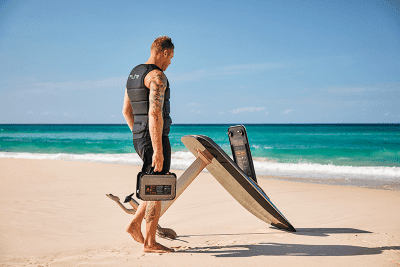
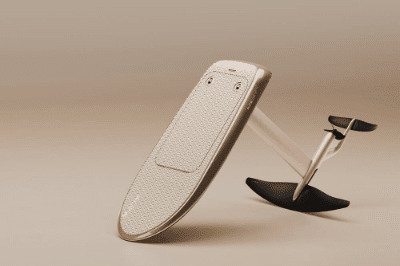
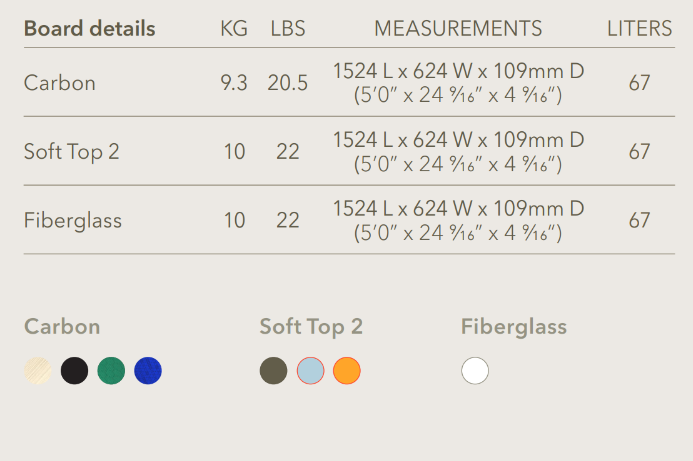
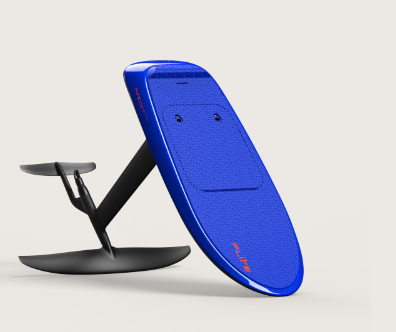
The 2026 Fliteboard PRO is available in three constructions. All share the same 67-liter shape and dimensions. The difference is weight, durability, and how the board handles daily use.
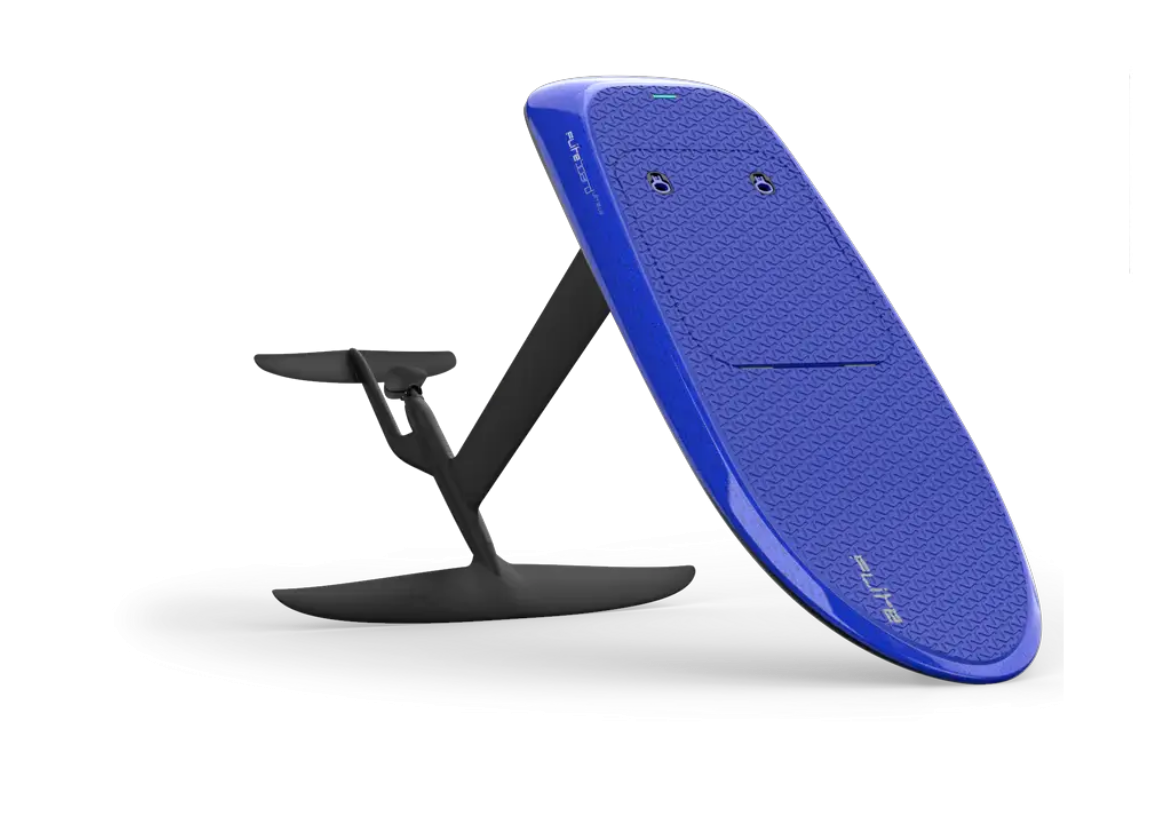
Board dimensions (all PRO versions): 1524 mm L × 624 mm W × 109 mm D (5’0” × 24 9/16” × 4 9/16”) Volume: 67 liters
Carbon PRO
Weight: 9.3 kg (20.5 lbs)
Feel: Lightest and most responsive
Best for: Riders prioritizing agility, freestyle, and clean feedback
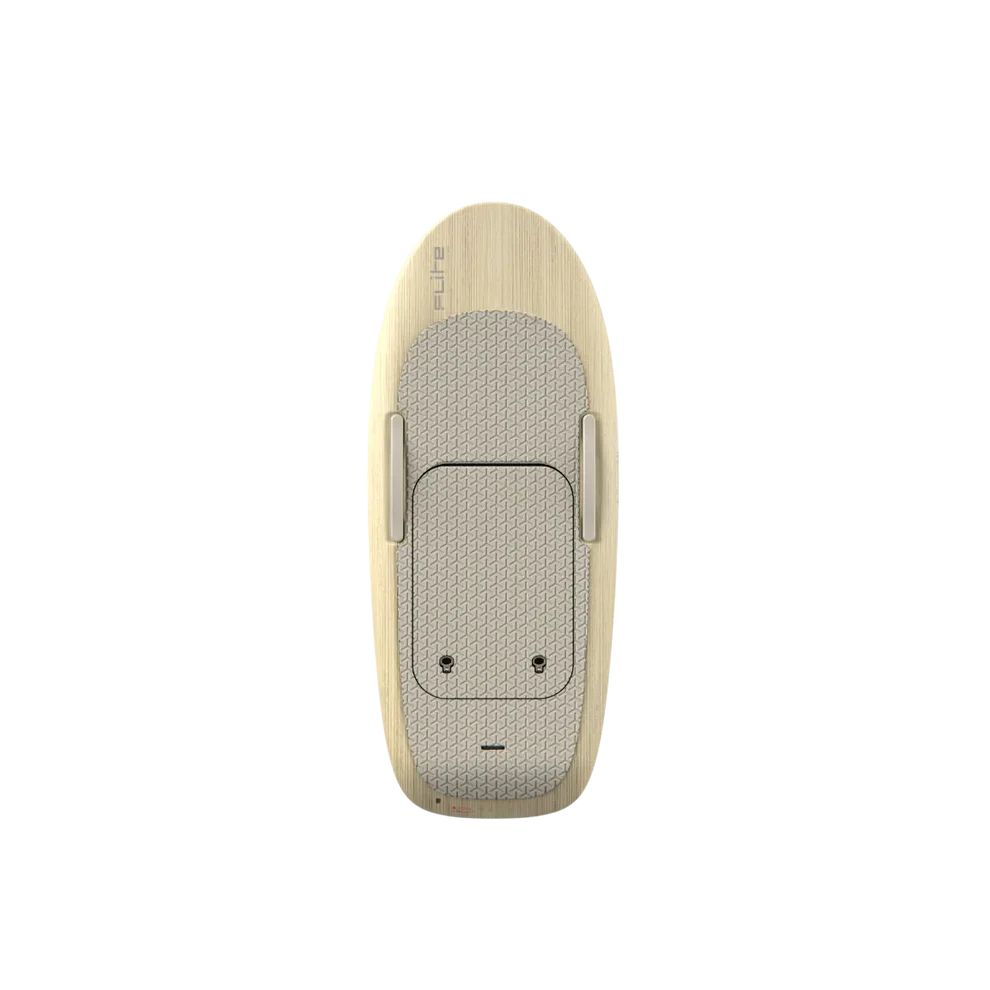
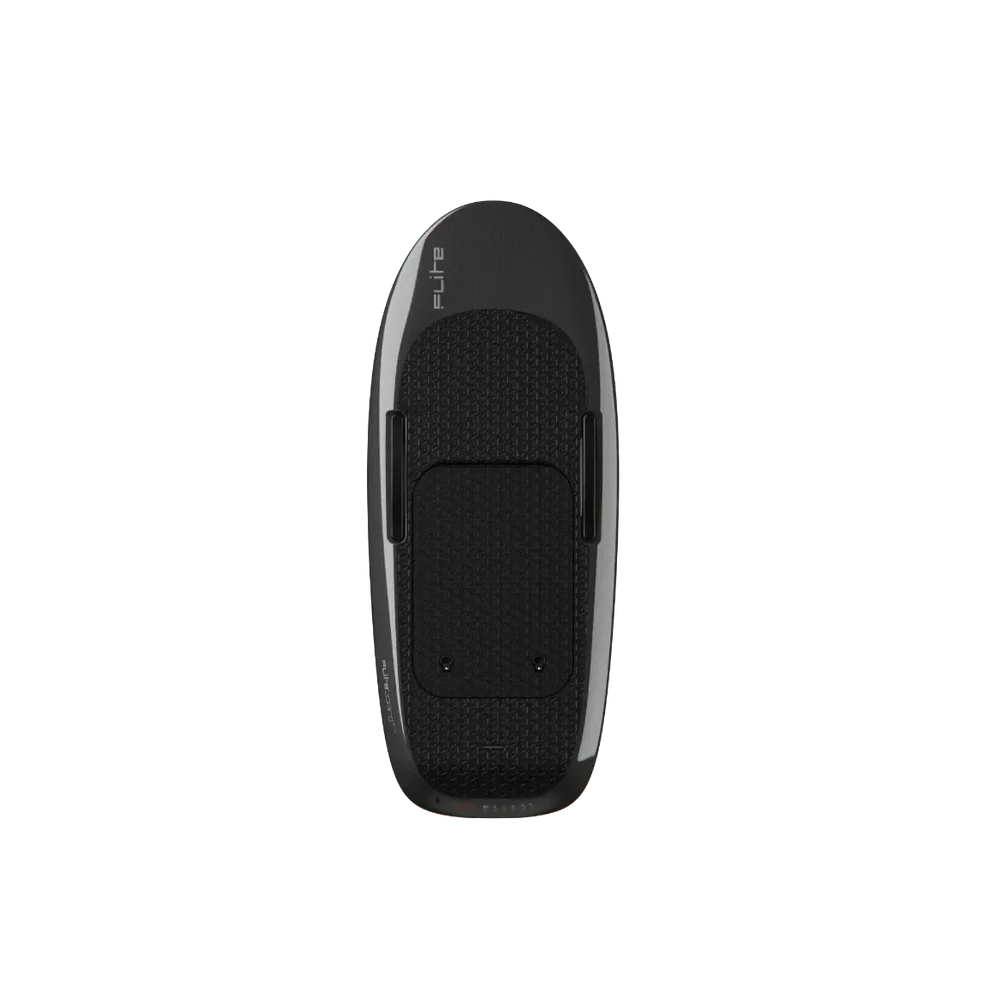
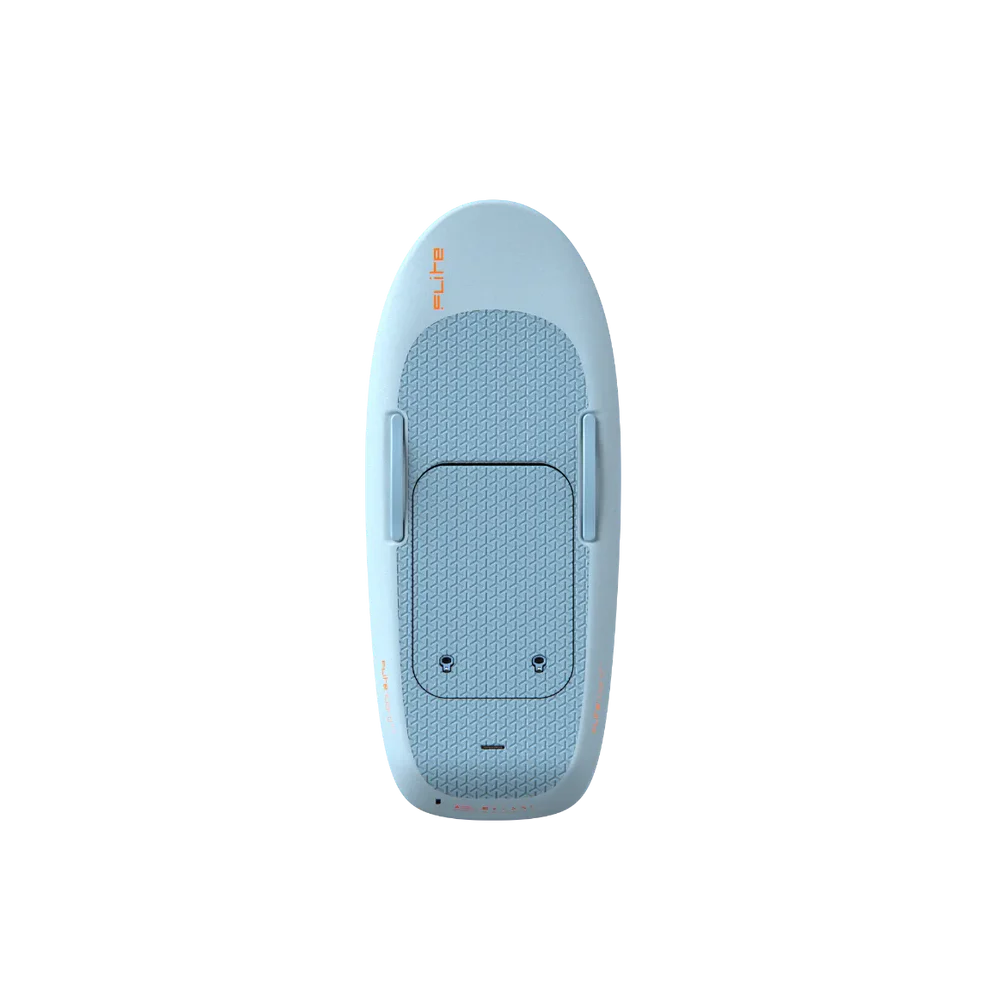
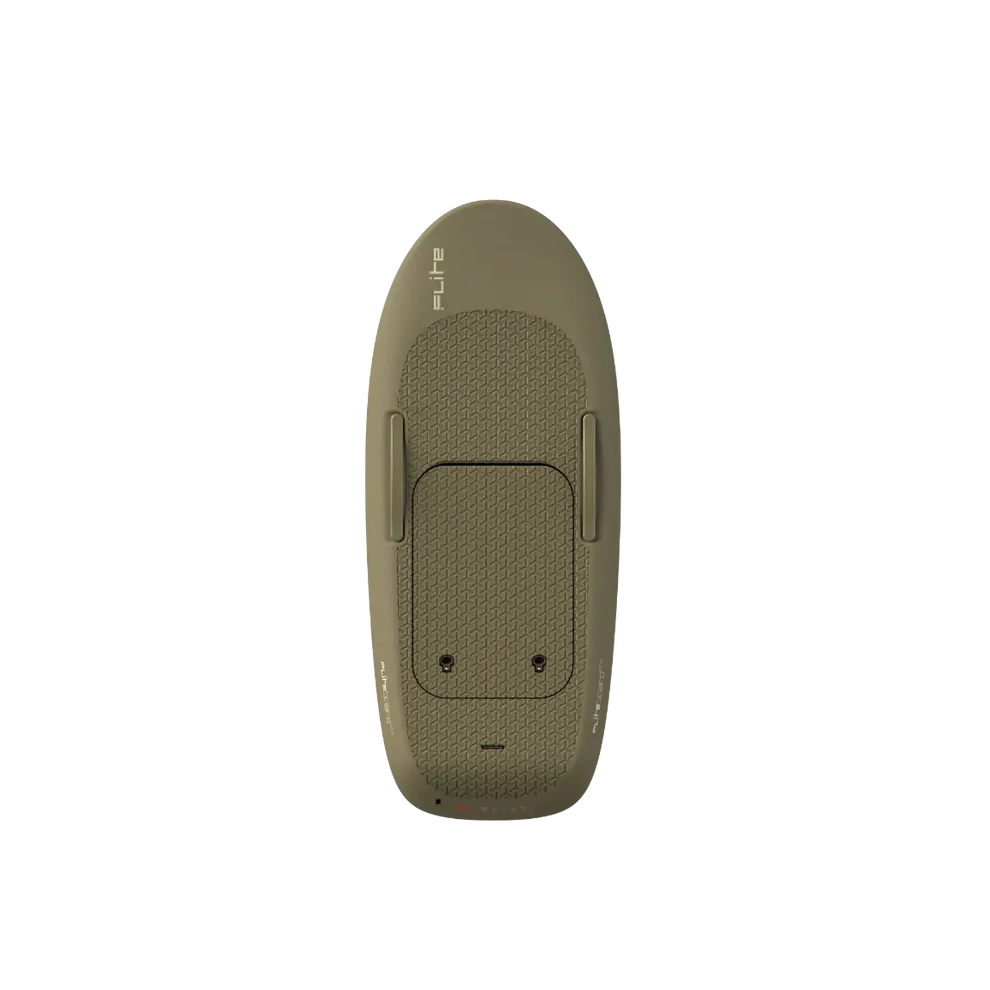
Colors: Ash, Black, Jade
Carbon reduces swing weight and reacts fastest to rider input. This is the preferred option for riders pushing responsiveness and technical riding.
Hamish’s take: “Carbon is what people choose when they want the board to disappear under their feet.”
Soft Top 2 PRO
Weight: 10 kg (22 lbs)
Construction: Polyurethane shell with EVA deck
Best for: Durability, shared use, docks, and lower stress ownership
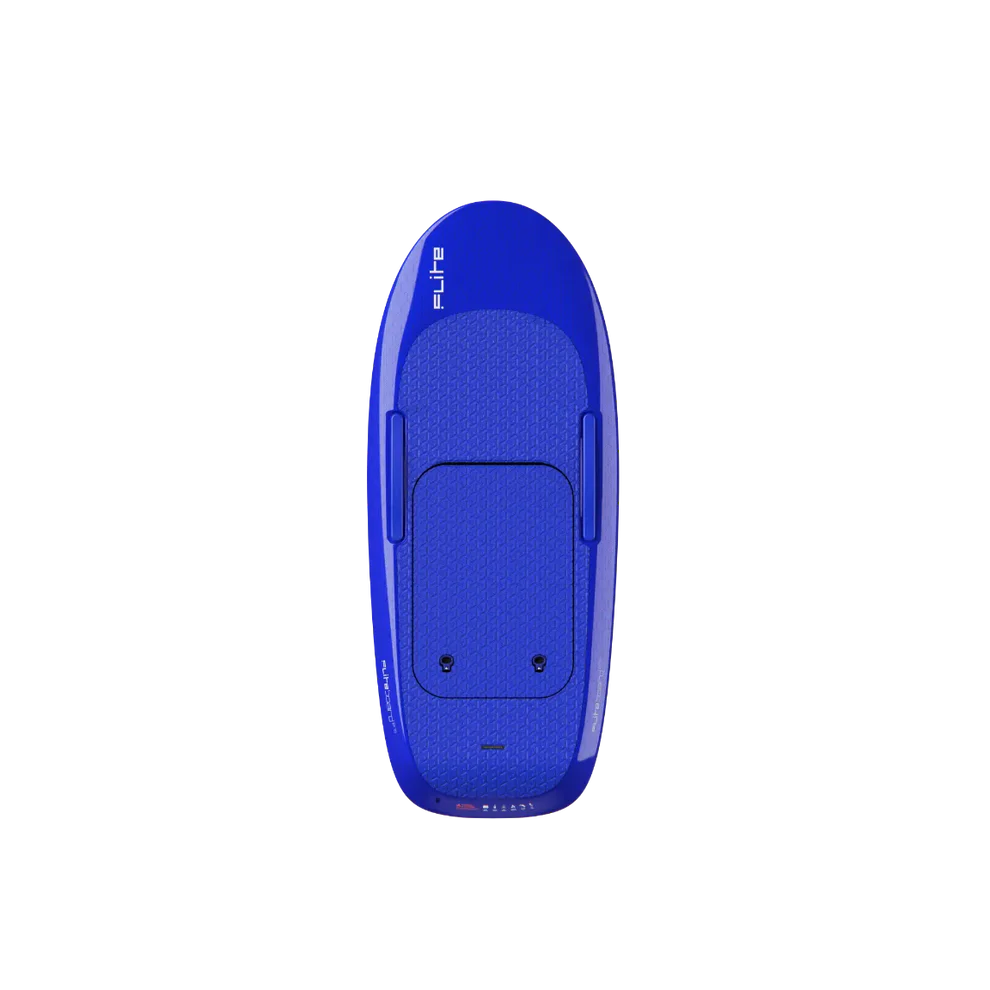
Colors: Sky (blue), Saltbush, Sol (orange)
Soft Top 2 trades a small amount of weight for impact resistance and comfort. It does not change how the board rides once on foil, but it changes how relaxed people feel handling it.
Hamish’s take: “If the board’s getting bumped, shared, or launched from docks, Soft Top just makes life easier.”
Fiberglass PRO
Weight: ~10 kg (22 lbs)
Feel: Traditional hard-board construction
Best for: Simple ownership, lower cost, minimal concern for padding
Colors: White only
Fiberglass sits between Carbon and Soft Top in feel. It rides like a PRO should, without the weight savings of carbon or the impact protection of Soft Top 2.
Hamish sums it up simply: “Same ride. You’re choosing weight and toughness, not performance.”
Does the Fliteboard PRO Make Freestyle Riding Easier?
For riders with basic control, yes.
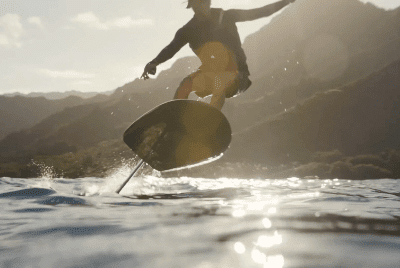
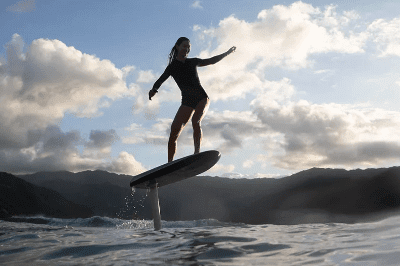
Freestyle riding depends on immediate feedback. Loading the foil, managing pitch, and linking movements all require a board that responds quickly. The ICON can do it, but it dampens that feedback. The PRO removes that damping.
The result is a board that feels lighter underfoot, more precise through transitions, and easier to place exactly where you want it.
Hamish frames it clearly: “The PRO lets people move the board instead of waiting for it.”
That responsiveness is what makes freestyle riding feel intentional instead of forced.
This is why riders who want quicker direction changes and cleaner transitions feel the difference immediately on the PRO.
How Does the Fliteboard PRO Feel in Flat Water and Dune Lakes With Jet 2?
This is where the PRO and Jet 2 combination shines.
In flat water and dune lakes, Jet 2 delivers smooth, progressive power instead of abrupt surges. On a smaller board, that smoothness matters. It keeps takeoffs calm and predictable without overwhelming the board.
Jet 2 is also significantly quieter. In calm conditions, that changes the entire session. Less noise reduces tension, improves communication during lessons, and keeps riders relaxed.
Hamish notices it immediately: “People ride looser when the board isn’t yelling at them.”
For heavier riders, the same rule applies as across the lineup. Riders over roughly 200 to 220 pounds may still prefer a traditional prop for stronger low-end pull. For most riders, Jet 2 and the PRO are an excellent match.
On flat-water dune lakes, this shows up immediately. Riders can ease onto foil, make small S-turns, and adjust stance without noise or drama. The PRO stays quiet and neutral enough that you can practice control instead of reacting to chop or surge.
Is 67 Liters Too Small for an Intermediate eFoiler?
For most intermediate riders, no.
The PRO still allows controlled standing, resets, and low-speed management. What changes is how quickly mistakes show up. Late lean, sloppy throttle, or hesitant stance adjustments are no longer absorbed.
That is why some riders feel unstable at first. The board is not unstable. It is simply honest.
Hamish’s rule of thumb: “If 100 feels boring, it’s probably time. If 67 feels terrifying, it’s probably early.”
Will I Fall More When Switching From the ICON to the PRO?
Usually, yes. Briefly.
Most riders fall more during the first few sessions because habits that worked on the ICON stop working on the PRO. Leaning late, hesitating at takeoff, or relying on the board to settle things out no longer works.
Once those habits clean up, falls decrease quickly.
Important distinction: Falling on the PRO usually means you are progressing, not regressing.
Hamish says, “If someone never falls on the PRO, they probably waited too long to switch.”
If you’re on the fence between ICON, PRO, or ULTRA, this is the easiest decision to get right with a quick call.
When Does It Make Sense to Add Footstraps on the 2026 Carbon PRO?
The PRO is often the first board where footstrapsgenuinely add value.
On larger boards, straps can feel unnecessary. On the PRO, they unlock control. Straps allow riders to load the foil harder, manage pitch more precisely, and commit to turns without hesitation.
Hamish warns against rushing the decision: “Straps don’t fix instability. They reward stability.”
Most riders benefit from riding the PRO strapless first, then adding straps once control feels automatic.
What Are the Best Wings to Pair With a Fliteboard PRO for Freestyle Riding?
Wing choice on the PRO should support control before speed.
Many riders start with a slightly larger wing to maintain forgiveness while adjusting to the smaller board. As technique improves, downsizing increases speed, carve tightness, and pumping efficiency.
The key is not chasing top-end early. The PRO already delivers responsiveness. Wings should complement that, not overwhelm it.
Hamish’s advice: “Let the board teach you first. Then tune the wings.”
Should You Skip the PRO and Go Straight to the ULTRA L3?
Some riders do. Many come back.
Skipping the PRO only makes sense for riders who already have strong foil control, consistent wave riding experience, and comfort managing low-volume boards. For most riders, the ULTRA removes too much margin too early.
Touchdowns are harsher. Recovery windows are shorter. Sessions become mentally demanding.
Hamish is blunt: “Most people who skip the PRO end up stepping back.”
The PRO exists to make the ULTRA enjoyable later.
Who the Fliteboard PRO Is Actually For (And Who It’s Not)
The PRO is for riders who:
Ride confidently on the ICON
Want faster response and tighter control
Are interested in freestyle, carving, or technical riding
Accept a short adjustment period
It is not for riders who:
Are still struggling with balance
Want maximum forgiveness
Prefer slow, relaxed cruising
The PRO rewards intention.
If you are still relying on the board to keep you upright while standing still, or you are falling during basic takeoffs, Hamish would not put you on the PRO yet.
Frequently Asked Questions About the Fliteboard PRO 2026
Is the PRO only for advanced riders?
No. It is best suited for intermediate riders who are comfortable riding consistently.
Is the PRO harder than the ICON?
It feels harder at first because it stops correcting mistakes automatically.
Is the PRO stable enough for casual sessions?
Yes, once basic control is established.
Does the PRO work well in flat water?
Yes, especially paired with Jet 2.
Is the PRO faster than the ICON?
Top speed is similar. It feels faster due to quicker response.
Final Takeaway: Is the PRO the Right Board for Responsive Freestyle?
The 2026 Fliteboard PRO is not about making riding harder. It is about removing the buffer you no longer need.
If the ICON feels too calm and the ULTRA feels like too much, the PRO is the board that makes riding feel intentional again. It responds when you move, teaches faster through feedback, and supports freestyle progression without forcing specialization.
As Hamish often says: “The PRO is where people stop managing the board and start riding.”
Want Help Dialing in a Fliteboard PRO Setup?
If you are unsure whether the PRO fits your riding, weight, or local conditions, a short conversation can save you months of guessing.
Get a straight recommendation based on how and where you ride. Talk it through with Hamish before you decide.