What’s New in the 2026 Fliteboard Series 6 Lineup?
By Ryan Goloversic posted on January 16, 2026
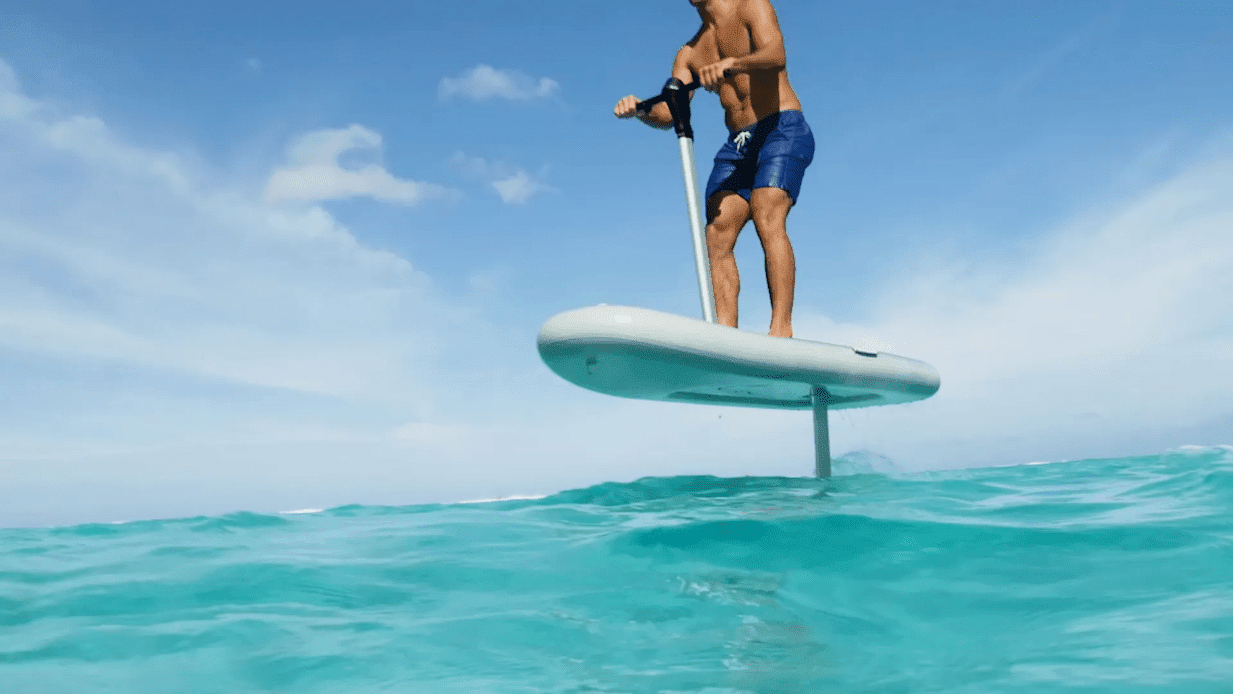
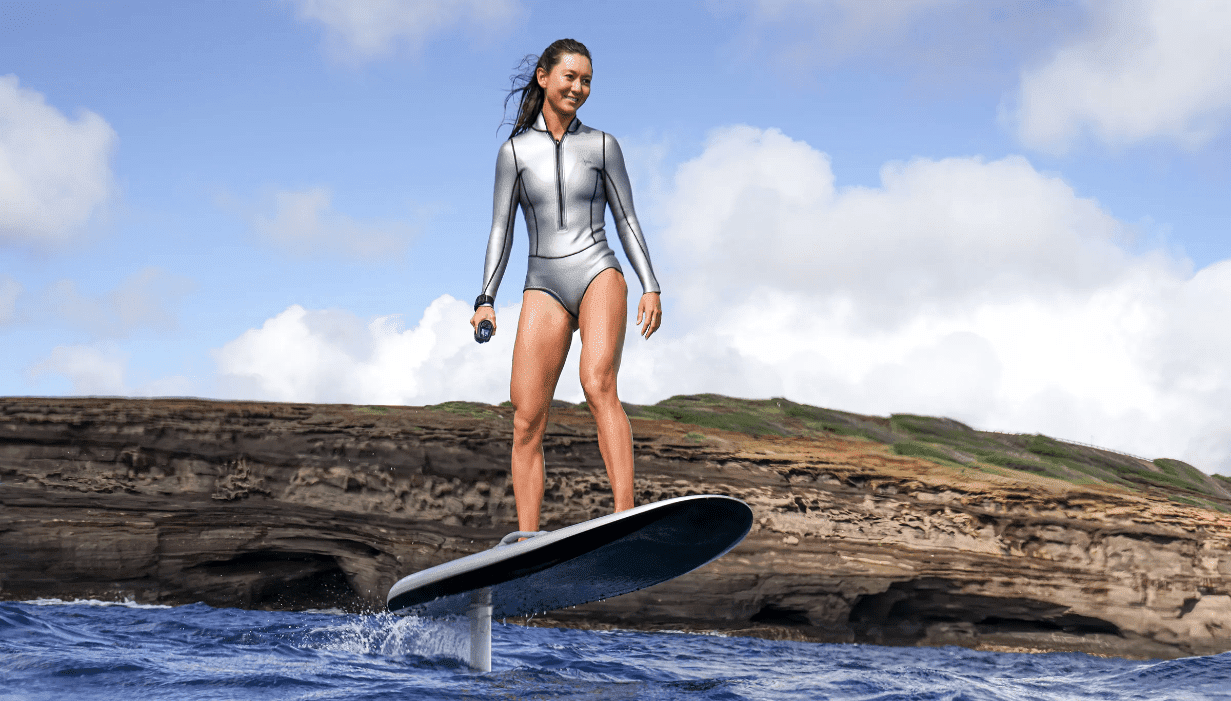
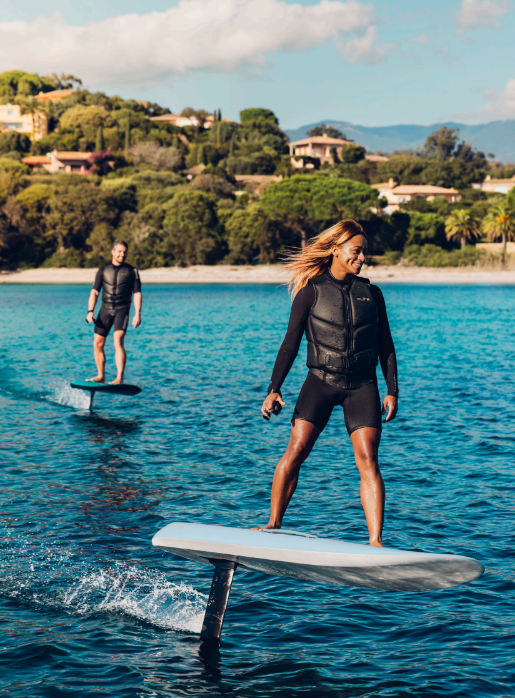
The 2026 Series 6 update is not about adding more boards or reshuffling categories. It is about what happens in the first seconds of every ride.
Those seconds decide everything. Standing up. Foot placement. First throttle input. Saving a wobbly takeoff or a rough touchdown. Confidence is built or broken right there.
Fliteboard calls this the “Era of Speed,” but not because the boards go faster. The speed is experiential. Faster learning. Faster confidence. Faster recovery when something goes wrong.
If you have ever seen someone fall before leaving the dock, or felt a board surge too hard too soon, you already know the problem Series 6 is addressing.
Hamish sees it every week while teaching: “Most crashes didn’t happen at speed. They happened right at takeoff.”
Series 6 is Fliteboard’s answer to that reality. Material changes, propulsion updates, and hardware refinements all serve one goal: calmer, more predictable first moments that are easier to control and less punishing.
This guide breaks down what changed across the 2026 lineup, why it changed, and how it shows up on the water. It is not about picking a board yet. It is about understanding why every Series 6 board now feels easier before you even do.
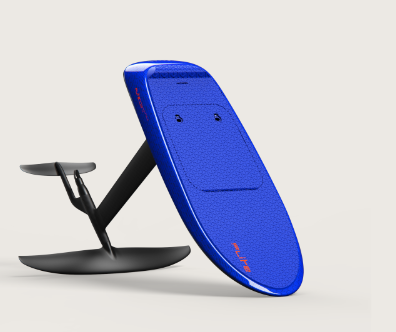
Why Did Fliteboard Move From Fiberglass to Polyurethane Shells for Series 6?
Fliteboard moved away from fiberglass because fiberglass did not survive how people actually use boards.
In the real world, boards get dragged up docks. They bump swim platforms. Someone steps on with shoes. A rail taps a piling. None of that happens at speed, but it adds up fast.
Fiberglass chips. It cracks. It looks tired quickly, even if the board rides fine.
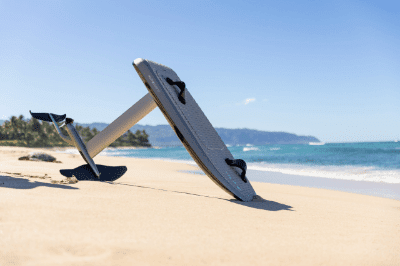
Polyurethane shells change that experience immediately.
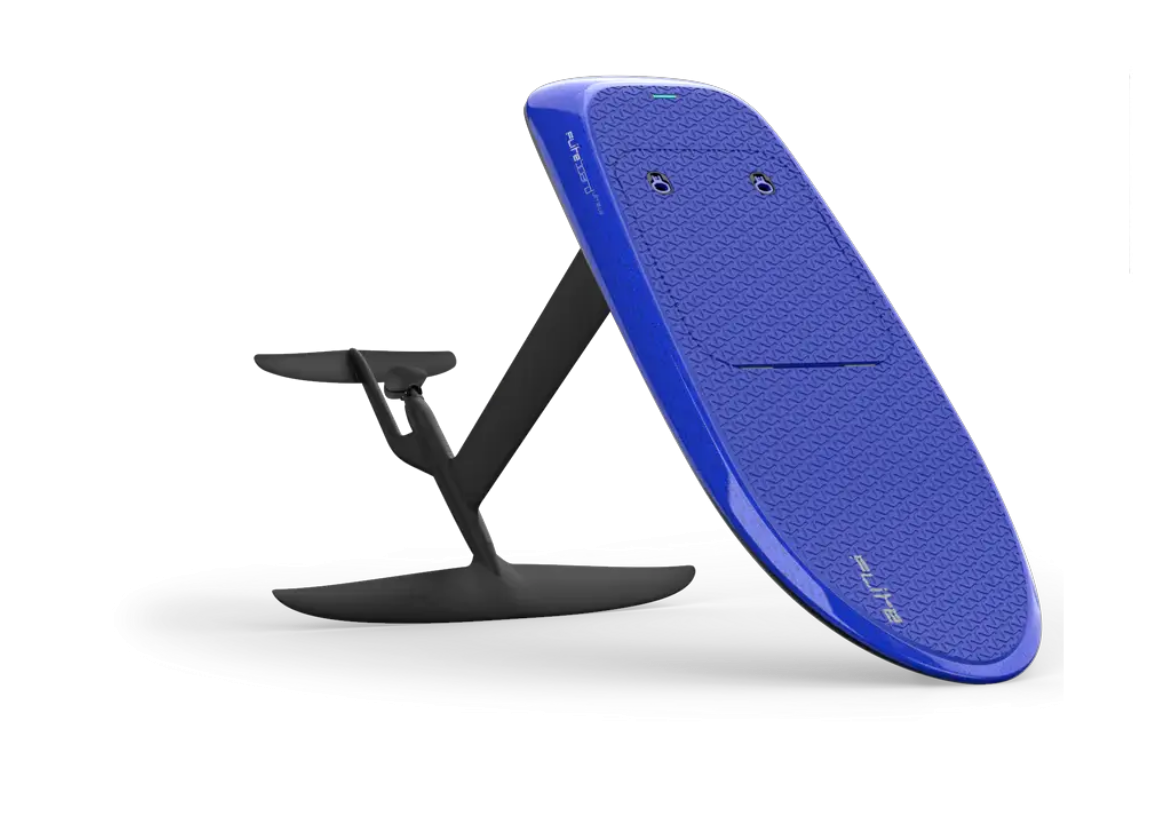
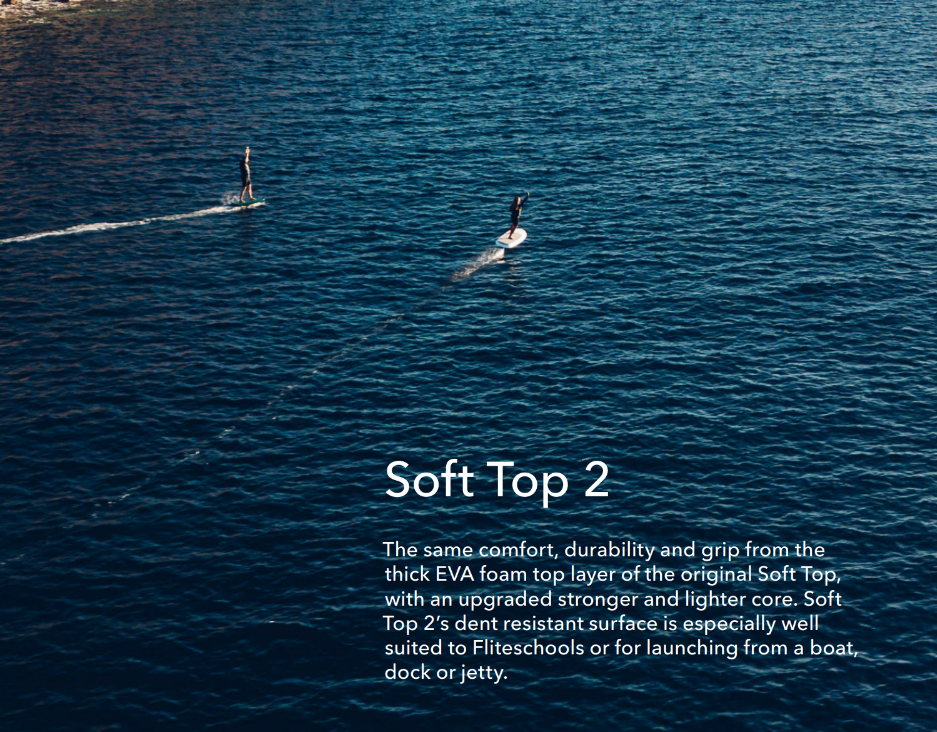
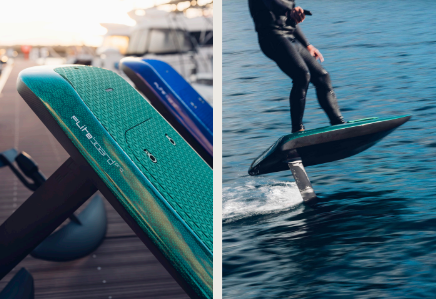
With the new Soft Top 2 construction, those same everyday mistakes stop being a problem. A board nudged against a dock does not leave a scar. Someone slipping while climbing on does not mean a repair later.
Hamish explains it without sugarcoating: “Fiberglass was fragile. Polyurethane survives real life.”
There is also a feel difference. Polyurethane absorbs small impacts and vibration better than fiberglass. When a rider stands still adjusting their feet, the board feels calmer. When the throttle comes on gently, the board does not transmit every micro-movement back into the rider’s legs.
Fiberglass still exists in limited form, now only offered in White, but Series 6 makes the direction clear. Fliteboard is building boards for ownership, not just performance specs.
How the ICON Rebrand Fits Into the Series 6 Strategy
Series 6 did not change what the 100-liter board is. It changed how clearly that role is communicated.
That board is now officially called the ICON.
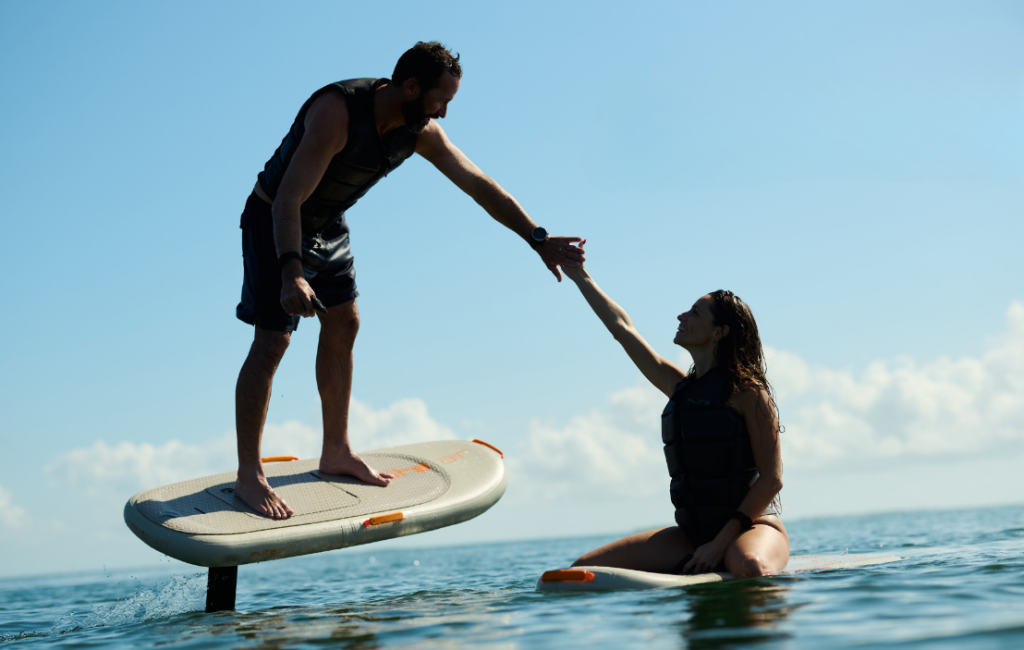
In practice, this is the board Hamish puts most people on first. Someone shows up curious but nervous. Maybe they have ridden boardsports before, maybe they haven’t. The ICON gives them time.
They can stand still. Reset their feet. Breathe. Nothing feels rushed.
After 10 to 20 hours, something shifts. Riders stop worrying about balance and start wanting response. Turns feel slower than their intention. That is when Hamish starts pointing them toward the PRO.
The ICON has not failed at that point. It has succeeded.
Series 6 simply makes that progression easier to understand. ICON is the reference. PRO is the step forward. ULTRA and RACE are purpose-built specialists.
The rebrand removes guesswork before riders ever get on the water.
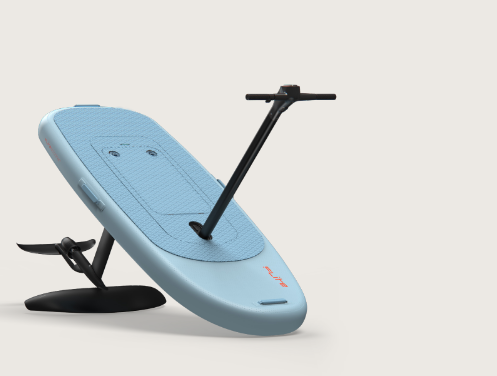
What Changed With the AIR Models in 2026?
The AIR models did not change dramatically, but Series 6 clarified their role.
Visually, the lineup is simpler. One Sabbia colorway. Less choice, more clarity.
Functionally, the AIR boards remain extremely durable. They are easy to transport, easy to store, and hard to damage.
But Hamish is honest about the tradeoff. Inflatable shells interact with the water differently. When a rider touches down, the material grips the surface slightly before releasing.
For some riders, especially early learners, that grip can feel like a brief brake. The board hesitates. Balance shifts.
Hamish describes it plainly: “The inflatable grabs the water. Some people feel that hesitation more than others.”
That does not make the AIR boards bad. It makes them different. Series 6 simply makes it clearer that AIR boards prioritize durability and logistics over feel.
If you are launching from docks, teaching groups, or traveling constantly, AIR still makes sense. If you are sensitive to how a board releases during takeoff and touchdown, hard boards feel cleaner.
How the Jet 2 System Changed Takeoff Behavior
Jet 2 changes the moment where most people struggle.
Older systems could feel abrupt. You touch the throttle, the board jumps, and suddenly you are reacting instead of controlling.
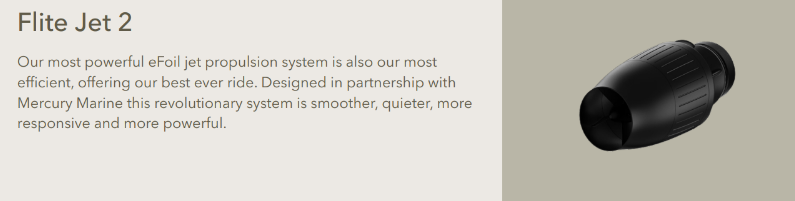
Jet 2 smooths that out. Power comes in progressively. The board accelerates instead of lunging.
A common lesson scenario illustrates this. A rider eases into the throttle, feels the board start to plane, and has time to adjust stance before lift. With Jet 2, that moment feels calm instead of rushed.
Noise matters too. Jet 2 is roughly 40 percent quieter. Instructors can talk. Riders can think. Sessions feel less chaotic.
Hamish notices it immediately: “People stop panicking at takeoff.”
Jet 2 does not make the board faster. It makes the rider calmer.
The Heavier Rider Rule: Jet 2 vs Propeller
Jet 2 works best within a certain range, and Hamish is very clear about that.
For riders over about 200 to 220 pounds, Jet 2 can feel underpowered right at the bottom end. The board planes, but the transition can feel drawn out.
Hamish jokes about himself: “I’m a fatty. I need the prop.”
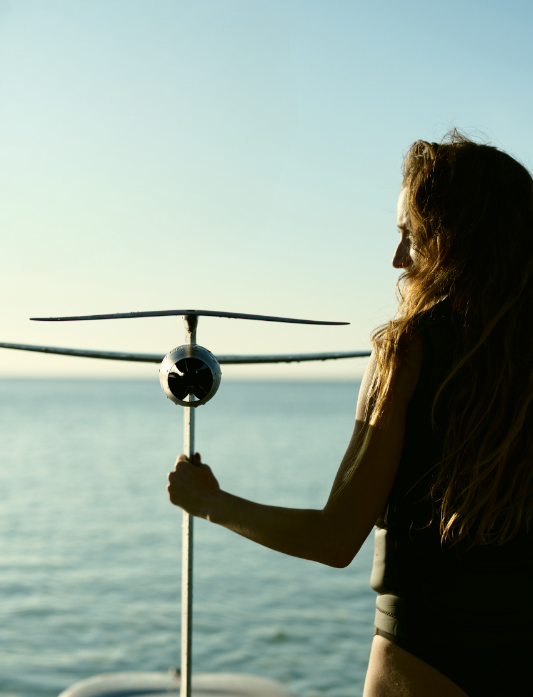
The traditional propeller delivers immediate, linear torque. Heavier riders feel the board lift cleanly instead of struggling through a slow transition. There is no surge, no gear-down feeling. Just steady pull.
Jet 2 is excellent for most riders. The prop is still the right tool for some. Series 6 does not remove options. It makes the rules clearer.
Performance Mastery: ULTRA L3 vs RACE Philosophy
Series 6 draws a sharp line between performance paths.
The RACE is a flat-water weapon developed with Mercury Racing. It goes fast, but more importantly, it supports the large Explore battery. That matters for heavier riders or anyone who wants speed without watching the clock.
ULTRA L3 takes the opposite approach. Less battery mass. More board feel. A forward mast shift improves stability, and the new tail kicker gives riders a physical reference when pushing hard turns.
The analogy fits because the use cases are different.
RACE is the Formula 1 car with a big fuel tank on a smooth track. ULTRA L3 is the stripped-down machine built to dance on waves.
Both exist because Series 6 favors purpose over compromise.
Hardware and Ergonomics That Reduce Friction
Some of the biggest improvements in Series 6 show up before you even ride.
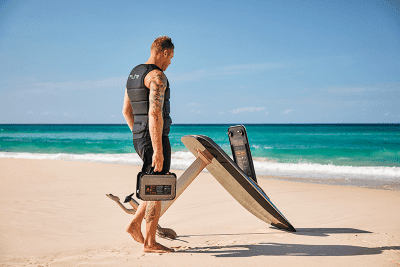
Recessed handles change how boards are carried. One hand. Battery installed. No smashed knuckles. No awkward tilt.
If you have ever carried a board off a dock and clipped a rail, you feel the difference immediately.
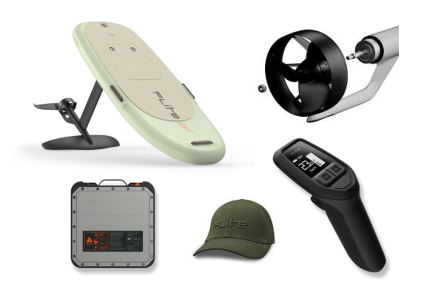
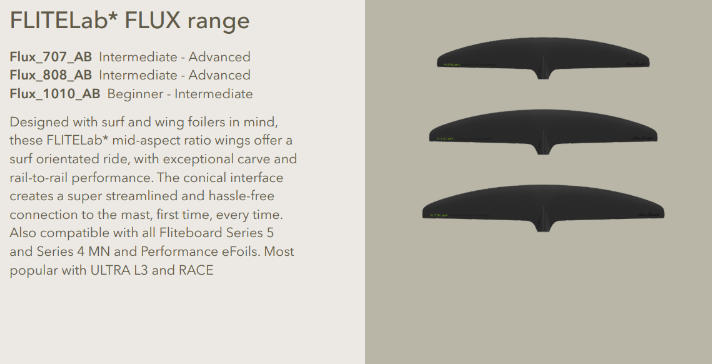
The conical wing interface is now standard, reducing drag and making boards ready for future FLITELab and Flux wings without adapters.
Even the Flitescooter reflects this mindset. One Sky colorway. Black anodized handles. Clear identity.
None of this makes boards faster. It makes ownership easier.
Frequently Asked Questions About the 2026 Fliteboard Series 6 Lineup
What does “Series 6” actually change compared to earlier Fliteboards?
Series 6 changes how the boards behave in the first moments of a ride. Takeoffs are smoother, noise is reduced, and the boards are more forgiving during mounting, standing still, and early throttle input. The focus is usability, not higher top speed.
Is the “Era of Speed” about going faster?
Not really. It is about faster confidence and faster progression. Riders spend less time recovering from mistakes and more time actually riding. Speed here means efficiency, not mph.
Why did Fliteboard move away from fiberglass?
Because fiberglass did not hold up to real use. Boards chip and crack when launched from docks, bumped on boats, or shared between riders. Polyurethane shells survive those situations far better without adding weight.
Does polyurethane change how the board rides?
Yes, subtly. Polyurethane absorbs small impacts and vibration better, which makes the board feel calmer at low speed. That matters most during standing still, foot adjustments, and early takeoff.
Is Jet 2 better for everyone?
Jet 2 is better for most riders because it delivers smoother, quieter power and removes the sudden surge at takeoff. However, heavier riders may still prefer a traditional propeller for stronger low-end torque.
When should a heavier rider choose a propeller instead of Jet 2?
Riders over roughly 200–220 pounds often feel more control with a propeller during takeoff. The prop provides predictable, linear pull that makes getting on plane easier at higher body weight.
Are the AIR models worse for learning than hard boards?
Not worse, but different. AIR boards are extremely durable and easy to transport, but the inflatable material can create a slight braking sensation during touchdowns. Some learners feel this more than others.
Why was the 100-liter board renamed ICON?
To remove confusion. The ICON is the reference all-rounder board. It is the primary teaching platform and the baseline for progression. The rebrand makes its role clear without changing how it rides.
Will Series 6 make older Fliteboards obsolete?
No. Earlier boards still ride well. Series 6 simply reduces friction and stress during learning and everyday use. It feels easier, not fundamentally different.
Is this page meant to help me choose a board?
No. This page explains why the 2026 lineup feels different. For choosing the right board, the 2026 Buyer’s Guide or the individual board guides are the better next step.
Final Takeaway: What the Series 6 “Era of Speed” Really Means
Series 6 is not about extremes. It is about removing small problems before they become big ones.
Polyurethane shells handle real use. Jet 2 calms the most stressful moment of a session. Hardware updates reduce mistakes that happen before riding even starts.
Speed, in this context, means faster confidence and faster learning.
Hamish sums it up best: “Series 6 just feels easier from the moment you step on.”
That is the real shift for 2026. Not chasing numbers, but making eFoiling calmer, smoother, and more approachable across the entire lineup.
Want Help Translating Series 6 Changes to Your Setup?
Series 6 changes how the boards behave, but it does not automatically tell you which configuration makes sense for you.
If you are trying to decide how polyurethane construction, Jet 2 vs prop, battery size, or board choice actually applies to your weight, experience level, and riding environment, the fastest way to get it right is a short conversation.
Start with the 2026 Fliteboard Buyer’s Guide if you want a structured overview of the lineup and progression paths. If you already know you are leaning toward the all-rounder, the Fliteboard ICON 2026 Guide breaks down how that board fits real ownership and learning scenarios.
And if you want a straight answer without guessing, contact Hamish directly.
He will tell you what works, what doesn’t, and what you actually need based on how and where you plan to ride.