



No. It is still a high-skill board, but the 2026 forward mast position actually makes wave riding calmer once you are on foil. It does not reduce performance. It reduces unnecessary pitch management.


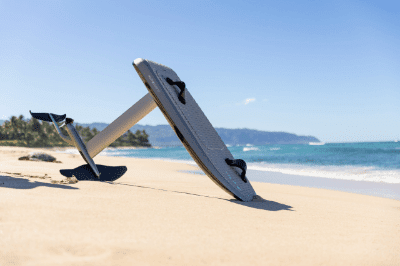
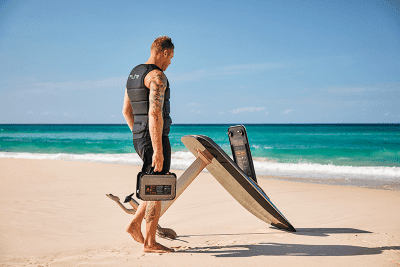
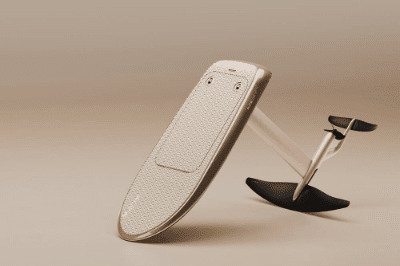
The 2026 Fliteboard ULTRA L3 is a purpose-built eFoil for experienced riders who want a board that behaves like a surf foil once the motor is off. At just 49 liters, with a 2 cm forward mast position and an ultra-narrow outline, it prioritizes glide, pitch stability, and clean wave lines over forgiveness or runtime. The forward mast calms pitch during powered-off transitions, the low volume and narrow silhouette reduce drag and swing weight, and compatibility with a folding prop allows the board to fully disengage from propulsion and ride freely down the line. The ULTRA L3 is not a do-everything eFoil. It is a specialist tool for wave riders who value precision, powered-off performance, and a true surf-foil feel over versatility or ease of use.
If you are looking at the Fliteboard ULTRA L3, you are not shopping for your first eFoil and you are not chasing top-speed numbers. You are looking for a board that behaves like a surf foil once the motor stops mattering.
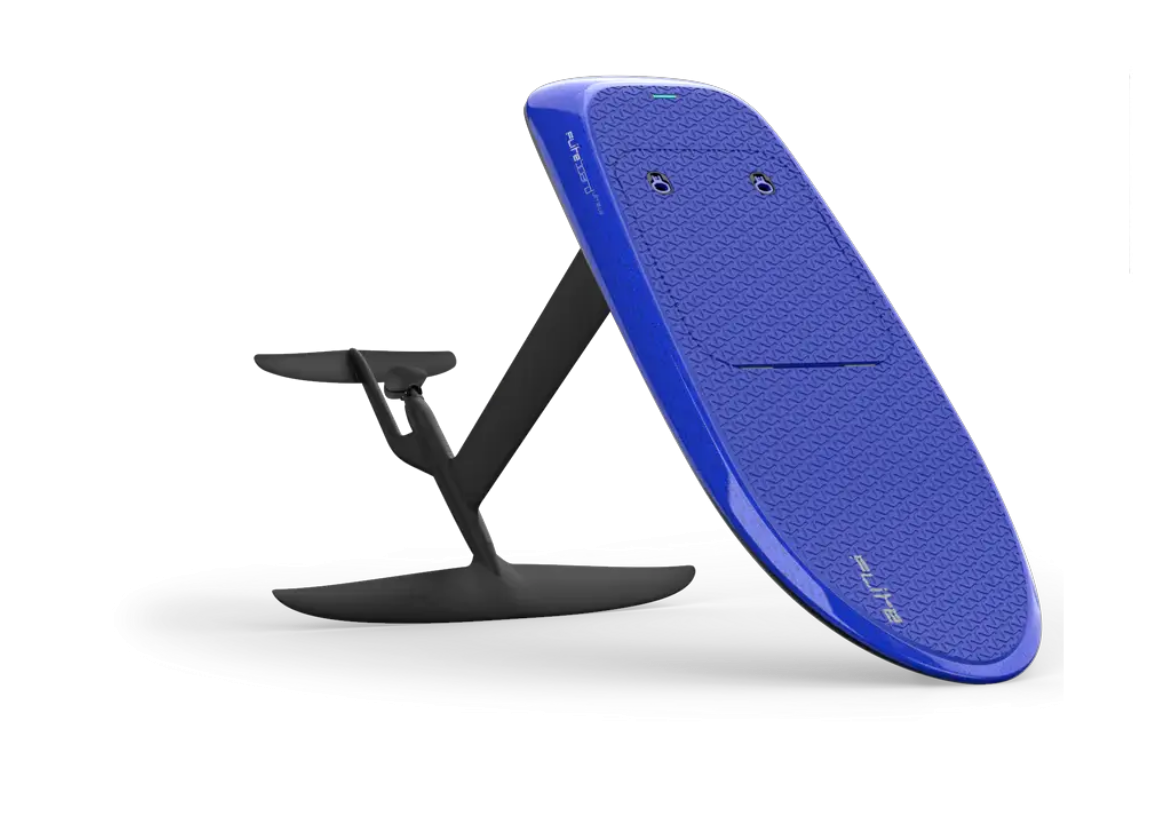
At just 49 liters, the 2026 ULTRA L3 sits at the extreme end of Fliteboard’s performance spectrum. This is their most compact, most reactive, and most surf-oriented platform. It is designed for riders who already understand foil lift, board trim, and wave positioning, and who want an eFoil that disappears under their feet once they are on foil.
For 2026, Fliteboard did not reinvent the ULTRA L3. Instead, they refined the parts that matter most when riding waves. A 2 cm forward mast position improves pitch stability without dulling response. The narrow 46 mm silhouette reduces drag and swing weight. Together, those changes make the board calmer when paddling into swell and more predictable once the motor is off.
Hamish described it best after the first sessions on the updated board:
“This is the first ULTRA that actually feels easier in waves without feeling slower or less alive.”
This guide breaks down what changed on the 2026 ULTRA L3, how those changes show up in real wave riding, and why this board continues to be the reference point for powered-off eFoil surfing.
↪ If you want the broader progression logic first, the Fliteboard 2026 Buyer’s Guide covers the full lineup step by step.
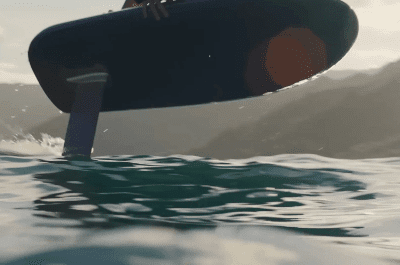
The single most important change on the 2026 ULTRA L3 is the 2 cm forward mast position. On paper, that sounds minor. On the water, it changes how the board behaves the moment power drops and the wave takes over.
On earlier ULTRA setups, the mast sat slightly farther back. That worked well for powered riding, but once you shut the motor down on a wave, riders had to stay more active with their feet to manage pitch. Small mistakes showed up fast. Late weight shifts meant nose drop. Early shifts meant breaching.
Moving the mast forward rebalances the entire system.
What riders feel immediately is calmer pitch at low and mid speeds. As you come off power and transition into glide, the board settles instead of hunting. You are not fighting fore-aft corrections just to stay in the pocket. The foil carries speed more naturally, which gives you time to read the wave instead of reacting to the board.
This matters most in real wave situations, not flat-water testing.
Picture a shoulder-high runner where you motor in, shut off, and set your line. On older placements, you might need a quick foot shuffle to keep trim as speed drops. On the 2026 ULTRA L3, that adjustment largely disappears. The board holds its angle. You stay centered. The wave becomes the focus.
Hamish described the change after his first few sessions:
“You don’t feel rushed anymore. Once you’re on foil, it just stays there.”
The forward mast also improves recovery when things are not perfect. Late drops, uneven chop under the wave face, or small timing errors no longer punish you immediately. The board gives you a fraction more margin to correct without dulling the ride feel.
This is not about making the ULTRA L3 forgiving. It is still a high-skill board. What the forward mast does is remove unnecessary instability that had nothing to do with wave riding itself.
The result is simple and noticeable.
Cleaner entries.
Quieter feet.
More confidence once power is gone.
If you already ride waves on an eFoil, this is the update you feel within the first minute.

At 49 liters, the 2026 ULTRA L3 lives in territory most production eFoils never touch.
This is not “light for an eFoil.”
This is true surf-foil volume, adapted to carry power only when you need it.
What matters is not the number alone. It is where that volume lives and what it allows once the motor stops being the focus.
Most performance eFoils keep extra length or thickness to smooth takeoffs and hide mistakes. The ULTRA L3 strips that away. It assumes you already understand lift, trim, and timing, and it removes anything that interferes once you are flying.
Nothing here is trying to help you.
It is trying to get out of the way.
The first thing you feel is reduced swing weight. Direction changes happen immediately. Turns feel connected instead of delayed. There is no mass pulling you off line when you redirect on a wave face.
That is the difference between powered and surfy.
The 46 mm narrow silhouette sharpens that feeling even further. Less width means less drag and fewer corrections once you are up. In waves, that shows up as cleaner lines and smoother transitions. You are not forcing the board through turns. You are guiding it.
The board follows the wave, not the motor.
This is why the ULTRA L3 rides lighter than its scale weight suggests. Roll and yaw resistance stay low. Inputs stay clean. The board responds without hesitation, which is exactly what experienced wave riders look for once power fades out.
Hamish described it simply after riding it back to back with higher-volume boards:
“You stop thinking about the board almost immediately. It just goes where you point it.”
Is it the lightest high-performance eFoil available? In terms of ride feel and functional surf volume, it sits right at the top. But that comes with a clear boundary.
This board does not carry beginners.
It does not hide stance errors.
And it does not forgive late decisions.
What it gives back is honesty.
A board that feels closer to a traditional surf foil than anything else with a motor attached.
Next, we’ll look at propulsion choices, specifically whether the 2026 ULTRA L3 can run a folding prop and how that changes real wave riding once you are powered off.
Yes. And on the ULTRA L3, it finally makes complete sense.
The 2026 ULTRA L3 is fully compatible with a folding prop, and for wave-focused riders, this changes how the board behaves the moment you shut power off.
Here’s why it matters.
A fixed prop always creates drag, even when you are no longer using it. On a wave, that drag shows up as resistance when you try to glide, pump, or link sections. The board feels like it is being gently pulled backward. You compensate without realizing it, usually by riding higher on the foil or working harder to maintain speed.
The folding prop removes that resistance.
As soon as you come off throttle, the blades fold cleanly out of the water. Drag drops immediately. The foil accelerates more freely down the line, and glide lasts longer with less effort. Instead of managing leftover propulsion hardware, you are riding a foil again.
On the ULTRA L3, this effect is amplified by the board’s 49-liter volume and narrow 46 mm silhouette. There is very little excess mass or width fighting you once power is gone. With the folding prop, the board transitions from powered entry to pure glide without a noticeable step in feel.
This shows up clearly in real sessions.
You motor in, shut off, set your rail, and the board keeps moving. Pumps feel lighter. Direction changes feel cleaner. You are not dragging hardware through the wave face while trying to stay in the pocket.
Hamish summed it up after running the ULTRA L3 with and without the folding prop:
“With the folding prop, it finally rides like a surf foil that just happens to have a motor.”
There is one important caveat.
Folding props are not beginner equipment. They are designed for riders who already have clean throttle control and know when to commit to powered-off riding. On the ULTRA L3, that expectation is already baked in. This setup assumes you are comfortable turning the motor into a tool, not a crutch.
If your goal is powered-off wave riding, longer glides, and less resistance once you drop in, the folding prop is not an accessory. It is part of the system that makes the ULTRA L3 feel complete.
Next, we’ll look at why the ULTRA L3 has become the reference point for powered-off wave riding, and what actually separates it from every other eFoil when the motor is no longer the focus.

This is where the ULTRA L3 separates itself completely.
Powered-off riding exposes everything a board is doing right or wrong. There is no throttle to save a bad line. No extra thrust to mask drag. What you feel is foil efficiency, balance, and how cleanly the board carries speed once gravity takes over.
The ULTRA L3 is built for that moment.
At 49 liters, there is no excess volume trying to resurface the board once you drop in. The board stays settled on foil instead of bobbing or rebounding. When you angle down the face, speed builds naturally, not because of power, but because nothing is holding you back.
The forward mast position matters here more than anywhere else. By moving the mast 2 cm forward, pitch stability improves when you are gliding without power. The nose stays composed. You are not fighting fore-aft balance while reading the wave. That lets you focus on line choice instead of correction.
Then there’s the 46 mm narrow silhouette.
Less width means less drag when the board is flat and less resistance when you roll onto rail. On a wave, that translates to smoother transitions and cleaner direction changes. You are not forcing turns. You are letting the foil do what it wants to do.
This is what riders feel immediately when power goes away.
The board does not stall.
It does not hunt.
It does not feel like it needs help.
It simply keeps moving.
That is why riders coming from prone or tow foiling adapt to the ULTRA L3 so quickly. The board does not feel like a powered platform pretending to surf. It feels like a surf foil that happens to have a motor for positioning.
Hamish described it after a clean, powered-off session:
“Once the motor’s off, it disappears. That’s the goal.”
This is also why the ULTRA L3 is unforgiving in the right way. If your timing is late or your line is wrong, the board will not correct it for you. But when you get it right, the reward is a glide that feels natural and unforced.
That balance is hard to achieve.
And it is exactly what wave riders are chasing.
If powered-off riding is the reason you’re looking at the ULTRA L3, this is the section that matters most. You can see the full ULTRA L3 setup on the product page, or talk it through with Emerald Wake to make sure your mast, prop, and battery choices support the kind of waves you actually ride.
If this style of riding sounds like what you’re after, you can take a closer look at the ULTRA L3 on the product page. If you want to talk it through before deciding, you can reach Emerald Wake directly.
The ULTRA L3 is extremely sensitive to setup. Battery choice, mast, and propulsion all matter more here than on any other Fliteboard.
This is not a board where you add capacity “just in case.”
For wave riding, lighter is better, almost every time.
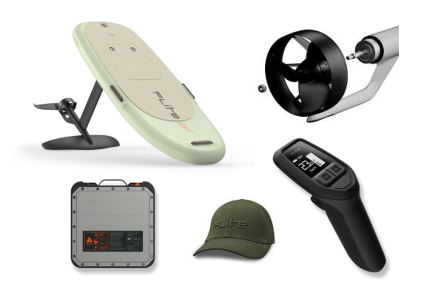
Most ULTRA L3 riders end up on the Nano battery, and there is a clear reason for that. The Nano keeps total system weight low, reduces swing weight, and lets the board sit higher and freer on foil once power is off. When you drop into a wave and shut the motor down, the board feels neutral instead of anchored. Pumps take less effort. Direction changes stay clean. The foil carries speed without feeling loaded.
That matters far more in waves than runtime.
The Explore battery technically fits, but on the ULTRA L3 it works against the board’s purpose. Extra mass dulls the very thing this board is designed to maximize: glide, responsiveness, and powered-off feel. Long cruise time is not the goal here. Clean entries and effortless exits are.
Propulsion choice reinforces the same logic. A folding prop pairs naturally with the Nano setup. Once you cut throttle, drag disappears and the board transitions instantly into surf mode. Nothing is hanging in the water asking for compensation. The system stops feeling powered and starts feeling pure.
Mast choice follows suit. Riders chasing waves typically stay on the MN Carbon Wave mast, keeping the entire setup light, stiff, and responsive. There is no reason to overbuild the system when the board itself is already optimized for precision.
The takeaway is simple.
The ULTRA L3 rewards restraint.
Minimal battery. Clean propulsion. Purpose-built mast.
When everything is aligned, the board stops asking for attention and starts doing exactly what wave riders want it to do.
If you’re unsure which combination matches the waves you ride and how you actually use power, that’s the moment to pause and sanity-check the setup before buying. A quick conversation with Hamish usually saves weeks of second-guessing later.
The ULTRA L3 is built for riders who already know what they are doing once power stops mattering. It assumes you can manage takeoffs cleanly, shut the motor off with intention, and control pitch without relying on thrust to fix mistakes.
This board makes sense if you:
It does not make sense if you:
The ULTRA L3 does not teach wave riding.
It reveals it.
When timing is right, it feels effortless.
When timing is off, it does nothing to help you.
Hamish put it plainly after a week of demos:
“This board rewards good habits immediately and exposes bad ones just as fast.”
That honesty is exactly why experienced riders love it. There’s no padding between you and the foil. No excess volume masking feedback. No system weight dragging you through turns.
If you want a surf-first eFoil that disappears once the wave takes over, this is the right tool. If you want something more versatile or forgiving, the answer lives elsewhere in the lineup.
Next, we’ll close this out by tying the ULTRA L3’s role together and clarifying where it sits long-term in a quiver, not just as a single-board decision.

The ULTRA L3 is not a destination board.
It is a specialist tool.
In a real-world quiver, it sits at the point where riding stops being about access and starts being about feel. This is the board you reach for when conditions line up and you want the motor to disappear as early as possible.
Most ULTRA L3 owners do not ride it every session.
They ride it on the right sessions.
Clean swell.
Room to set a line.
Enough confidence to shut power off early and commit.
That context matters. The ULTRA L3 shines when it is used intentionally, not when it is forced to cover roles it was never designed for. Paired with a PRO, ICON, or even an AIR for everyday riding, the ULTRA L3 becomes the wave-specific piece that completes the lineup rather than replacing it.
What makes the 2026 update important is not that it changed what the ULTRA L3 is. It made it easier to access what it already did well.
The forward mast position reduces unnecessary pitch work.
The narrow silhouette keeps drag out of the way.
The low volume stays honest once power fades.
Nothing here adds forgiveness.
Everything adds clarity.
If your goal is powered-off wave riding that feels closer to prone foiling than eFoiling, the ULTRA L3 remains the reference. If your goal is one board to do everything, this is not it and it is not trying to be.
That is why it works.
If you already know this board fits how and where you ride, you can explore the full ULTRA L3 setup on the product page. And if you want to sanity-check battery, mast, or prop choices before committing, talking it through with Hamish is the fastest way to get it right.
This board rewards precision.
It rewards restraint.
And when used correctly, it disappears exactly when you want it to.
That is the point.
No. It is still a high-skill board, but the 2026 forward mast position actually makes wave riding calmer once you are on foil. It does not reduce performance. It reduces unnecessary pitch management.
For most riders, no. It is designed for wave-focused, powered-off riding. Many owners pair it with a PRO or ICON for everyday sessions and keep the ULTRA L3 for clean swell days.
Lighter batteries are preferred. Nano and Sport keep swing weight low and preserve the surf-foil feel. Heavier batteries work, but they dilute what the board is designed to do.
Not required, but strongly recommended for wave riding. The folding prop removes drag once power is off and makes the ULTRA L3 feel significantly closer to a true surf foil.
It can, but it is not optimized for it. This board shines when there is enough energy to glide. In soft conditions, higher-volume boards are easier and more fun.
Riders still refining takeoffs, riders who rely on throttle through turns, or anyone looking for forgiveness. The ULTRA L3 assumes clean technique.
If you still find yourself unsure after reading this, that usually means you are right on the edge of where the ULTRA L3 starts to make sense. In that case, a short conversation is often more useful than another spec comparison.
You can review the ULTRA L3 directly on the product page, or contact Emerald Wake and ask for Hamish to talk through whether this board actually fits how you ride.
Read Also: 2026 Fliteboard RACE Review & Fliteboard ICON 2026 Guide & Fliteboard PRO 2026 Review & What’s New in the 2026 Fliteboard Series 6 Lineup?
Please fill out this form and someone from our team will contact you as soon as possible. You can also reach us by email at info@emeraldwake.com
info@emeraldwake.com
Phone: (850) 400-8500
Business hours:
Mon-Sat: 8am – 5pm
Sun: 9am – 4pm

© 2026 Emerald Wake LLC - All Rights Reserved
Privacy Policy | Accessibility | Terms of Use | Disclaimer