




Often, yes. In shallow and depth-variable systems like Coastal Dune Lakes, inlets, and protected bays, the Lind can be a better fit than a hydrofoil eFoil because it does not rely on mast clearance beneath the board.

If you ride in shallow, depth-variable water along 30A, Lake Powell, or similar brackish dune lake systems, the Lind is often a better fit than a hydrofoil eFoil because it does not rely on mast clearance.
In this guide, I’ll break down:
Bottom line: This is not a brand decision. It is a water-depth decision.
If you live along 30A or near Lake Powell, you already know something many electric board buyers overlook.
Water here is not static.
These dune lakes and inlets can look perfect on a calm morning. Clean surface. Private dock access. Minimal traffic. But beneath that surface, depth changes. Dock shelves sit under three feet in places. Sandbars move. Seasonal fluctuations shift the usable riding corridor throughout the year.
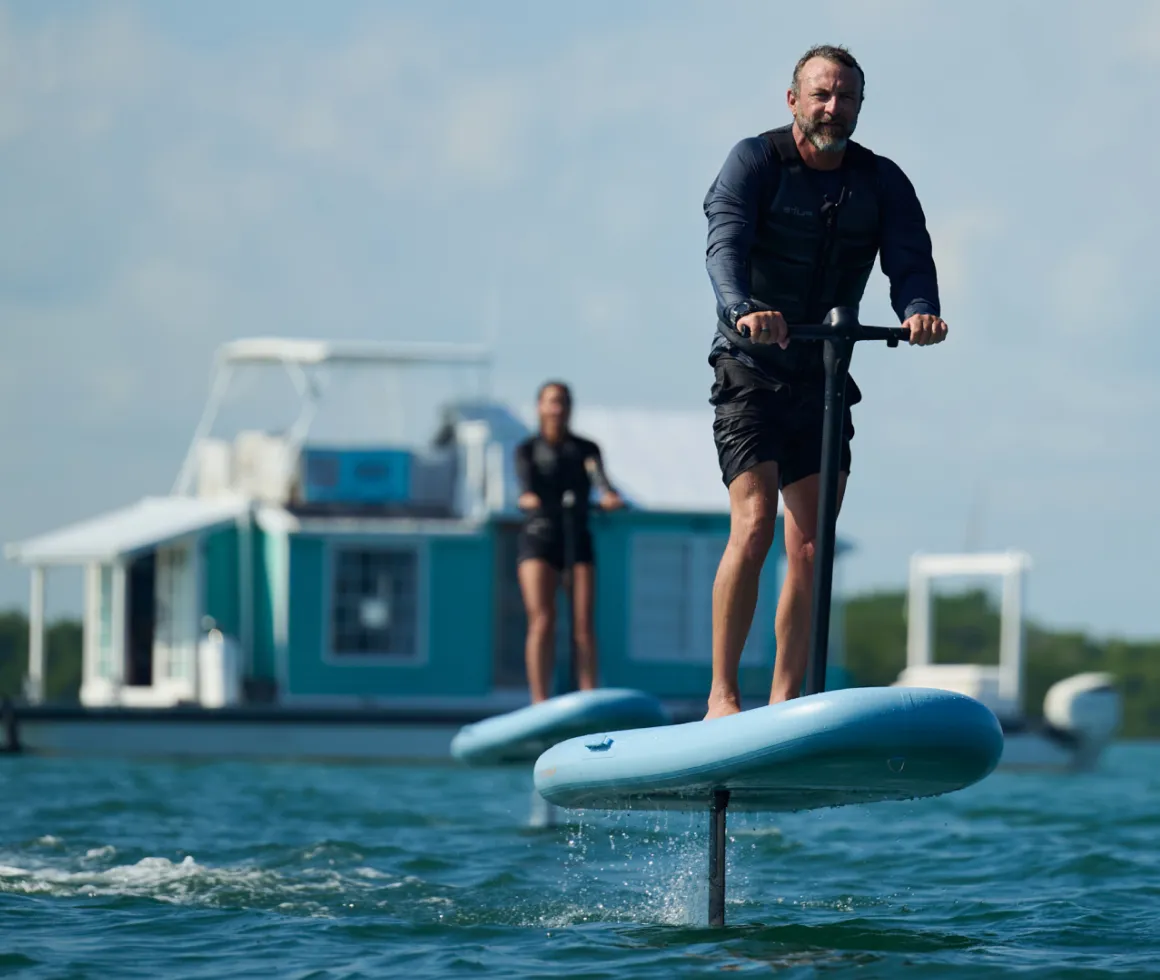
A hydrofoil needs room under the board to operate properly.
In water where bottom contours tighten or shift, that requirement becomes limiting.
That is exactly why I chose to bring the Lind Canvas into the shop.
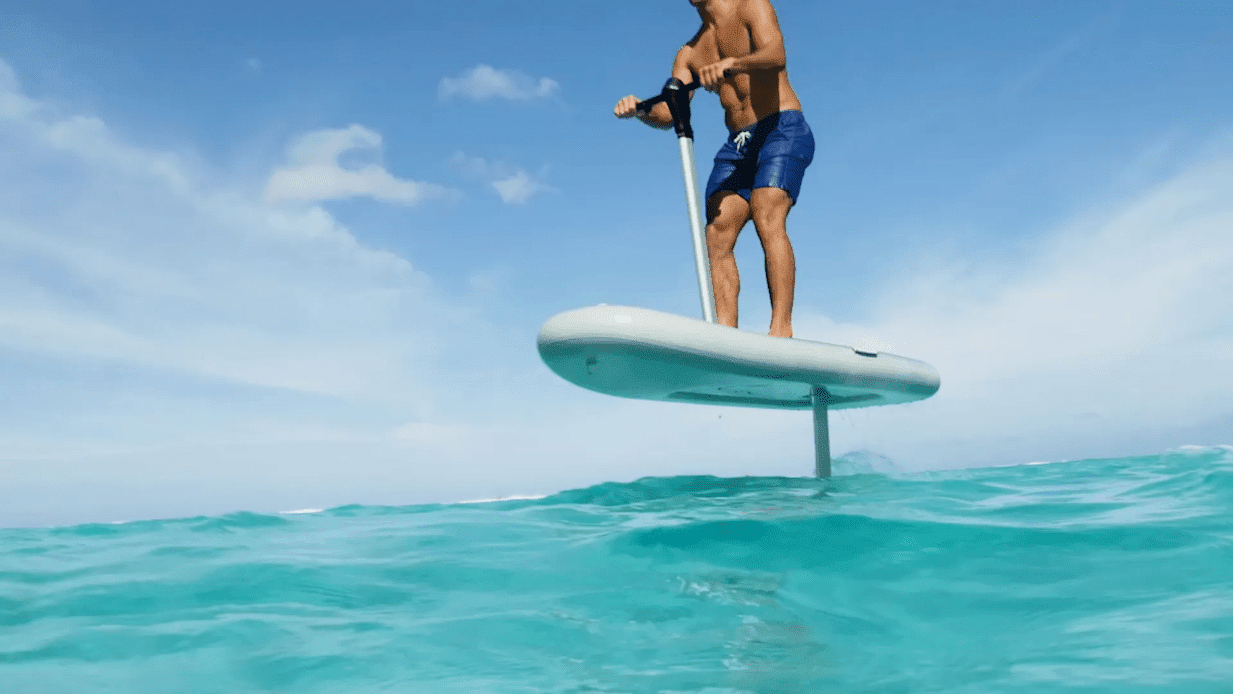
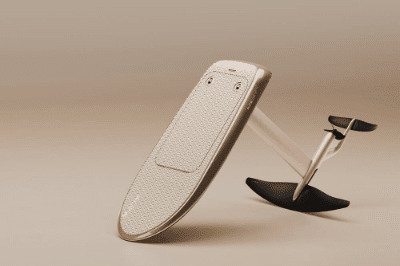
The Lind is not a novelty product. It is a precision-built electric surf platform positioned at the luxury marine level. Its propulsion system stays inside the hull, which means it does not rely on underwater mast clearance the way a foil does.
For homeowners riding from docks, inlets, or protected bays, the first consideration is not speed.
It is simple: Is your water actually deep enough for the board you are considering?
Get in touch with Hamish if you have specific questions about the Lind, or if you would like to experience one in person before making a decision. Units are available through Emerald Wake Website with direct delivery options.
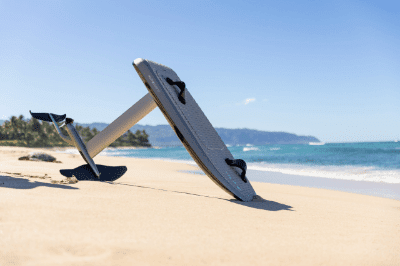
Hydrofoils depend on consistent vertical clearance beneath the board.
Electric hydrofoils introduced lift by raising the board above the water’s surface. Once elevated, drag drops and the ride becomes smooth and efficient.
In deeper water, that system works beautifully.
Most performance eFoils use masts between 28 and 32 inches. When you factor in rider movement and safety margin, you need more depth than many people assume.
In our local systems, bottom contours aren’t uniform. If a foil makes contact with sand, damage can happen quickly.
That’s not an engineering flaw.
It’s a terrain mismatch.
⤷ If you are unfamiliar with how hydrofoil lift works, read our detailed breakdown: What Is an eFoil and How Does It Work?
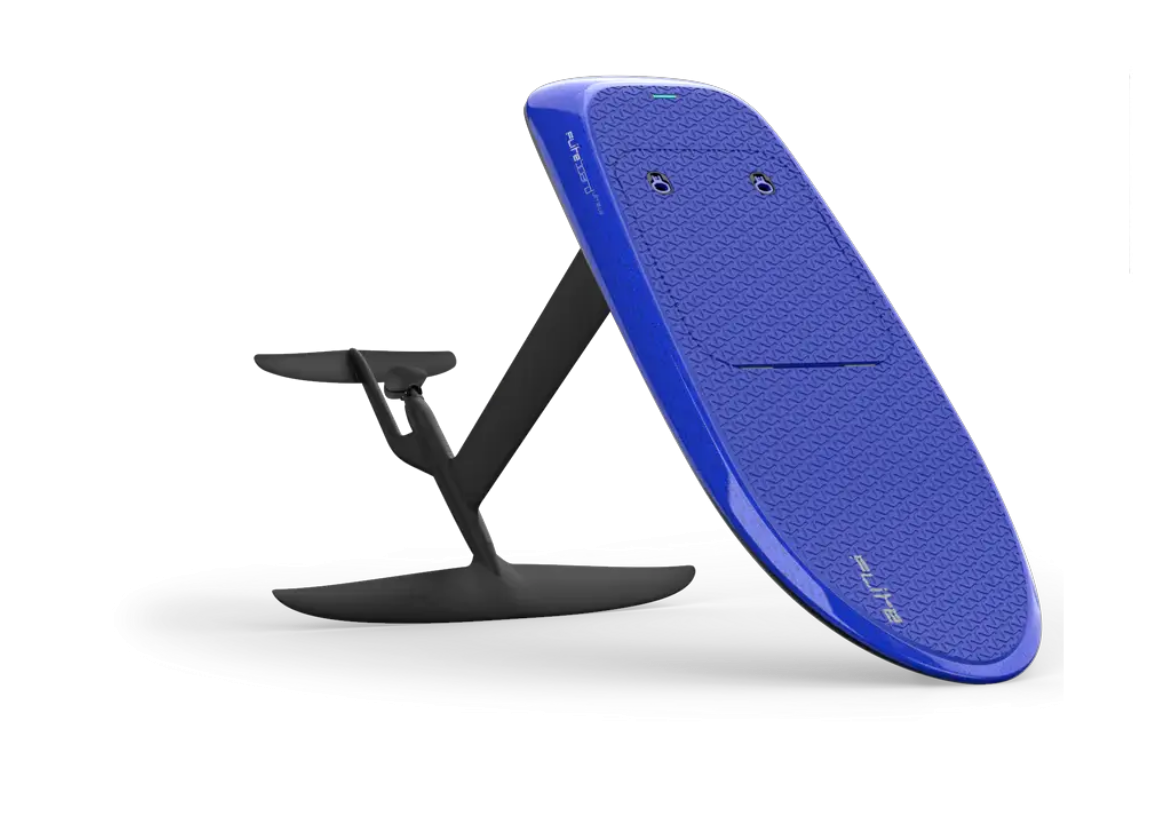
Premium hydrofoil systems like Fliteboard excel in deep bays, large freshwater lakes, and offshore coastlines. They deliver long glide and a true levitation feel.
The Lind platform was built around a different assumption.
Not all water is deep.
Different technology. Different application.
This isn’t about which system is better.
It’s about how you want it to feel.
Both remove the need for waves.
Both use electric propulsion.
But once you’re riding, they are completely different.
A hydrofoil lifts.
As speed increases, the board rises above the water. Once elevated, the ride becomes quiet and efficient.
You’re riding above the surface.
For riders who prioritize glide, range, and that floating sensation, it’s hard to beat.
But it requires depth.
It’s technical. It’s balance-driven. It’s about managing lift.
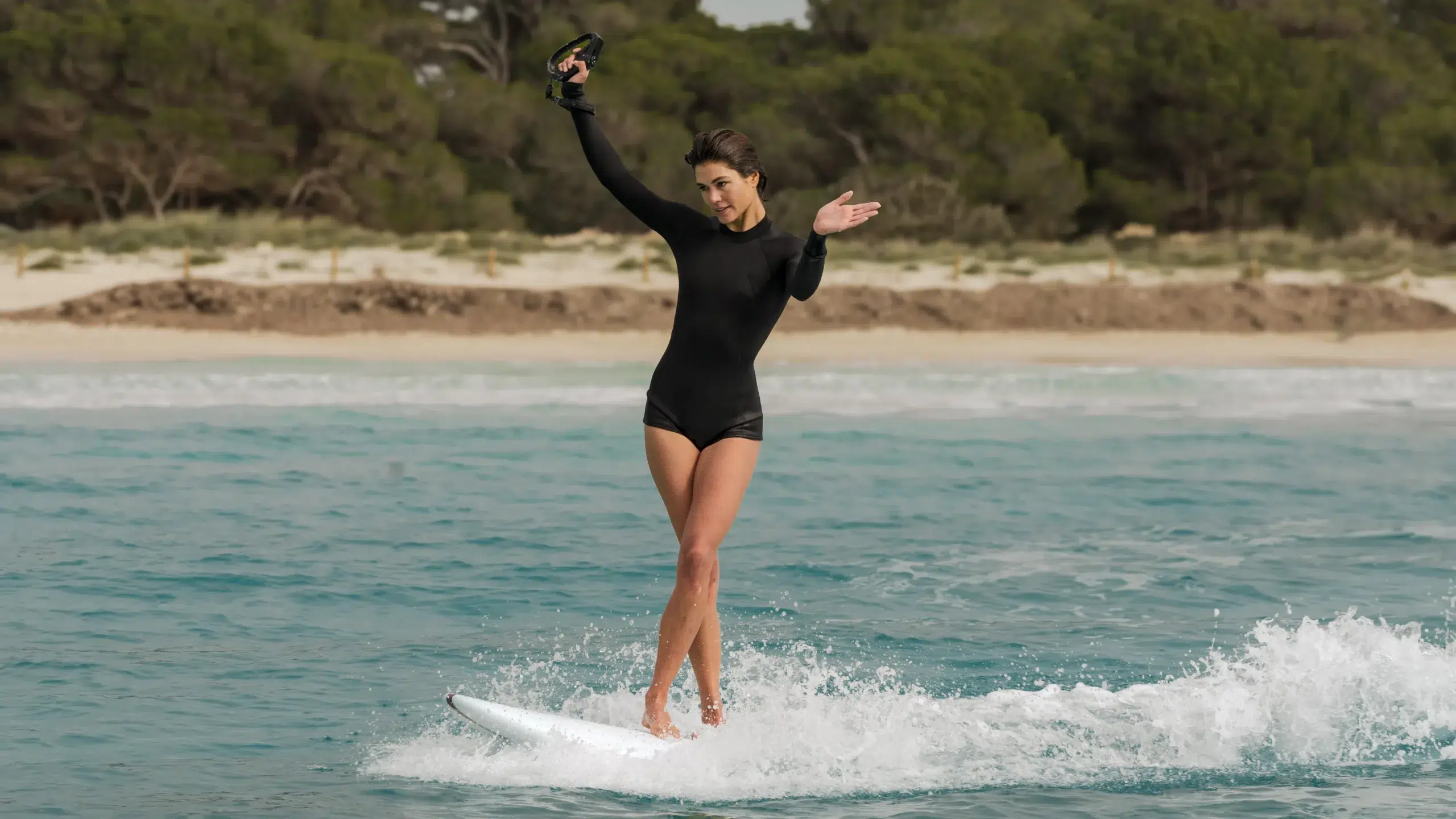
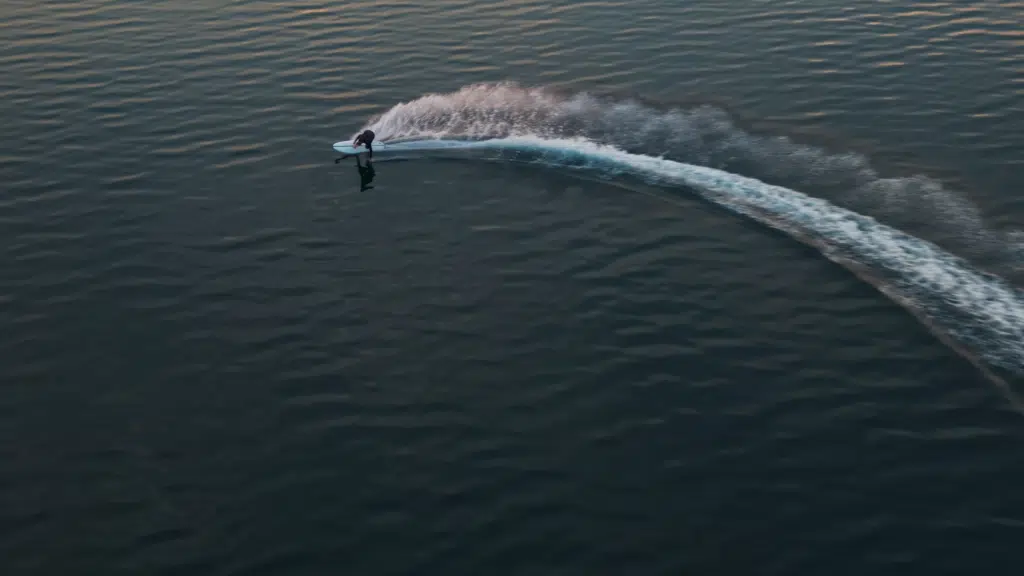
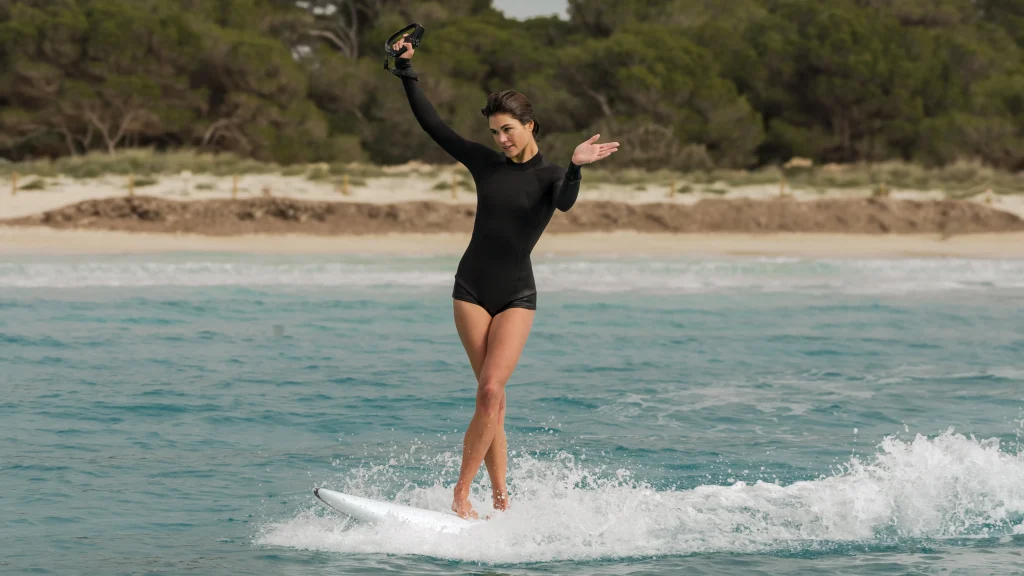
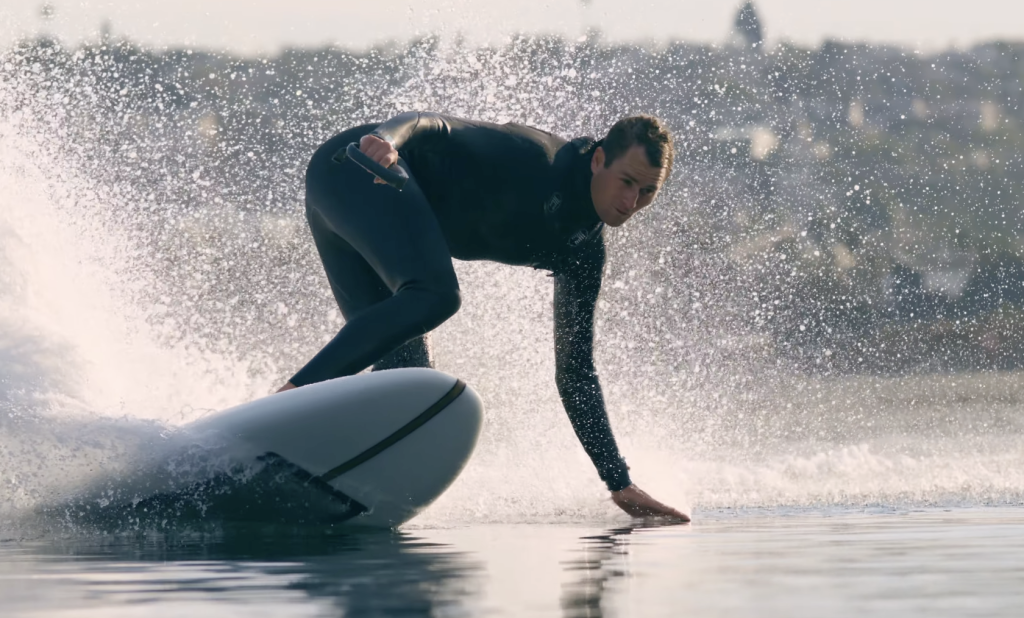
The Lind stays on the surface.
It planes across the water instead of rising above it.
You feel the rail engage.
You feel spray off the tail.
You feel water texture under your feet.
Many riders compare it to snowboarding on water. Lean and it drives.
At higher speeds, it’s more physical than people expect. Your legs act as suspension. You stay engaged.
You’re not hovering.
You’re carving.
If you’re unsure which aligns with your water and riding style, reach out to Hamish. He’ll walk you through it based on where you actually plan to ride.
The structural difference is simple.
There’s nothing extending below the board.
Everything is integrated into the hull.
In environments where depth changes quickly, that matters.
If you’re riding dune lakes, shallow bays, or private shoreline access, you don’t want to calculate what’s under you.
With the Lind, you don’t have to.
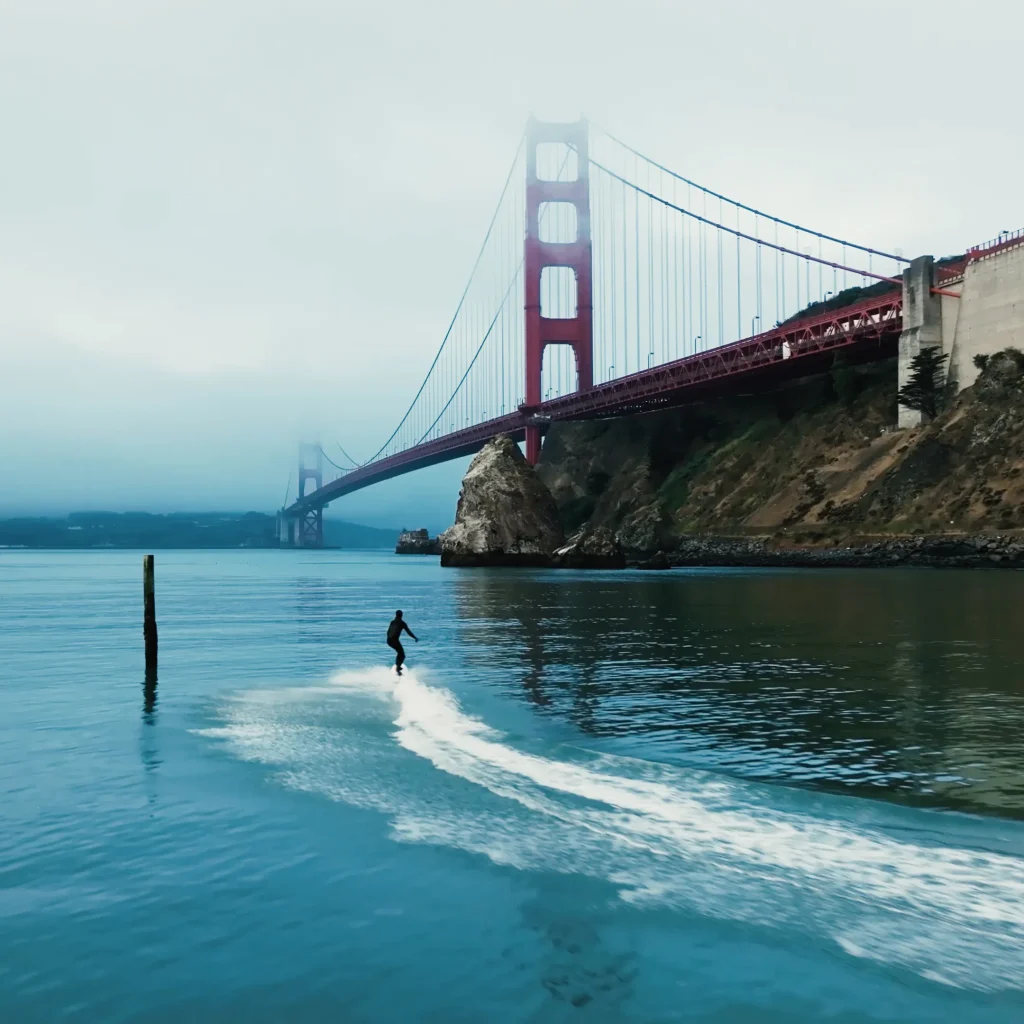
Water is drawn through an intake, accelerated by dual motors, and expelled through a precision jet channel.
There is:
No exposed propeller
No mast beneath the rider
No submerged wing
The drive unit locks into place without tools.
From a rider’s perspective, that means immediate throttle response and instant planing.
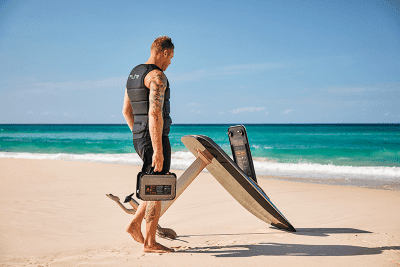
From an ownership perspective, the modular system makes transport realistic if you don’t have dockside storage. The board, battery, and drive unit separate cleanly.
On paper:
✔️ 20 kW dual motor output
✔️ 3.1 kWh battery
✔️ Speeds up to around 40 mph
✔️ Roughly 45 minutes of ride time
What that translates to is more important.
The board accelerates quickly and settles once planing. Speed adds stability.
The most technical moment is transitioning from prone to standing. After that, the stance feels intuitive for anyone with surf, snowboard, wake, or skate background.
At higher speeds, you stay engaged.
This isn’t passive cruising.
It’s active riding.
You hear the water more than the motor. It’s a contained system, so what dominates is spray and wind, not engine noise.
And none of it depends on depth below the board.
If you’re evaluating this for your property or dock access, that’s usually the deciding factor.
If you want to talk through your launch zone and whether this platform makes sense there, get in touch with Hamish. He’ll walk you through real-world conditions, not just specs.
Along 30A, you’re not dealing with deep, uniform water.
You’re dealing with dynamic coastal systems.
Access changes. Entry points shift. Certain corridors become more usable at different times of year.
That reality should guide platform selection.
⤷ Read Also: Top 5 Things to Do on Lake Powell with an eFoil
In these environments, clearance can become inconsistent.
Common factors include:
When depth becomes unpredictable, your riding area narrows.
That’s simply a function of terrain.
Because propulsion remains inside the hull profile, the Lind can operate in:
This isn’t about top speed.
It’s about usable access.
If you’re launching from private shoreline property or within a dune lake system, evaluate your depth profile first.
Reach out to Hamish. He’ll review your location and help you determine what actually fits your water.
The first thing you notice is acceleration.
The board gets on plane quickly. Once there, it feels planted.
Speed adds stability.
You feel rail pressure. Spray off the tail. Surface texture underfoot.
On calm mornings inside a dune lake, you mostly hear wind and water. The motor fades into a soft background whirr.
You’re not flying above the surface.
You’re carving across it.
This isn’t a gadget.
It’s a performance platform.
At higher speeds, your legs absorb chop. Throttle input matters. Stance matters.
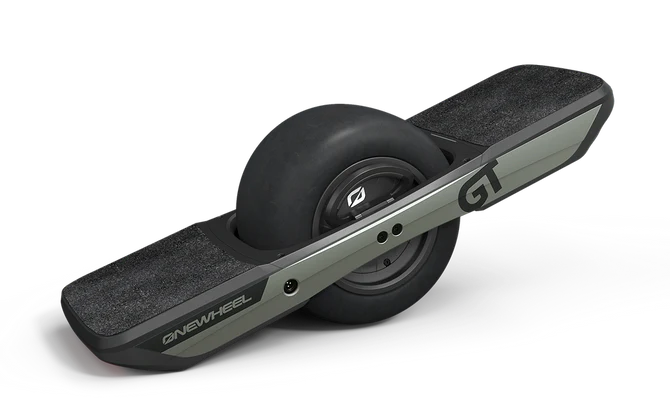
If you’ve ridden a surfboard, wakeboard, skimboard, or something like a OneWheel, the stance feels intuitive. The learning curve is about speed control, not lift management.
Falls are real at higher speeds.
It rewards awareness.
It feels athletic.
Yes, when used in the right environment.
This is powered marine equipment. It requires space and rider awareness.
There is no ankle leash. The system uses wireless signal cutoff. If signal drops, motor output stops. At speed, the board will travel briefly before settling due to inertia.
This is not built for crowded swim beaches.
It performs best in:
If your launch zone is high density and unpredictable, this is not the right platform.
This is not for:
It requires balance, throttle discipline, and spatial awareness.
If you ride and understand board dynamics, it aligns.
If you want passive recreation, it does not.
This is an environmental decision.
| Category | Lind | Fliteboard |
| Propulsion | Integrated jet | Mast and hydrofoil |
| Depth Requirement | Shallow-compatible | Requires consistent clearance |
| Ride Feel | Surface carving | Elevated glide |
| Best Terrain | Dune lakes, inlets | Deep bays, offshore water |
If your water depth varies, has shelf edges, or shifting sandbars, mast clearance becomes the constraint.
If your water is deep and stable, hydrofoil lift becomes viable.
For yacht owners, the question is clearance and handling.
The Lind is modular. Battery and propulsion separate cleanly, reducing lifting weight and simplifying storage onboard.
Hydrofoils require vertical clearance below the board.
Surface propulsion does not.
In shallow anchorages, that difference determines usability.
Freshwater rinse and proper lithium battery storage remain essential.
→ If your vessel operates in shallow coastal zones and you want solo board-style riding, it aligns.
→ If you want passenger transport or long cruising range, it does not.
They are different mechanically.
Hydrofoil systems require managing lift and elevation.
The Lind requires managing speed and rail engagement.
There is no lift transition. The board stays on the surface and planes.
If you have surf, wake, or snowboard background, the stance feels intuitive. You’re managing acceleration, not flight.
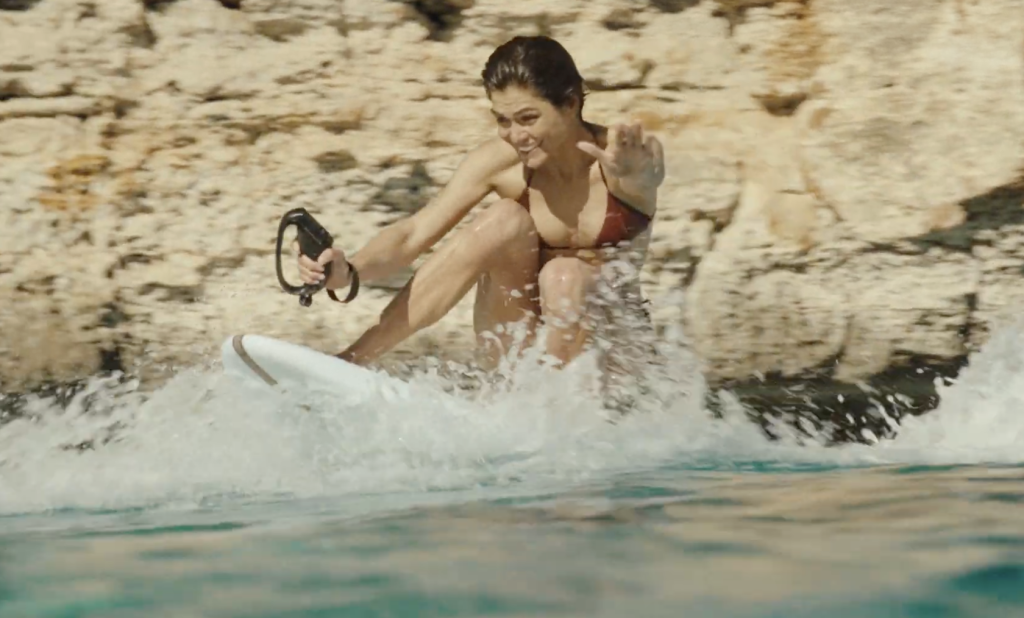
Rated runtime is approximately 45 minutes.
Actual duration depends on:
Sustained high throttle reduces runtime. Controlled riding extends it.
For most riders, 45 minutes represents a full session.
The relevant question is whether that matches how you plan to use it from your dock or anchorage.
Electric surf has split into two paths:
Both are refined. Both are legitimate.
If your shoreline is deep and stable, hydrofoil lift delivers glide and range.
If your water is shallow, shelf-heavy, or depth-variable, surface propulsion removes the clearance constraint and expands your usable riding area.
This decision is not about hype. It is about terrain.
Before choosing a platform, evaluate your actual launch zone.
In Coastal Dune Lakes along 30A and Lake Powell, water depth is not uniform. Dock shelves, shifting sandbars, and seasonal fluctuations reduce consistent underwater clearance.
Hydrofoil eFoils require mast depth beneath the board to operate properly.
The Lind electric surfboard keeps propulsion integrated within the hull, removing the mast clearance constraint and expanding usable riding space in shallow and depth-variable systems.
The correct platform choice depends on your actual launch zone, shoreline profile, and riding objectives.
At Emerald Wake, we evaluate real-world water conditions before recommending a platform.
Often, yes. In shallow and depth-variable systems like Coastal Dune Lakes, inlets, and protected bays, the Lind can be a better fit than a hydrofoil eFoil because it does not rely on mast clearance beneath the board.
Hydrofoil eFoils require consistent vertical clearance under the board. In dune lake environments where dock shelves sit shallow, sandbars shift, and water levels change seasonally, that clearance can become inconsistent and reduce the usable riding area.
In many cases, yes, as long as the area is navigable and free of submerged hazards. Because propulsion stays within the hull profile, the Lind does not require mast clearance the way a hydrofoil system does.
Yes, when used in the right environment. This platform is not designed for crowded swim beaches. It works best in open water corridors, private dock launches, and low-traffic sessions where the rider has space and predictable surroundings.
This platform is not for unsupervised children, crowded public beach use, casual rental operations, or buyers expecting a novelty ride. It requires balance, throttle control, and spatial awareness.
For shallow and depth-variable water, the Lind is often the better fit because it does not rely on a mast below the board. For deep and consistent water where lift and glide are the goal, a hydrofoil eFoil like Fliteboard can be the better choice.
They are different mechanically. eFoils require learning lift control during elevation. The Lind stays on the surface, so the learning focus is throttle discipline, stance, and rail engagement at speed. For riders with surf, wake, or snowboard background, the surface stance often feels intuitive.
The rated runtime is around 45 minutes, but real-world duration depends on rider weight, throttle usage, water conditions, and average speed. Controlled riding typically extends runtime compared to sustained high throttle.
If your shoreline has shallow shelves, shifting sand, or seasonal drawdowns, you may not have consistent clearance for a hydrofoil mast. The simplest approach is to evaluate the depth profile of your launch zone and riding corridor before choosing a platform.
Please fill out this form and someone from our team will contact you as soon as possible. You can also reach us by email at [email protected]
[email protected]
Phone: (850) 400-8500
Business hours:
Mon-Sat: 8am – 5pm
Sun: 9am – 4pm

© 2026 Emerald Wake LLC - All Rights Reserved
Privacy Policy | Accessibility | Terms of Use | Disclaimer