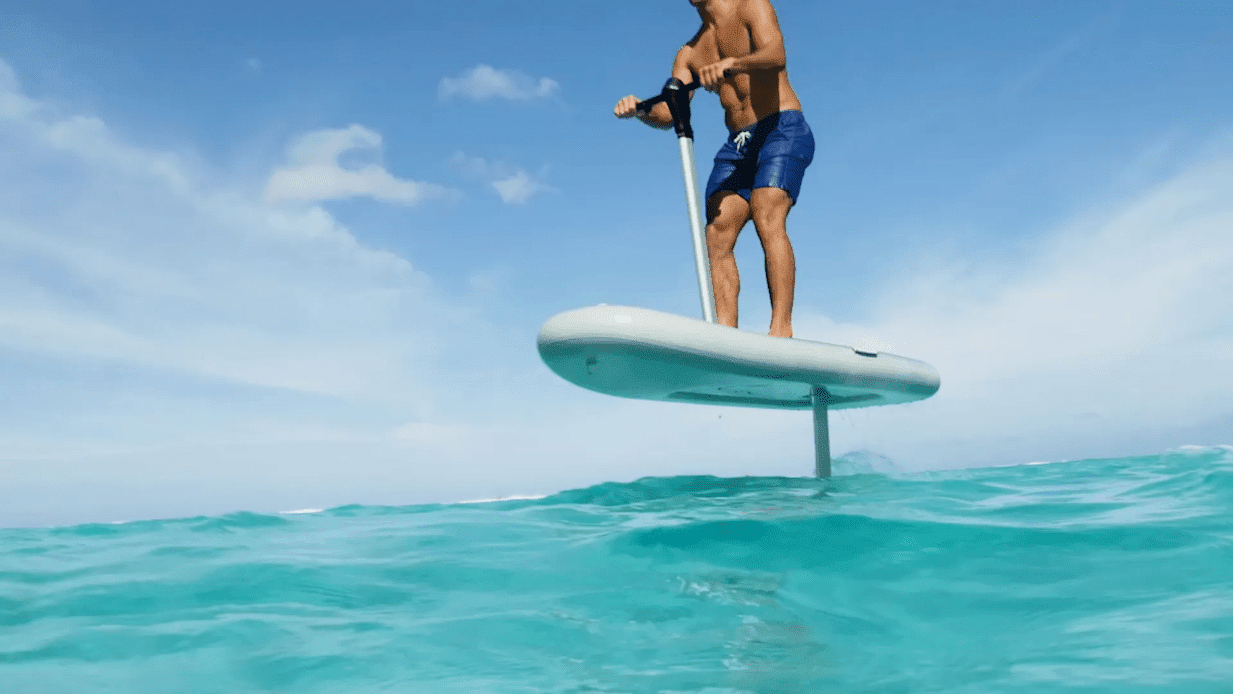


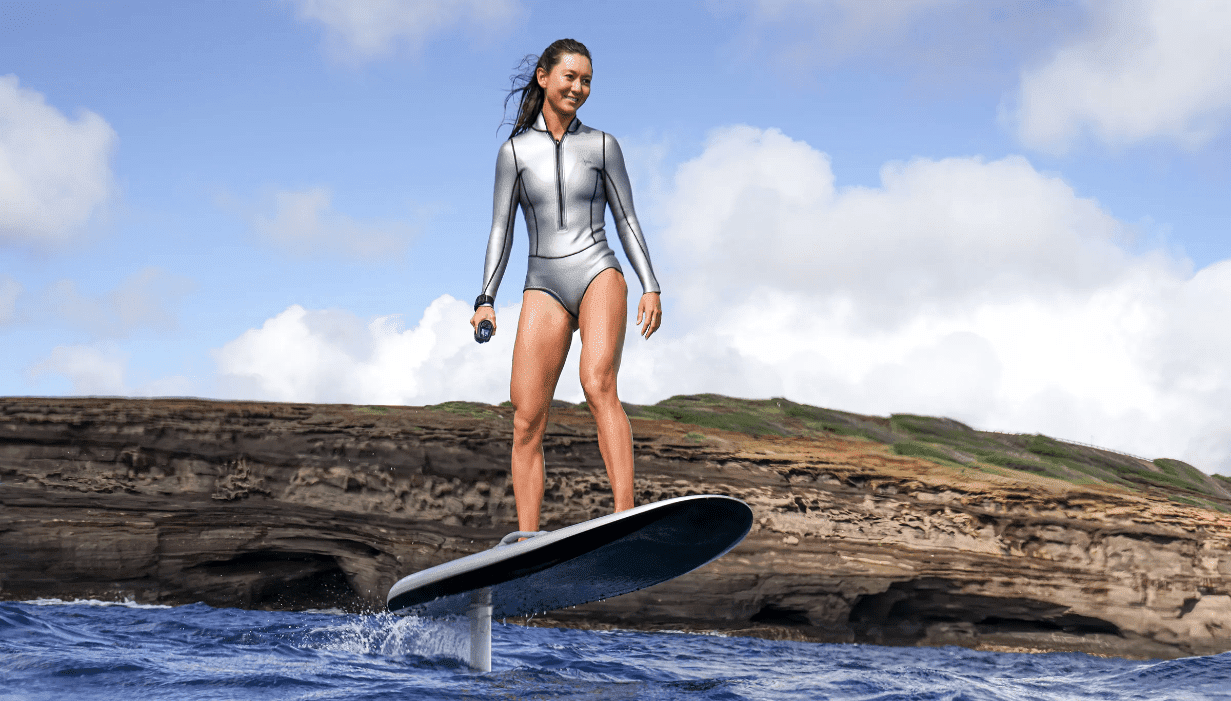




In real-world riding, yes. The RACE has been clocked at 55 km/h (34 mph), but more importantly, it can hold that speed repeatedly without the instability or drop-off most boards experience at the top end.


If you’re asking how fast the new Fliteboard RACE really is, you’re already in a different category of rider. This board was not designed to make eFoiling easier, safer, or more forgiving. It was built to go fast, stay composed at speed, and hold efficiency right where most boards start to fall apart.
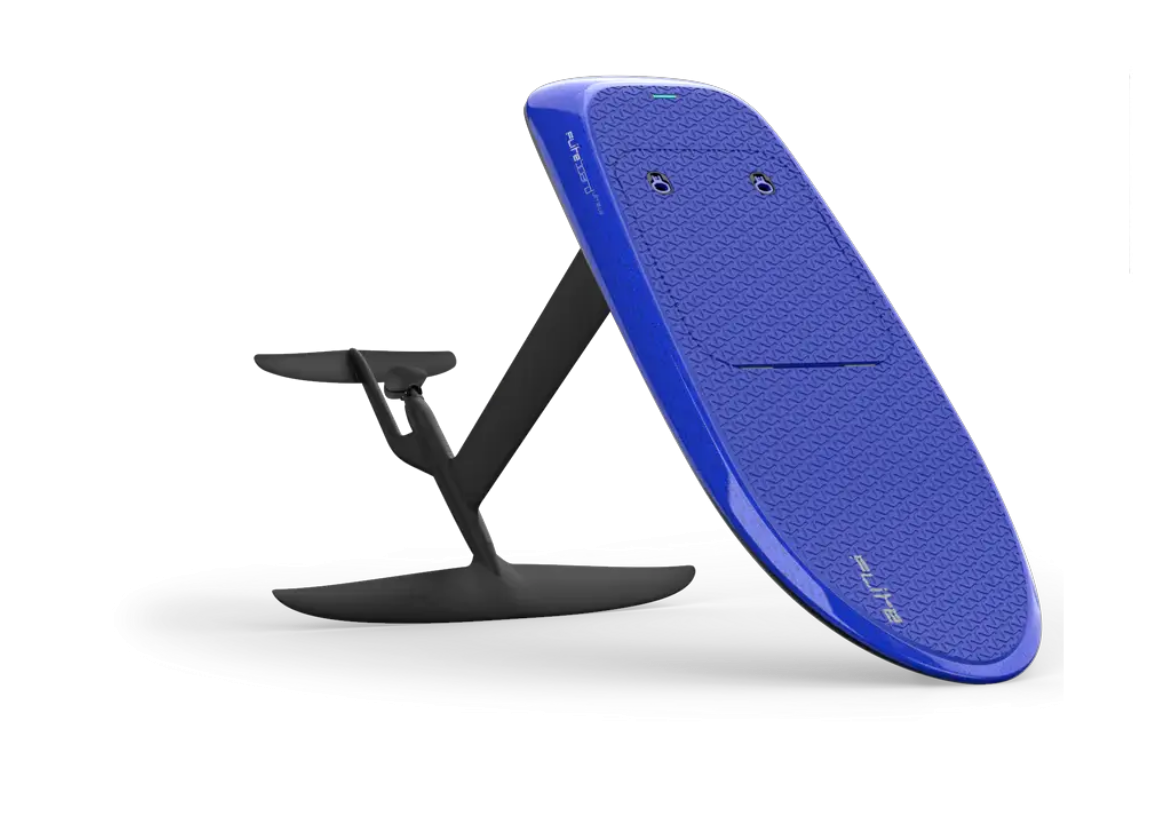
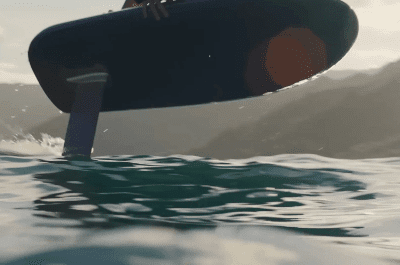
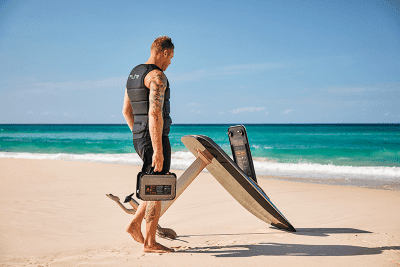
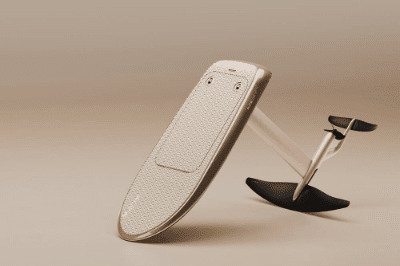
The 2026 Fliteboard RACE is the result of a direct collaboration between Fliteboard and Mercury Racing. In real-world testing, it has reached 55 km/h (34 mph) with controlled, repeatable stability. That number matters, but what matters more is how it gets there and who can actually use it.
As Hamish put it when the first boards landed,
“This isn’t just a faster board. It’s the first eFoil that still feels composed when you’re actually pushing it.”
This review breaks down where RACE fits in the lineup, why the Mercury Racing partnership matters, how it differs from ULTRA, and why it uniquely supports the Explore battery for sustained top-end riding. If you’re considering buying one, this is the context you want before clicking purchase or picking up the phone.
If you want the broader progression logic first, the Fliteboard 2026 Buyer’s Guide covers the full lineup step by step. That foundation matters, because RACE only makes sense once everything below it is already clear.
Before getting into speed numbers or hardware, it’s important to place RACE correctly.
RACE is not:
RACE sits outside the normal learning and progression path. It exists for riders whoalready understand foil efficiency, battery load, and what happens to stability as speeds climb. If you are still deciding between AIR, ICON, PRO, or ULTRA, this board is not where that decision should start.
RACE is not about learning faster.
It is about riding fast without things coming apart.
Fliteboard did not build RACE by simply turning up the power. They partnered with Mercury Racing because sustained speed on water exposes weaknesses long before it becomes exciting.
Most high-performance eFoils share the same problem. You roll into the throttle, see a big number briefly, and then the ride starts to degrade. The board feels nervous. Small stance changes turn into overcorrections. You back off, not because you want to, but because the system stops feeling solid.
RACE behaves differently.
As speed builds, the board settles in. Instead of tightening your stance and managing instability, you feel the board track straighter. Your feet quiet down. Your focus shifts from balance to direction.
That is Mercury Racing influence showing up where it matters: load handling, efficiency, and composure at speed, not just peak output.
This is why the 55 km/h number matters differently here. Many boards can touch similar speeds briefly. RACE can hold it repeatedly without the ride degrading or forcing you to reset.
Hamish described it after multiple sessions:
“Most fast boards feel impressive for five seconds. This one feels calm when you’re actually pushing it.”
This is not about quick adrenaline hits.
This is about usable speed.

The short answer is 55 km/h (34 mph).
The more important answer is how often you can actually ride there.
On most boards, top speed is something you visit briefly. The moment you try to stay there, the nose hunts, corrections stack up, and predictability disappears.
That does not happen on RACE.
On flat water, the board accelerates cleanly through cruising speed and continues building without a spike of instability. Instead of feeling like you’re balancing on a knife edge, the hull and foil lock into a line. The faster you go, the more settled the board feels.
A common session example looks like this. On a PRO or even an ULTRA, you roll on throttle, enjoy the burst, then naturally settle back. On RACE, you stay pinned longer because nothing is telling you to slow down. Your feet stay quieter. Your vision stays up instead of down.
Speed is delivered smoothly, not in a surge. Power builds in a way that lets you stay ahead of it rather than react to it.
Hamish summed it up simply:
“It’s the first time I stayed wide open and felt like the board wanted to stay there too.”
That is the performance difference. Not the headline number, but the fact that speed stops being intimidating.
If this style of riding sounds like what you’re after, take a closer look at the product page. If you want to talk it through before deciding, you can reach Emerald Wake.
On paper, ULTRA and RACE sit next to each other at the top of the lineup. On the water, they feel fundamentally different.
ULTRA is built around immediacy. Every movement transfers straight through the board. That sensitivity is exactly why ULTRA feels alive when carving, pumping, or riding waves. It rewards clean technique, but it also demands constant input as speed climbs.
RACE is built around composure. Instead of amplifying input, it smooths it. Where ULTRA keeps you engaged, RACE keeps you settled.
Most riders notice this immediately in their stance. On ULTRA, your feet stay active, especially at speed. On RACE, your stance quiets down. The board tracks forward and asks for commitment rather than correction.
Hamish put it plainly after riding them back to back:
“ULTRA wants input. RACE just wants you to commit.”
Neither board replaces the other. ULTRA remains the better tool for carving, wave-style riding, and riders who want constant feedback. RACE exists for riders who care about holding speed, not just touching it.
On most eFoils, battery choice becomes a compromise at speed. Lighter batteries feel lively but lose consistency under load. Heavier batteries offer endurance but usually dull response and destabilize the board.
RACE is built to break that tradeoff.
It is the only Fliteboard platform designed to carry the Explore battery at speed without degrading ride quality. Board shape, volume distribution, mast placement, and propulsion work together so added battery mass increases stability instead of hurting it.
On other boards, Explore can feel sluggish or nose-heavy once speeds climb. On RACE, it feels planted.
Hamish after back-to-back testing:
“It’s the first time the Explore battery didn’t feel like a compromise.”
What this means in real use is consistency. Long, fast sessions where the board does not change character halfway through. You are not managing battery behavior. You are just riding.
Lighter batteries still make sense for short, aggressive runs. But RACE is the first platform where choosing Explore does not mean giving up top-end confidence.

This is the part that matters most before buying.
RACE is not a reward for progression.
It is not a board you grow into.
It is a board you choose because you already know what you want from speed.
RACE makes sense if you:
It does not make sense if:
Hamish was direct after the first week of demos:
“This board is incredible when it matches the rider. When it doesn’t, it shortens sessions instead of improving them.”
That honesty matters.
If this board fits how you ride, the Fliteboard RACE is available directly through the product page.
If you want to sanity-check battery choice, setup, or whether this board actually fits your riding before committing, reach out to Hamish. That conversation tends to clarify things quickly.
The 2026 Fliteboard RACE is not impressive because it is fast.
It is impressive because it stays composed when fast stops being theoretical.
Where most boards ask you to back off, RACE settles in. Where other setups feel sharp for seconds, RACE feels stable for entire runs. That changes how you ride, how long you stay pinned, and how much confidence you carry from one session to the next.
This board assumes you already know why ULTRA starts to feel busy at speed. It assumes you care about efficiency, repeatability, and holding a line when conditions are not perfect.
If that describes your riding, RACE delivers something genuinely different.
If it does not, there is no downside to saying no.
RACE is not about going fast once.
It is about riding fast without the board asking you to slow down.
In real-world riding, yes. The RACE has been clocked at 55 km/h (34 mph), but more importantly, it can hold that speed repeatedly without the instability or drop-off most boards experience at the top end.
It depends on how you ride. RACE is not twitchy or reactive like ULTRA can feel at speed. It actually feels calmer the faster you go. That said, it assumes you already have clean takeoffs, solid stance control, and experience managing speed.
For most riders, no. RACE is built for speed and efficiency, not carving, wave-style riding, or relaxed cruising. Many riders who own RACE also keep a PRO or ULTRA for different sessions.
RACE was designed around sustained load. The board shape, volume distribution, mast placement, and Mercury Racing propulsion work together so the added weight of the Explore battery increases stability instead of hurting it.
Choose ULTRA if you value responsiveness, carving, and feel at moderate to high speeds. Choose RACE if you value holding high speed, efficiency, and stability over long runs. They solve different problems.
Probably not. RACE shines when speed is sustained. If your sessions are short, explosive, or focused on maneuvering, lighter and more reactive setups usually make more sense.
If you still have questions after reading this, that usually means you are right on the edge of where RACE starts to make sense. In that case, talking it through is often faster than guessing.
Read Also: Fliteboard 2026 Buyer’s Guide & Fliteboard ICON 2026 Guide & Fliteboard PRO 2026 Review & What’s New in the 2026 Fliteboard Series 6 Lineup?
Please fill out this form and someone from our team will contact you as soon as possible. You can also reach us by email at info@emeraldwake.com
info@emeraldwake.com
Phone: (850) 400-8500
Business hours:
Mon-Sat: 8am – 5pm
Sun: 9am – 4pm

© 2026 Emerald Wake LLC - All Rights Reserved
Privacy Policy | Accessibility | Terms of Use | Disclaimer