
If you’re shopping for an eFoil in 2026, the hardest part isn’t learning to ride. It’s choosing the right board. Fliteboard’s lineup has grown into clearly defined families, each built for a different type of rider, but from the outside, it can still be hard to tell which one actually fits you.
This guide is designed to fix that. Instead of vague advice or spec comparisons, we’ll walk through the actual Fliteboard 2026 board families, explain who each one is for, and show you how riders typically move through the lineup over time. If you’re brand new, you’ll see where to start. If you’re upgrading, you’ll see what makes sense next. And if you already know how to ride, you’ll see which boards are worth considering and which ones to skip.
Everything here is based on the 2026 Fliteboard catalog and real-world experience helping riders choose, ride, and live with these boards. The goal is simple: by the end of this guide, you should be able to point to a specific Fliteboard and say, “That one makes sense for me.”
↪ For a detailed look at the new features for 2026, be sure to read our specialized guide: What’s New in the 2026 Fliteboard Series 6 Lineup? | The Era of Speed Explained
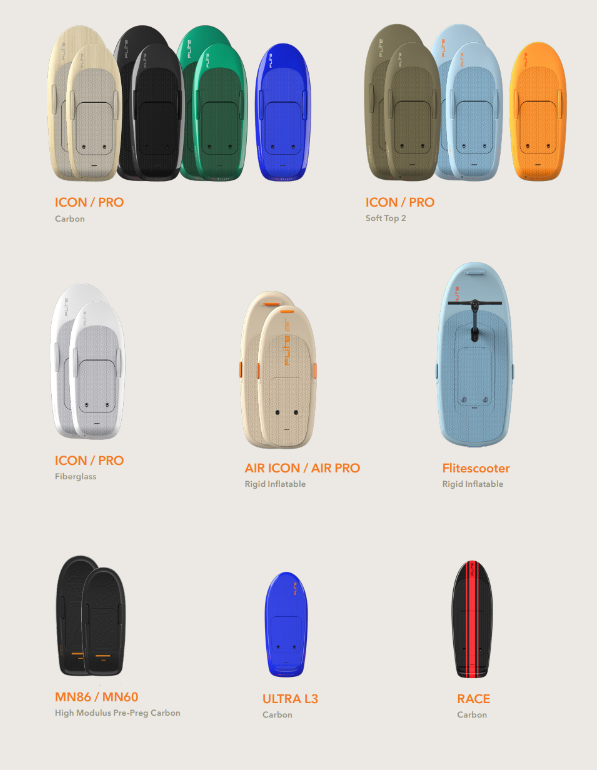
Before diving into individual boards, it helps to understand how Fliteboard organizes the 2026 lineup. Instead of one board trying to do everything, Fliteboard splits the range into distinct families, each built around a clear riding purpose.
If you’re unsure where you fit, that’s normal. Most buyers don’t neatly fall into a category at first. The sections below break down each family in detail, with real examples, so you can narrow things down without guessing.
📞 If you want to talk it through, you can reach Hamish at Emerald Wake at (850) 400-8500 or email him at ha****@*********ke.com.


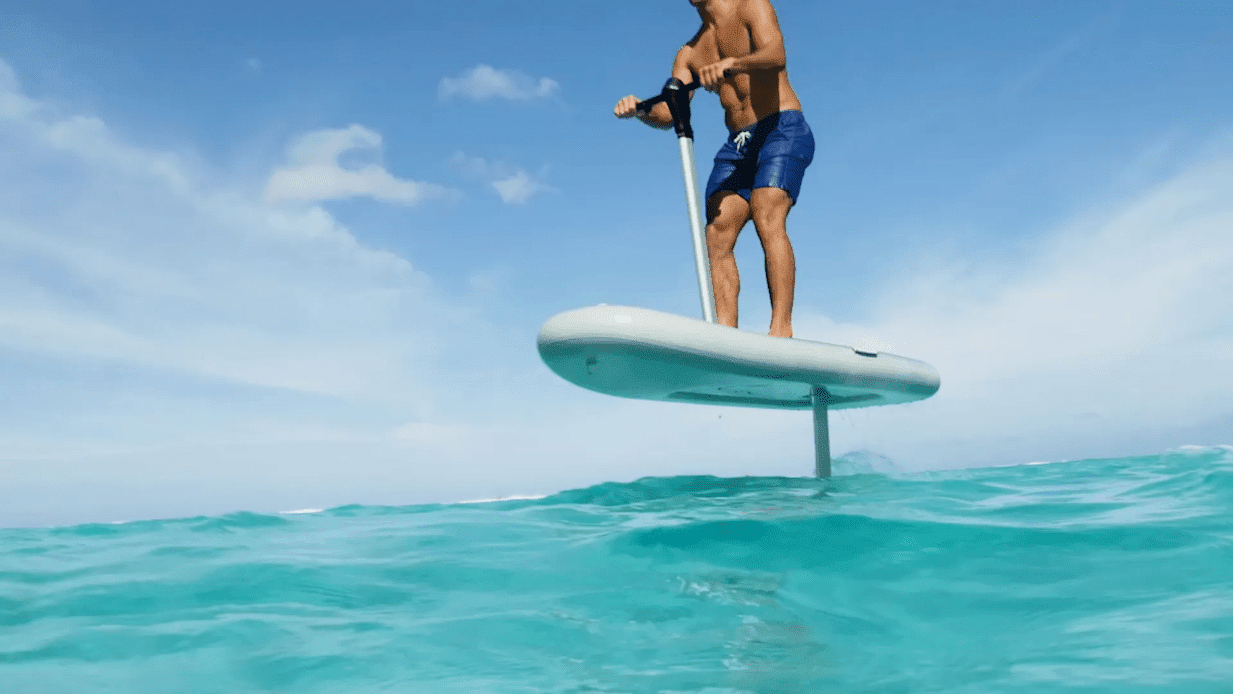
The Fliteboard AIR family exists for one main reason: durability and accessibility. These boards are built for riders who value toughness, shared use, and a lower cost of entry more than refined ride performance.
AIR boards use a rigid foam core combined with an inflatable outer bladder. That construction makes them far more tolerant of bumps, docks, boats, and beginner mishaps. They are also less likely to damage boats or docks and are more forgiving if a rider falls onto the board.
That said, AIR boards are not performance-focused. Compared to hard boards, they are larger in volume, less efficient on battery, and their grippier surface can cause hesitation during touchdowns. This can actually make them feel less predictable once riders start flying consistently.
AIR boards make the most sense for:
They are not the easiest-riding boards once skills improve, and many riders move out of AIR boards as confidence grows.
Hamish explains that inflatable boards are forgiving on impact, but that forgiveness can come at the cost of feedback and efficiency once riders start flying consistently.
Both AIR boards share the same electronics, foil systems, and batteries as the rest of the Fliteboard lineup. The difference is purely in board construction and ride feel.
AIR ICON is the larger, more stable inflatable option. It prioritizes float, balance, and impact tolerance, making it suitable for first-time riders, shared use, and cautious learners.
In real-world use, that means if someone hesitates during takeoff, the board doesn’t feel twitchy. If they come down from height, it settles instead of dropping. If weight shifts too far forward or back, there’s a moment to correct before things go wrong.
We consider the AIR ICON ideal for:
It’s not trying to be fast or sharp. Its job is to make early sessions enjoyable instead of exhausting.
AIR PRO ICON is slightly smaller and more nimble. It keeps the inflatable construction but offers a more responsive feel once riders are consistently flying. It is often chosen by riders who want inflatable durability without the full size and sluggishness of AIR ICON.
A tangible example: as riders start making longer runs and gently carving, the AIR PRO ICON responds sooner when weight shifts or stance changes. It still allows mistakes, but it doesn’t dampen feedback as much. That makes it easier to feel what the board is doing under your feet.
We usually see riders choose the AIR PRO ICON when they:
This is a common choice for people who want to progress without jumping straight into a rigid board.
We generally recommend the AIR family to riders who want to focus on learning and enjoying sessions, not managing equipment.
The AIR boards make sense if:
They make less sense if:
As Hamish often points out when helping riders choose,
“The best beginner board is the one that keeps you riding the longest, not the one you grow out of the fastest.”
If you’re deciding between theAIR ICON and AIR PRO ICON, the difference usually comes down to confidence and how quickly you expect to progress. Talking through where you’re at and how you plan to ride helps narrow that down quickly and avoids buying the wrong version.
Once riders are flying consistently, many discover that hard boards are actually easier and cleaner to ride than inflatables. Hard boards release from the water more smoothly, respond more predictably during touchdowns, and use battery more efficiently.
This is why many instructors, including Hamish, teach on larger boards but recommend riders buy hard boards once they have basic control. Hard boards don’t absorb mistakes, but they communicate clearly, which helps riders improve faster.
In the 2026 lineup from Fliteboard, hard boards are grouped into clear families so riders don’t have to guess where they belong. Each step forward gives you more response from the board, but it also asks more from the rider in terms of balance, timing, and control.
As Hamish puts it,
“Every step you take toward performance gives you more feel, but it also asks you to be more accurate.”


The ICON hard boards are often where riders land when they move out of inflatable boards or choose to skip inflatables entirely. These boards still feel stable and confidence-inspiring, but the ride is noticeably more connected.
A real example: when you shift your weight forward on an ICON hard board, the board lifts more immediately instead of lagging. When you touch down from height, the board reconnects cleanly instead of bouncing. Riders often notice that the board feels more direct under their feet, with less hesitation compared to inflatable boards.
We see ICON hard boards work best for riders who are flying comfortably and consistently, want better response without making things difficult, and are ready to start feeling what the foil is doing without giving up confidence. This lines up with how Hamish explains ICON boards as the point where riders stop being cushioned by the board and start feeling what the foil is doing.
For many riders, ICON is the easiest and most natural transition into rigid boards.
Read Also: Fliteboard ICON 2026 Guide: Is This the Best All-Rounder eFoil?

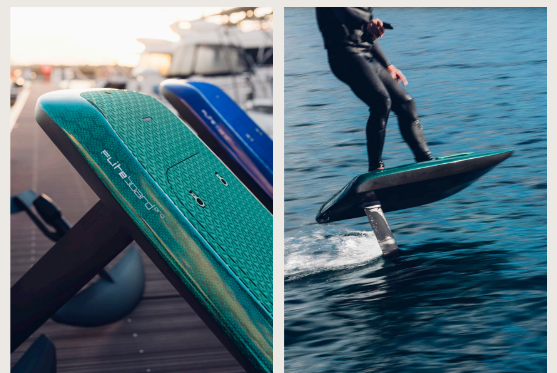
The PRO hard boards are built for riders who are already comfortable and want the board to respond the moment they ask it to. Compared to ICON boards, PRO boards feel quicker edge to edge and more precise through turns.
On the water, this becomes obvious when carving. When you lean into a turn, the board follows immediately. When you adjust stance mid-ride, the board responds without smoothing things out. Sessions feel more engaging and more connected, but sloppy input is also more noticeable.
We usually recommend PRO hard boards to riders who ride regularly, carve with intention, and want a board that won’t feel limiting as skills improve. This is the stage where, as Hamish puts it, “the board stops hiding things from you,” and technique starts to matter more than forgiveness. Many riders stay in this category for a long time because it balances response with usability.
Read Also: Fliteboard PRO 2026 Review | Is the 67L PRO Better for Responsive Freestyle?


The ULTRA hard boards sit at the performance end of the lineup. These boards are built for riders who already know how they ride and what they want from their setup.
A tangible example: on an ULTRA, small weight shifts have immediate consequences. If your stance is clean, the board feels fast and locked in. If your timing is off, you feel it right away. That isn’t a flaw. That’s exactly how these boards are designed to work. As Hamish explains it bluntly, “ULTRA boards don’t lie to you.”. He explains this in the context of technique: clean input feels incredible, and small mistakes are immediately obvious.
ULTRA boards make sense for riders who are confident in all phases of riding, value precision and responsiveness, and are willing to give up comfort for control. They do not make sense for riders who are still figuring things out or who want a relaxed ride.
Read Also: Fliteboard ULTRA L3 2026 Guide | Best eFoil for Wave Riding?
If you’re unsure when to move from inflatable to hard board, or which hard board family fits your riding, talking it through helps. Describing how your current sessions feel and what you want to improve makes it much easier to choose the right step instead of guessing.
Call or text
(850) 400 8500
Email
in**@*********ke.com
Visit
emeraldwake.com
Next, we’ll narrow this down further by looking at real upgrade scenarios and how riders typically move between ICON, PRO, and ULTRA based on how they actually ride.

Most riders don’t move through the Fliteboard lineup because they planned it that way from day one. They upgrade because something in their sessions starts to feel slightly off. Not broken. Not bad. Just not quite right anymore. This is where understanding real upgrade patterns matters more than specs.
Below are the most common upgrade paths we see with the 2026 lineup, based on how people actually ride.
This is the earliest and most common upgrade, and it usually happens sooner than people expect.
A typical example: a rider who was nervous at first is now getting up every time, riding long straight runs, and starting gentle turns. The AIR ICON still works, but the rider starts noticing that the board feels a little muted when they shift weight or try to carve.
That’s when AIR PRO ICON makes sense. It keeps the inflatable comfort and forgiveness but adds quicker response. This is usually when riders start noticing that the board feels muted or slow to respond, even though they’re riding confidently.
This transition is less about confidence and more about feel.
A common scenario: riders are comfortable flying, carving lightly, and riding consistently, but they want more feedback. They want to feel the foil sooner when they move their feet. They want landings to feel cleaner and more predictable.
Moving to an ICON hard board removes the inflatable buffer and gives direct feedback without making the board demanding.
Hamish describes this step as riders starting to feel direct feedback from the board instead of having their input softened by the inflatable construction.
This is one of the most satisfying upgrades when timing is right.
This upgrade usually happens when riding becomes intentional.
A real example: a rider is carving on purpose, adjusting stance mid-ride, and riding faster with confidence. The ICON still feels stable, but the rider wants the board to react immediately instead of smoothing things out.
That’s where PRO hard boards come in. They respond faster edge to edge and translate rider input directly into movement.
As Hamish puts it,
"This is where the board responds directly to rider input instead of smoothing it out.”
This step rewards cleaner technique and longer-term progression.
This is the least common upgrade and the most deliberate.
Riders who move to ULTRA usually know exactly why they’re doing it. They want speed, precision, and immediate response. They’re willing to give up comfort and forgiveness to get it.
A typical ULTRA rider already knows what good timing feels like and wants a board that reflects every input instantly. As Hamish explains, ULTRA feels incredible when technique is clean, and demanding when it isn’t.
This upgrade is about intent, not progression pressure.
The most common mistake we see is skipping stages. Riders jump from inflatable straight to ULTRA or RACE thinking it will speed up progression. In reality, it often slows it down.
Boards that are slightly easier to ride usually keep people on the water longer. Longer sessions lead to faster improvement.
As Hamish emphasizes throughout the lineup, the right board is the one that keeps you riding longer and more consistently.
Next step:
If you’re unsure where you are in this progression, describing how your sessions feel is the fastest way to clarify your next move. What feels easy. What feels hard. What you want more of. That information matters more than any spec sheet.
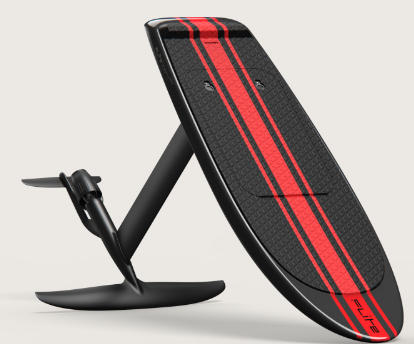
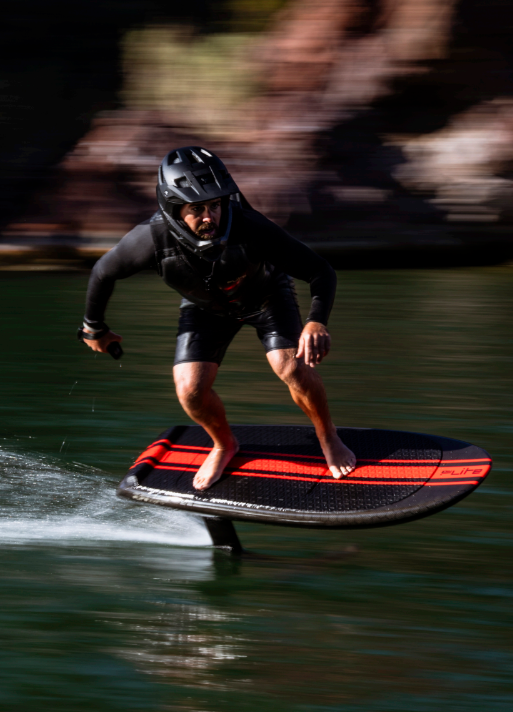
The RACE family sits completely outside the normal progression path of the Fliteboard lineup. These boards are not about learning faster, carving cleaner, or riding more comfortably. They are about speed, efficiency, and flatwater performance, and they are built for riders who already know exactly why they want that.
In the 2026 lineup from Fliteboard, RACE boards are purpose-built tools. They are not meant to replace PRO or ULTRA boards for most riders, but to serve a very specific riding goal. As Hamish puts it very clearly, “RACE boards are amazing at what they do, but they’re doing one thing.”
Read Also: 2026 Fliteboard RACE Review: How Fast Is the New Pro Model?
RACE boards are designed to minimize drag and maximize efficiency at speed. Everything about the shape, volume distribution, and riding position is tuned for straight-line performance on flat water.
A tangible example: on a RACE board, once you’re up and flying, the board feels incredibly fast and smooth. It carries speed effortlessly and rewards steady, committed riding. But at low speed or during transitions, it feels far less forgiving than other boards. They feel best once up and moving, and are less forgiving at lower speeds or during transitions. There’s very little margin for casual input.
Hamish describes the feeling simply: “They’re happiest when they’re moving.”
That sentence alone explains why these boards feel incredible in the right conditions and frustrating in the wrong ones.
The RACE family makes sense for a very specific type of rider.
We usually see them work best for riders who:
They make far less sense for riders who:
This is why RACE boards are rarely someone’s first or only eFoil. They’re often a second board, chosen with a very clear goal in mind.
A lot of riders assume RACE is the “next step” after ULTRA. In reality, they’re built for different purposes.
ULTRA boards are about precision and responsiveness across varied riding.
RACE boards are about holding speed efficiently in straight lines.
One isn’t better than the other. They’re simply solving different problems.
As Hamish explains it,
“ULTRA is about feel and control. RACE is about efficiency and speed.”
Knowing which one you actually want saves a lot of frustration.
RACE boards are incredible when they match the rider and the conditions. When they don’t, they can shorten sessions instead of enhancing them. That’s why this is the one category where we almost always recommend talking it through before buying.
Describing where you ride, how often, and what you want to feel on the water matters more here than anywhere else in the lineup.
Next step:
If you’re considering a RACE board, a quick conversation can confirm whether it fits your riding or whether another board will actually deliver better sessions. This is one of those decisions where clarity upfront makes all the difference.
Once riders understand which board family fits them, the next layer matters just as much. How a Fliteboard feels on the water is shaped as much by the foil, propulsion, and battery as it is by the board itself. This is also where many buyers make avoidable mistakes by locking onto a board and ignoring the rest of the system.
We see it all the time. Someone likes their board, but something still feels off. Most of the time, the board isn’t the problem. The setup is.
For 2026, the Series 6 updates from Fliteboard didn’t chase reinvention. They tightened the pieces that directly affect ride feel, efficiency, and ownership over time. These are changes you feel on the water, not just read about.
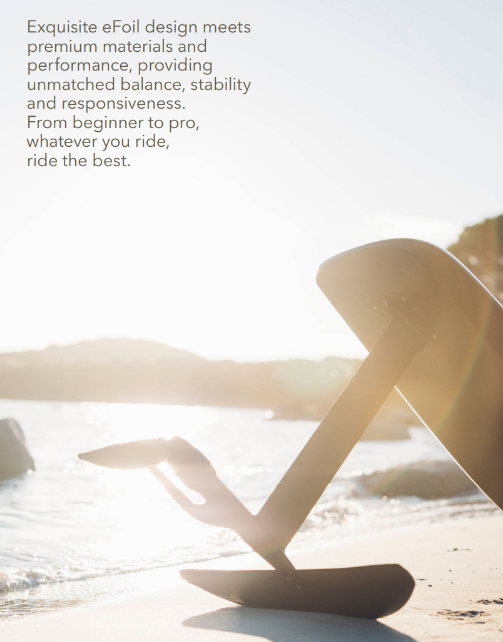

Foil choice has the biggest influence on how a board feels once you’re flying. Bigger foils lift earlier, feel calmer, and smooth things out. Smaller foils lift later, feel faster, and ask for cleaner input.
A real example: when you’re learning to ride straight and stay balanced, a larger foil lifts gently and stays level at low speed. As you start carving faster, that same foil can begin to feel draggy and slow to react. Swap to a smaller foil on the same board and the ride instantly feels quicker and more alive.
What’s improved in Series 6 is clarity. Foils are separated more cleanly by purpose, and the differences between sizes feel more predictable. Larger foils carry lift more smoothly through speed changes. Smaller foils release more cleanly without feeling sketchy.
As Hamish puts it,
“the foil is really what sets the personality of the board.”
The 2026 foil range is designed so when you change foils, you immediately understand why.
Foils are also one of the easiest ways to progress. Many riders keep the same board for years and simply adjust foils as their riding improves.
↪ If your board feels either too slow or too twitchy, that description usually points to a foil change before a board change.
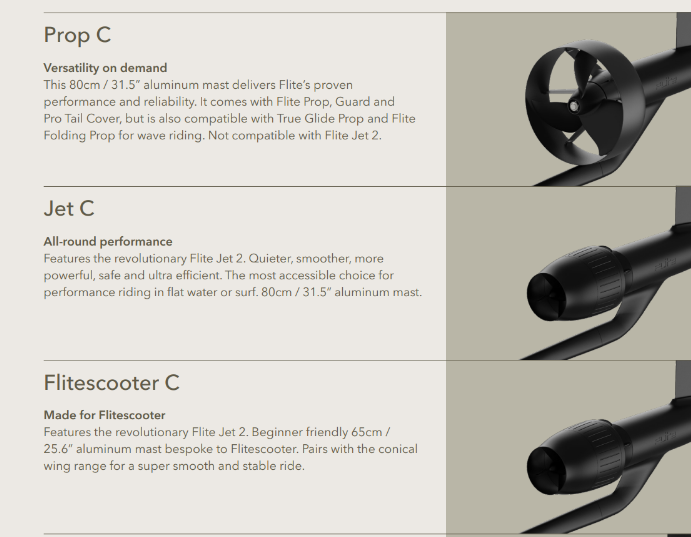


Propulsion has always been about control, but the 2026 Series 6 refinements focus even more on smoothness and consistency, especially around takeoff and low-speed riding.
For newer riders, smoother power keeps things calm. Throttle inputs feel progressive, takeoffs are cleaner, and the board doesn’t surge. As confidence grows, riders usually want power that feels more immediate, where the board responds the moment they ask.
Hamish sums it up simply:
“When you’re learning, you want power to feel calm. When you’re confident, you want it to feel instant.”
Series 6 does a better job of delivering both without forcing a compromise.
Conditions matter too. Flat water, chop, and longer-distance riding all favor slightly different power feel, and the 2026 updates make those differences easier to live with over longer sessions.
↪ If throttle response feels too soft or too abrupt, that’s usually a propulsion conversation worth having before changing boards.
📞 If you need help, call or text (850) 400 8500
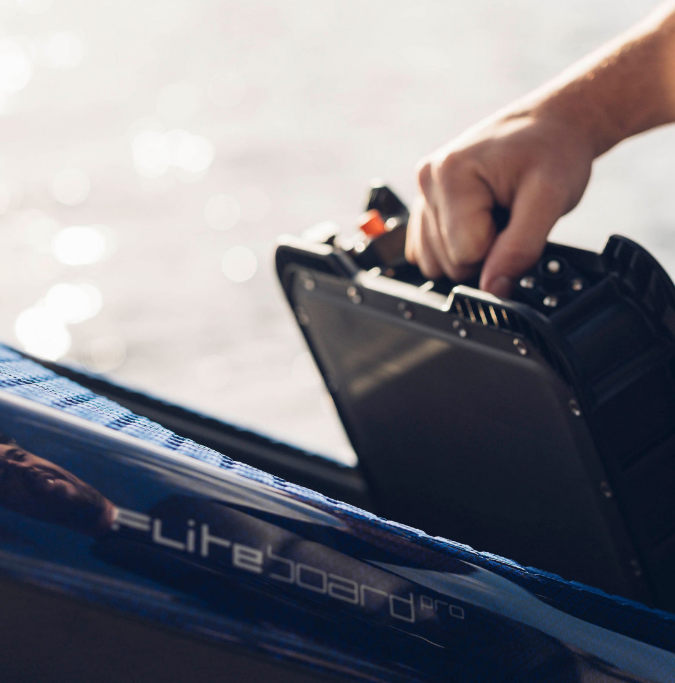
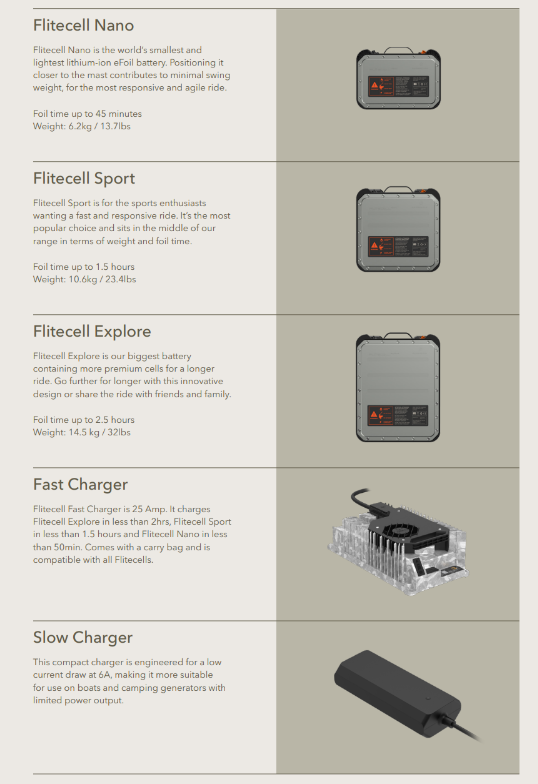
Battery choice affects far more than runtime. It changes balance, responsiveness, and how tired you feel by the end of a session.
Heavier batteries feel more planted and stable, which some newer riders like. Lighter batteries make boards feel more agile, especially in turns and stance changes. Over longer sessions, lighter setups often feel noticeably less fatiguing.
What’s clearer in 2026 is how consistent these differences are across the lineup. Battery choice is about feel from minute one to minute sixty, not just how long you can stay out.
Hamish often reminds riders, “battery choice is about feel as much as it’s about runtime.” Chasing maximum range doesn’t always lead to better sessions.
↪ If your board feels nose-heavy, sluggish, or tiring over time, battery choice is often the first thing to revisit.
One of the biggest strengths in 2026 isn’t a single component. It’s how everything works together. Boards, foils, propulsion, and batteries remain compatible, so riders can upgrade piece by piece instead of starting over.
That matters in real ownership. Parts wear. Goals change.
As Hamish says,
“Most people don’t replace everything at once. They evolve their setup.”
That long-term compatibility is a big reason riders stay in the ecosystem for years.
Next step:
If your setup doesn’t feel quite right, the fastest fix is often a small adjustment, not a full replacement. Describing what feels off during your sessions usually points directly to the right change.
Up to this point, we’ve talked about why setup matters. Here’s the part buyers actually need when they’re choosing in 2026: what the real options are, and what they’re meant to do in practice in the Fliteboard Series 6 lineup.
All Series 6 wings use the Conical (C) interface, meaning compatibility is consistent across boards and propulsion systems.
As Hamish explains,
“Most riders don’t need a faster foil, they need the foil that matches how they’re riding right now.”
For 2026, propulsion options focus on control and efficiency, not headline numbers.
The key difference isn’t raw power. It’s how controllable the power feels during takeoff, transitions, and longer sessions.
Hamish puts it plainly:
“Most people don’t want more power. They want power that’s easier to manage.”
Battery choice affects balance, fatigue, and responsiveness just as much as ride time.
In real use, many riders own more than one battery and choose based on the session, not a single “best” option.
As Hamish often says,
“Battery choice is about feel, not just range.”If you already know which board family you want, dialing in foils, propulsion, and battery choice is where the setup either clicks or doesn’t. A quick conversation usually saves a lot of trial and error.
If you already know which board family you want, dialing in foils, propulsion, and battery choice is where the setup either clicks or doesn’t. A quick conversation usually saves a lot of trial and error.

If you’re comparing Fliteboard 2025 vs 2026, the key thing to understand is this:
2026 is not a reinvention. It’s a refinement.
The biggest changes aren’t about chasing new riders. They’re about making the lineup clearer, more intentional, and easier to choose from.
As Hamish summed it up in the transcript,
“2026 is about helping riders end up on the right board sooner, not chasing the next thing.”
If you liked how Fliteboard felt in 2025, 2026 won’t surprise you.
It will just make choosing easier.
For most beginners, AIR ICON is still the best place to start. It prioritizes forgiveness, stability, and confidence, which leads to faster real-world progress than jumping into performance boards too early.
Yes, if you expect to ride often and progress quickly. AIR PRO ICON keeps inflatable forgiveness but offers clearer response once you’re flying consistently.
When takeoffs feel automatic and you want more feedback. Riders usually move to an ICON hard board when they want cleaner response without making sessions harder.
It’s different. PRO boards respond faster and demand cleaner input. ICON boards still prioritize confidence. PRO makes sense when you’re carving intentionally and riding regularly.
Usually no. ULTRA boards are precise but unforgiving. Most riders enjoy them more after time on ICON or PRO.
Yes, in straight-line efficiency. But RACE boards are specialized. ULTRA boards are more versatile across conditions and riding styles.
Often, yes. Many “board problems” are actually foil or battery mismatches. Changing foils can completely transform how a board feels.
One of Fliteboard’s strengths is ecosystem compatibility. Most riders evolve their setup over time rather than replacing everything.

There isn’t one “best” Fliteboard in 2026.
There is:
Most people don’t regret buying a Fliteboard.
They regret buying the wrong version for how they actually ride.
If you’re unsure between two options, that’s normal. That’s also the point where guessing usually leads to shorter sessions instead of better ones.
If you want help choosing the right 2026 Fliteboard setup, talk it through. Describing how you ride, where you ride, and what you want to feel on the water makes the answer obvious very quickly.
Call or text
(850) 400 8500
Email
in**@*********ke.com
Visit
emeraldwake.com
Please fill out this form and someone from our team will contact you as soon as possible. You can also reach us by email at info@emeraldwake.com
info@emeraldwake.com
Phone: (850) 400-8500
Business hours:
Mon-Sat: 8am – 5pm
Sun: 9am – 4pm

© 2025 Emerald Wake - All Rights Reserved
Privacy Policy | Accessibility | Terms of Use | Disclaimer